


Simon Illedits is a co-founder of Renty and writes about event technology for the Renty guide. He is responsible for the selection and testing of the entire rental inventory of sound, lighting, and media equipment. His focus is on how to properly size technology and set it up without any prior knowledge.

Simon Illedits is a co-founder of Renty and oversees the product range: which devices are added to the rental inventory, how they are tested and maintained, and how the plug-and-play packages are assembled. His connection to technology predates Renty. As a teenager, he built hi-fi systems and amplifiers, and he has been working as a DJ for over eight years, primarily at private parties and corporate events.
In 2022, he co-founded Renty in Graz with André Deutsch and Jakob Puck. When selecting equipment, he ensures that it remains easy to operate without instruction, as most customers are not technicians but people hosting their own events. Brands like HK Audio, LD Systems, SOUNDBOKS, JBL, and Pioneer DJ are in the inventory precisely because of this selection process.
In the Renty guide, Simon writes about event technology: sizing sound systems based on room size and guest count, speaker placement, lighting atmosphere and fog, projectors and screens, and power supply. He also points out limitations, such as the fact that projectors up to around 5,200 lumens cannot keep up in full daylight.


You should plan a summer party two to three months in advance, and the most important point is a backup plan for the weather: a covered area or an indoor space for all guests. Next come the budget, location, program, and equipment. Here you will find the complete guide with a checklist, timeline, and cost-per-person calculation.

Soundboks 3 and Soundboks 4 share the same amplifier, drivers, dimensions, and maximum volume. They differ in battery life at full volume, charging time, sound tuning, and the USB-C output. This comparison puts all manufacturer specifications side-by-side and explains which model suits which use case.
GEMA registration is handled online via the GEMA online portal: create an account, enter the event details including date, location, area, admission, and type of music, then submit. There is no fixed deadline in days, but the registration must be received before the event. For live music, the setlist is added afterward; GEMA sets a six-week deadline for this following the event.

Screen size depends on viewing distance: The front row should be at least 1.5 times the screen width away. More important than the material is wind protection, as a taut screen acts like a sail. Here you will find size recommendations, location tips, a DIY frame to build, and alternatives.

A photo booth at a graduation party provides two things a photographer doesn't cover: pictures of absolutely every guest and instant prints that they can take home that same evening. It runs without supervision and only needs a power outlet. Here you will find a comparison of packages, standard services like instant printing and online galleries, and the key points to consider when comparing.

An event budget clearly separates fixed costs, variable costs per guest, and revenue. A common mistake is a buffer that is too small; 10 to 15 percent should be included in every calculation. Here you will find the categories, three sample calculations for different types of events, and a template to download.

Party lighting works on three levels: ambient light for the room, accent light for walls and decor, and effect light for the dance floor. Uplights and PAR cans provide coverage, an LED bar covers multiple effects on one stand, and moving heads add movement. For a standard party, two levels are sufficient, such as uplights on the walls and an LED bar for the dance floor.
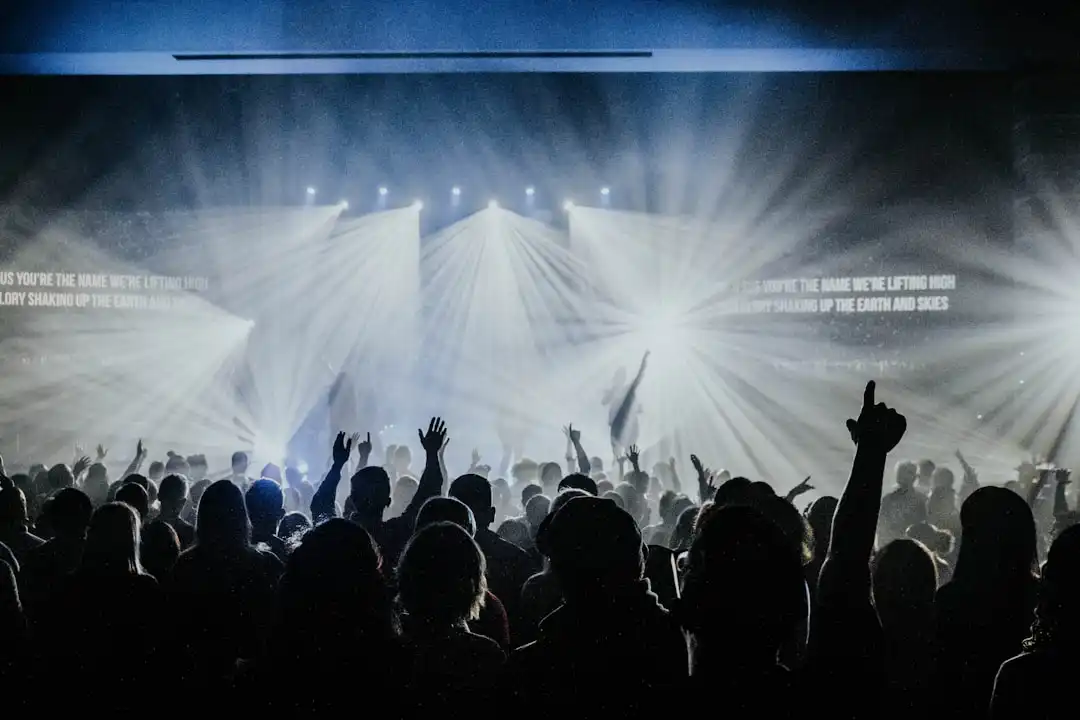
Event liability insurance, often called organizer liability insurance, covers third-party claims if someone is injured or property is damaged at your event. It reviews every claim, defends against unjustified ones, and pays the justified ones. It becomes necessary as soon as a private party becomes an event—i.e., when there is an admission fee, beverage service, a stage, an open guest list, or a public venue. It is available as a one-off policy for a single event or as an annual policy for clubs and companies with multiple events, with premiums based on visitor numbers, event type, venue size, and program.

You can calculate the power requirements of a carnival float in two steps: add up the wattage of all devices, then multiply by the duration of the parade. The result in watt-hours determines the size of the power station. For most parades, this is a more practical choice than a gasoline generator because it runs quietly and produces no exhaust fumes.

A midnight show lasts five to ten minutes and works in three formats: short film, dance show, or sketch. Longer is rarely better, as the audience's attention drops after the first climax. Here you will find ideas for each format, how to structure the dramaturgy, technical preparation, and legal points.

A New Year's Eve playlist follows the evening: calm background music for dinner, danceable hits later in the evening, the countdown song timed so the chorus hits at midnight, followed by the big party classics. Here you will find songs for every phase, an overview of the classics, and the points where the sound usually hits a snag.

At a festival, a power station covers your camp's power needs, while gasoline generators are often prohibited on large festival grounds in Germany and Austria. The key factor is capacity in watt-hours, not power output in watts. Here you will find the consumption calculation, the right size class for your camp, and what is actually allowed on the grounds.

Wir haben dir eine Mail geschickt, bitte bestätige sie um den Rabattcode zu erhalten.


