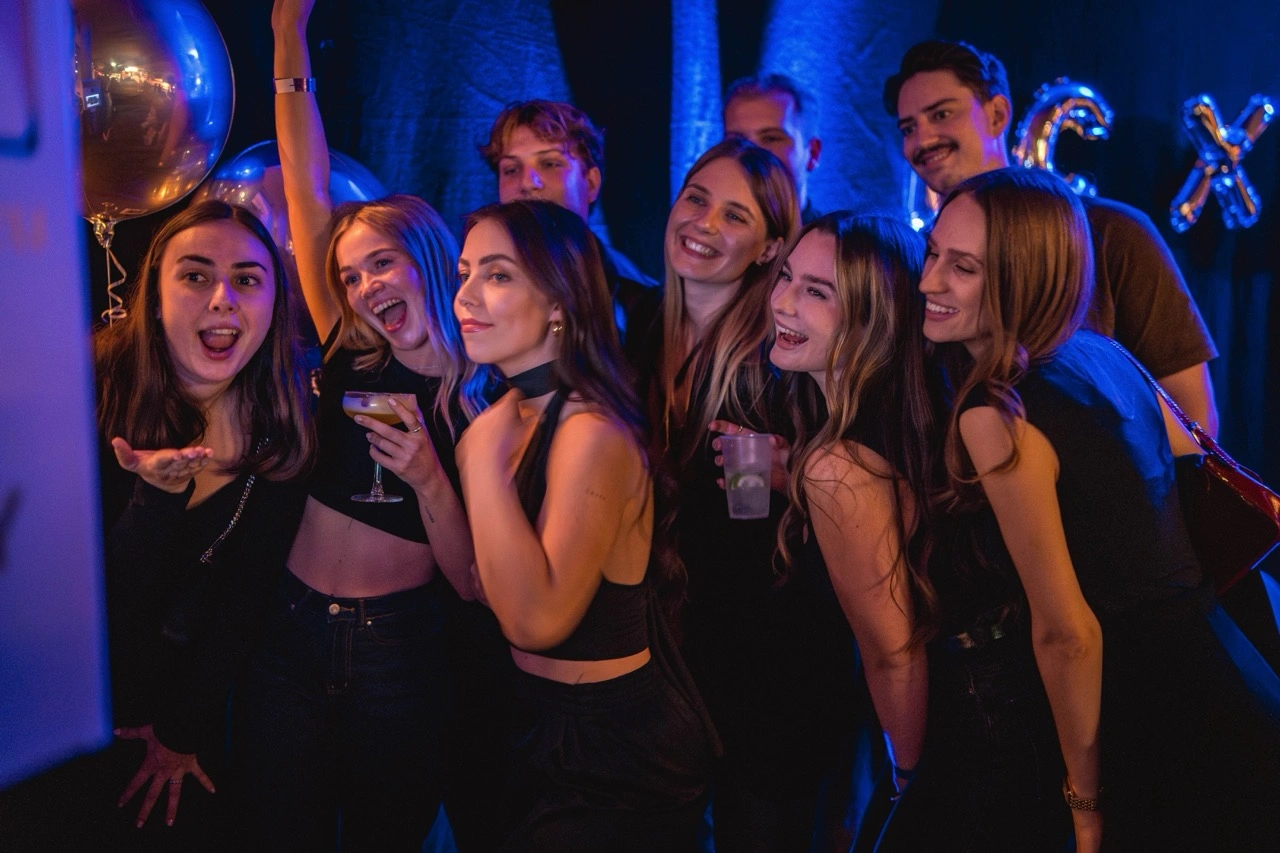
You should plan a summer party two to three months in advance, and the most important point is a backup plan for the weather: a covered area or an indoor space for all guests. Next come the budget, location, program, and equipment. Here you will find the complete guide with a checklist, timeline, and cost-per-person calculation.

0:00 - 0:38 With this summer party checklist, your event will be a hit. First, the location. Whether it's a garden or a terrace, make sure there's enough space. Then, the guest list. Invite everyone who brings good vibes. Food and drinks are essential. Finger food is practical and fun. Don't forget the drinks; a cool selection is important. For the atmosphere, take care of music and games. And if you're still missing something, check out Renty. You'll find everything you need there. With these tips, your summer party will be unforgettable.
To plan a perfect, stress-free summer party, ideally start organizing two to three months in advance and budget 30 to 50 euros per person. Since outdoor events are highly weather-dependent, you absolutely need a waterproof backup plan in the form of covered tents or a nearby indoor space for at least 80 percent of your guests. For sound reinforcement and ambient lighting after sunset, you need equipment that performs reliably even in humid conditions. You can find out which size fits your space in our outdoor PA systems. This ultimate guide will lead you safely through the entire budgeting process and provide a detailed checklist for a smooth event.
An open-air celebration is the ultimate challenge in event planning because factors like incoming rain, sudden wind, or a lack of power outlets can quickly lead to total chaos. However, with a clear structure and precise calculations for cold drinks and suitable catering, you will stay completely calm in any situation. We show you in detail how to obtain permits for public spaces and keep your garden party shielded from prying eyes.
👉 Looking for cool themes or creative games for your guests in addition to the logistics? Then get inspired by our summer party ideas guide, featuring the best concepts for the hot season.
Planning a summer party for 2026 and wondering where to even start? Good news: you've come to the right place. This guide will walk you through the entire planning process step by step, from the initial brainstorming to the day itself.
Whether you are organizing a corporate summer party for 150 employees on company grounds, setting up a club event with families and children, or planning a private garden party with 40 friends: the basic principles are the same. You need a clear timeline, a well-thought-out budget, ideas for activities, and a backup plan for the weather. And that is exactly what you get here—practical, DIY, and without the need for an event agency.
Throughout this article, you will come across further resources, such as specific summer party ideas or equipment for outdoor events. For sound, lighting, and photo booths, Renty offers a large selection of rental equipment with no deposit required, but more on that later. For now: roll up your sleeves and let's get started.

A clear timeline relieves stress and ensures you don't forget anything. For example: a corporate summer party on July 18th, 150 people, Friday from 4 PM to 10 PM on company grounds. Or a private garden party on Saturday with 40 guests. The scale varies, but the planning logic remains the same.
This section is organized chronologically: from 3-4 months before the event to the day of the event itself. If you want to dive deeper into general event planning, check out our Event Planning: The Ultimate Guide. There, you will find even more detailed checklists and templates.
This phase is crucial. This is where you set the major parameters: Where will the party take place? When? And how much money is available? Mistakes made in this phase will affect the entire planning process.
Define your goal: What do you want to achieve with the summer party? Team building and employee appreciation? A family day with children and partners? A client event with a networking focus? The clearer the goal, the better you can tailor the program and atmosphere to it.
Estimate guest numbers: For mid-sized companies, 80-150 people is typical. For clubs and associations, it's often 50-100. For private events, more like 30-60. As a rule of thumb, expect about eight out of every ten invitees to attend.
Set a budget: For companies in Germany, the tax-free allowance is €110 per person. This is often a good benchmark. Clubs and private individuals usually calculate based on a total budget. A proven breakdown:
| Budget category | Visualization | Share |
|---|---|---|
| 📍 Venue | 30% | |
| 🍽️ Food & Drinks | 40% | |
| 🎉 Entertainment | 20% | |
| 🛡️ Buffer | 10% |
Choose a date: The period between mid-June and early September is ideal. Companies often choose a Thursday or Friday, while private parties usually take place on Saturdays. Note: Check school holidays, long weekends, and vacation periods, otherwise you might miss key guests.
Secure a venue: Popular outdoor locations are booked up 4-6 months in advance during peak season. Possible spots: company courtyard, rooftop terrace, beer garden with outdoor space, clubhouse with a lawn, or a public park (check for permits here!).
Things are getting real: guests are notified of the event, and service providers are booked. The summer party is taking shape.
Prepare invitations: Your invitation should include: date, time, location, RSVP deadline, dress code, and a brief teaser of the program. Information regarding bad weather plans should also be included. Later in this article, you will find a dedicated section with tips and a link to free templates.
Decide on catering: Popular options for summer parties:
Include beer benches or high tables when requesting catering.
Drinks concept: A welcome drink (non-alcoholic is always a good choice, e.g., lemonade or a spritz variant) sets the tone. Add soft drinks, water, beer, and wine. In hot weather, plan for 2-3 drinks per person per hour.
Reserve event technology: Sound system for music and speeches, wireless microphone, perhaps a photo booth, projector for football matches or a year-in-review. Important: Check for outdoor suitability. Battery-powered devices are more flexible than wired equipment.
The summer party is in the home stretch. Now it's time for the finishing touches, clear responsibilities, and a foolproof Plan B.
Time the schedule: An example for a company summer party from 4 PM to 10 PM:
| Time | Program item |
|---|---|
| 1:00 PM | 🛠️ Setup by the organizing team |
| 4:00 PM | 🍹 Guest arrival & welcome drink |
| 5:00 PM | 🎤 Official welcome (management) |
| 6:00 PM - 7:30 PM | 🏆 Team games / outdoor Olympics |
| 7:30 PM | 🥗 Buffet opens |
| 8:30 PM | 🎧 DJ starts / outdoor cinema begins |
| 10:00 PM | 🏠 Official end |
Appoint an organizing team: You will need at least:
Clarify details with service providers: Delivery times, access routes, power connections, quiet hours. Get written confirmations.
Solidify Plan B: In case of rain, you will need tents or an indoor alternative. In case of heat: sun sails, fans, and plenty of water stations. More on this in the dedicated section below.
The big day is here. Now it is all about staying calm and organized. All to-dos should be checked off before the first guest arrives.
Schedule for the day:
Sound check: Position the speakers slightly elevated at ear level. Test the microphone with a short announcement. Determine the volume levels for background music (subtle, allowing for conversation) and the party phase (louder) in advance.
Final check before doors open:
Clarify roles for the day: Who is the contact person for service providers? Who greets guests at the entrance? Who keeps an eye on the schedule?
Activities make the difference between a "nice barbecue" and a "legendary summer party that people will be talking about for months." Parties with two or three real interactive elements are much more memorable than a simple barbecue. This applies to both corporate and private events.

Teambuilding for companies: An outdoor Olympics with 5-8 stations (sack races, water balloon tossing, tug-of-war) is a classic; it works for 20-100 people in 2-3 hours and costs less than €10 per person if you organize it yourself. Alternatives: A quiz rally through the company premises, escape game elements, or small challenges in mixed teams. This fosters team spirit like nothing else.
Family-friendly activities: For events with children and families: bouncy castle, face painting station, craft tent, bubble station. In hot weather, water games are an absolute hit.
Photo booth as a highlight: A photo booth easily generates 200-500 photos for 100 guests. You can customize it with your company logo, campaign motto, or summer party branding. Instant prints are popular keepsakes, and the digital images are perfect for employer branding on social media.
Live cooking: A paella pan, burger station, or mobile tarte flambée oven bring experiential catering to the party. The live interaction is something people will remember.
Outdoor cinema: Screen, projector, deck chairs—and your open-air cinema is ready. For 50-200 viewers, you need a projector with at least 4,000 lumens (for ambient light) and a projection distance of 10-15m.
DJ or live band: Start in the afternoon with subtle background music and turn it up from 8 PM. Keep noise regulations in mind after 10 PM. A live act is almost always more memorable than just a playlist.
You can find a detailed collection of ideas with 25 variations in the article Ideas & activities for the company summer party.
A great atmosphere at a summer party depends heavily on sound, lighting, and a reliable power supply. The problem: Outdoor events have specific requirements that differ significantly from indoor events.
Outside, you need more power because there are no walls or ceilings to reflect the sound. Add to that weather risks, tripping hazards from cables, and often no power outlet nearby. The good news: With the right technology, all of this can be solved.
As a platform, Renty offers a large selection of outdoor-ready event technology, from battery-powered speakers and power stations to battery-operated uplights. Everything is deposit-free, insured, and features plug-and-play functionality. But first, let's look at the basics.
Why do you need more power outdoors? It's simple: Indoors, walls and ceilings reflect the sound back. Outdoors, the sound "gets lost" in the open space. Wind does the rest.
The rule of thumb: Plan for about double the speaker power outdoors compared to a similar indoor event. Specifically: What works indoors with 200 watts needs 400-500 watts outdoors for comparable coverage.
Positioning:
Volume throughout the day: In the afternoon, keep it subtle (70–80 dB, easy to hold conversations), then louder during the party phase (85–95 dB). From 10 p.m., be considerate of neighbors and turn the volume down.
For tech beginners: Battery-powered speakers from Renty come with video tutorials and personal support. Setup takes less than 30 minutes.
Typical scenario: The summer party is taking place on the company lawn or in the backyard, but the nearest outlet is 50 meters away. A cable reel stretched across the grass? A tripping hazard, unsightly, and in the worst case, dangerous.
Battery-powered speakers: Integrated amplifier, 6–10 hours of battery life, Bluetooth connection, microphone input. Ideal for music and speeches in one device. Two 12-inch battery speakers are sufficient for 60–80 people.
Power stations: Think of a power station as a "giant power bank." With a capacity of 500–2,000 Wh, you can easily power ambient lighting, a photo booth, mobile charging stations, or smaller sound equipment for 6–10 hours.
Practical example: Company summer party with 80 people, 2 battery speakers, one power station for fairy lights and a photo booth—completely without a fixed power source, and not a single cable on the grass.
Safety: Protect devices from rain (under a pavilion roof), plan for sufficient reserves, and place speakers and power stations so that no one trips over them.
You can find battery-powered speakers and power stations in the overview of power stations, deposit-free, insured, and with plug-and-play functionality.
By 8:30–9:30 p.m. at the latest (depending on the month), lighting becomes important for both atmosphere and safety. No one wants to trip over cables in the dark or be unable to find the buffet.
Functional lighting: Secure paths, stairs, cable runs, and the buffet area with warm white light. LED spots with 50–100 watts and a 20m range are well-suited for this.
Mood lighting: Battery-powered uplights with color-changing capabilities can be set to company colors, perfect for branding. 6–10 hours of runtime, flexible positioning without cables.
Decoration ideas:
LED technology is energy-efficient and pairs perfectly with power stations. Experts report energy savings of 40% compared to halogen lamps.

Summer party on July 19th, and the weather forecast is fluctuating between 32 degrees and storm warnings. Sound familiar? Rain on any given summer weekend is anything but unlikely in the DACH region, and days over 30 degrees have become noticeably more frequent in recent years. A Plan B is therefore not a nice-to-have, but a must.
Party tent sizes: Plan for 0.75–1 m² per person for a standing party and 1–1.5 m² with seating. For 100 people, you will need at least 75–100 m² of covered space. Typical tent dimensions: 6x4m for 50 people, 10x10m for 100 people. Add a 20% buffer for a dance floor or buffet.
Sun protection strategies:
Ensure wind safety and stability: anchor tents with 30cm pegs and weigh down gazebos.
Rule of thumb for drinks in the heat: From 25°C, plan for at least 1 liter per person per hour. For a 5-hour event, that means 5 liters per guest. Mix: 60% water and fruit spritzers, 40% other drinks. Limit alcohol in the heat. Otherwise, the risk of heatstroke increases significantly.
Indoor alternatives: Prepare the canteen, meeting rooms, or warehouses. Tip: Choose equipment (sound, lighting) that works both indoors and outdoors so you don't have to reconfigure if you switch to Plan B.
You can find specific decoration and lighting ideas for tents in the article Decorating & lighting party tents.
For Plan B, the covered area is what matters, not the tent brand. As a rule of thumb, you need about one square meter per guest if everyone is to stand under cover at the same time, or closer to two if seating is provided. The overview of party tents by floor area shows which size fits your guest count.
The invitation is more than just a date notification. It sets the tone, builds anticipation, and manages expectations. A good invitation noticeably increases the response rate.
What must be included:
Include a program teaser: "Look forward to an outdoor Olympics, a photo booth with instant prints, and a barbecue buffet with vegan options." This builds anticipation without giving away the entire schedule.
Bad weather information: "The event will take place rain or shine; in case of rain, we will be under tents / in Hall B." This lets guests know they can attend regardless of the weather.
Organize RSVPs: Use digital registration via a form, email, or intranet. Schedule a reminder one week before the deadline. Digital invitations achieve a 90% open rate, while printed ones only reach 60%.
Tip for companies: For international teams or production staff, use simple language and offer translations if necessary.
You can find ready-to-use templates in the article Free templates for summer party invitations.
This section is aimed specifically at HR managers and event coordinators within companies. It covers tax aspects, inclusion, noise control, and how you can use the company party for employer branding.
Tax-free allowances:
If you exceed the tax-free allowance, 30-45% income tax will apply. Note: Rules can change, so consult your tax advisor if in doubt.
What is included in the allowance? Food, drinks, venue, equipment, entertainment, and potentially travel costs. Not included: individual cash gifts to employees.
Consider inclusion:
Noise control: Depending on local regulations, quiet hours often begin at 10 p.m. Let your neighbors know in advance with a quick note to help prevent complaints.
Employer branding via photo booth: Use photo strips with your logo, props in your corporate design, and a dedicated social media hashtag. Important: Clarify image rights and obtain consent before posting. Experience shows that photo booth pictures often hit social media the same evening, providing you with free reach.
Leveraging the summer party for communication: Include a short thank-you speech from management, introduce new team members, and publicly recognize particularly dedicated teams. This strengthens team spirit and employee retention—by up to 12%, according to Deloitte.
Here is a compact checklist for your summer party, organized by phase, formatted for easy scanning, and optimized for quick ticking off. You will find the button to download the PDF at the end of this section.
With this guide, you are perfectly prepared for a summer party that will be remembered for a long time. Whether it's 40 guests in the garden or 200 colleagues on company grounds, with the right planning, a solid Plan B, and the right equipment, your 2026 event will be a complete success.
Download the checklist as a PDF now and get started. And if you still need the right equipment for sound, lighting, or a photo booth: at Renty, you'll find everything deposit-free, insured, and with personal support.
What are the must-haves for a summer party?
How do you organize a summer party?
How long should a summer party last?
Do I need a permit for my summer party?
What should I do if the weather changes at the last minute?
How much budget should I calculate per person?
Check event equipment, book in 90 seconds, and choose pickup or delivery. Deposit-free and insured throughout Germany and Austria.

Wir haben dir eine Mail geschickt, bitte bestätige sie um den Rabattcode zu erhalten.