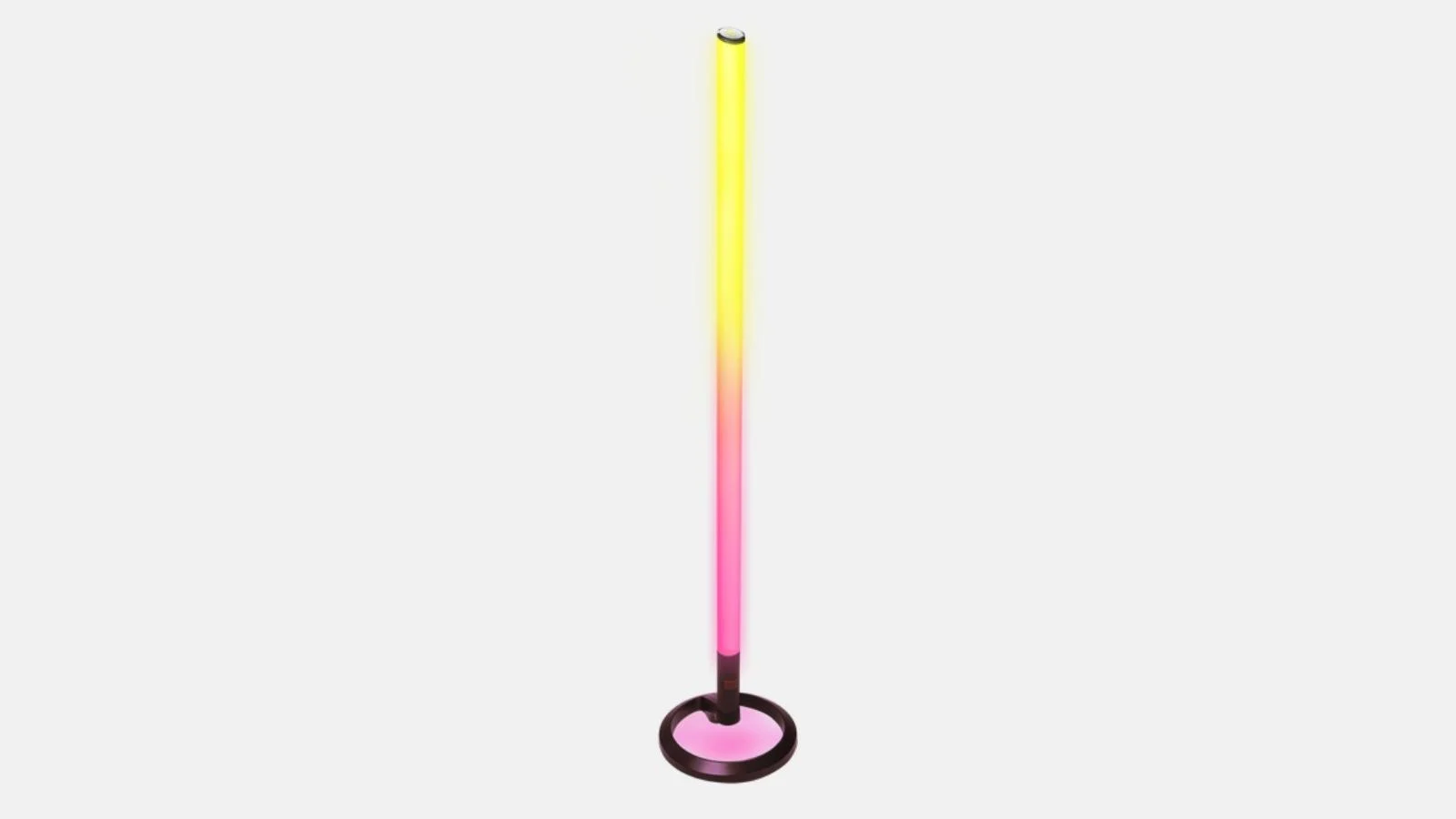
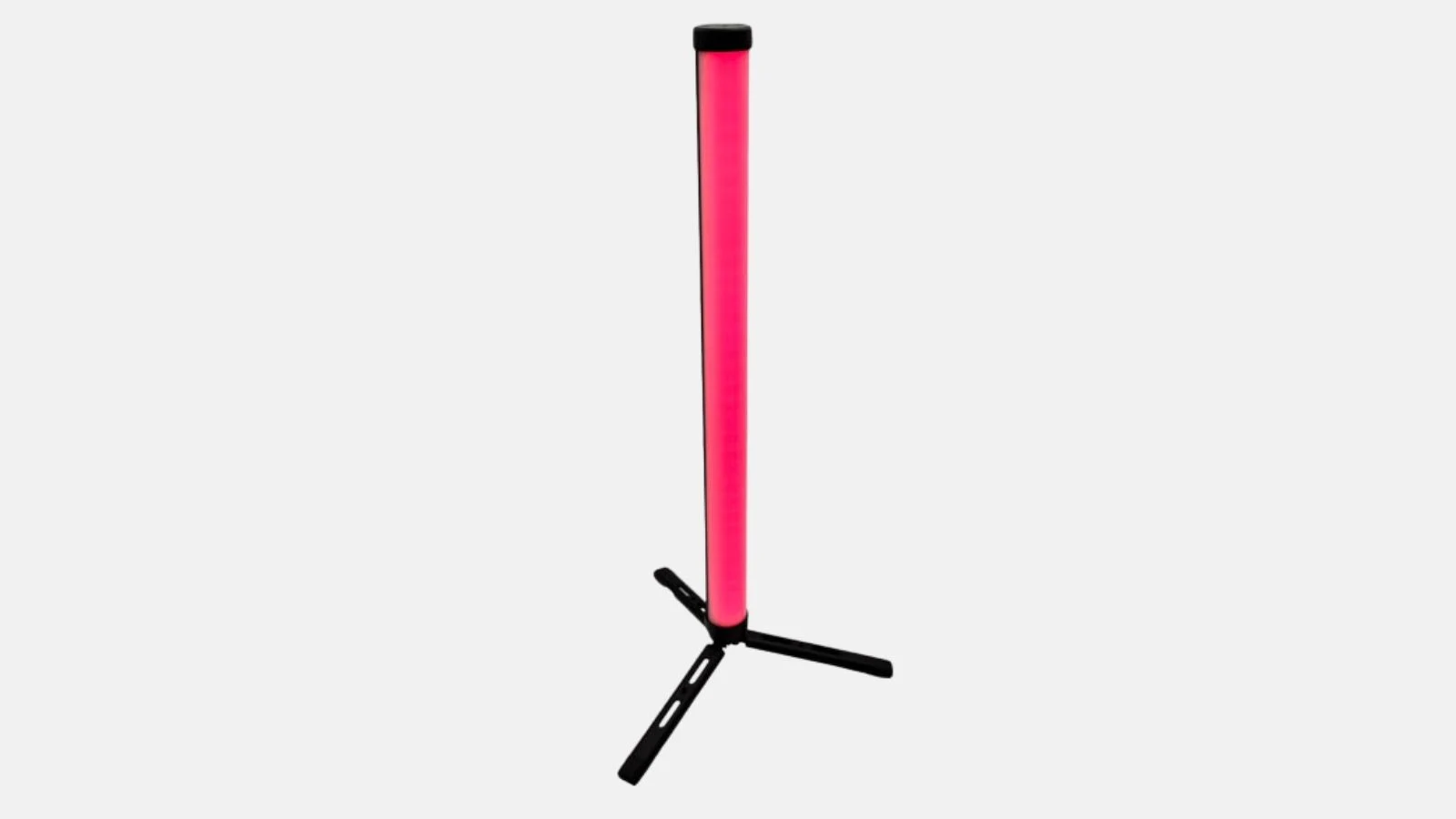
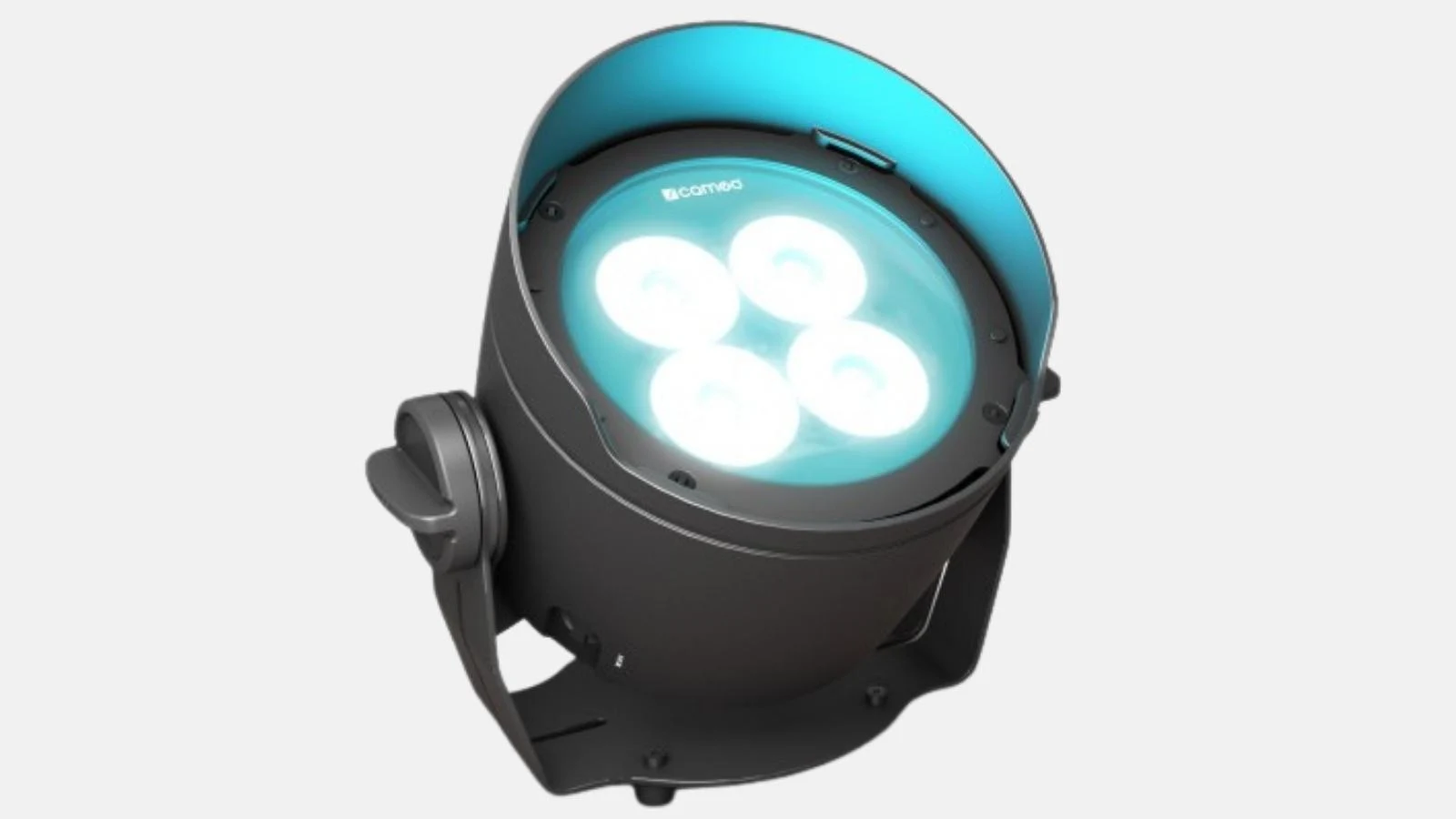
Renty rents out uplights and light tubes for ambient lighting starting at €17.90 per day, both types available with battery or for power outlets, remote control included. You can book online and pick up for free or have the lighting delivered and set up for you. You can see which lights are available for your date directly in the catalog.

A hall looks flat under ceiling lighting. The light comes from above, hits everything with equal intensity, and leaves surfaces, corners, and the ceiling at the same brightness. This is exactly what robs a location of its depth, and increasing the brightness doesn't change that.
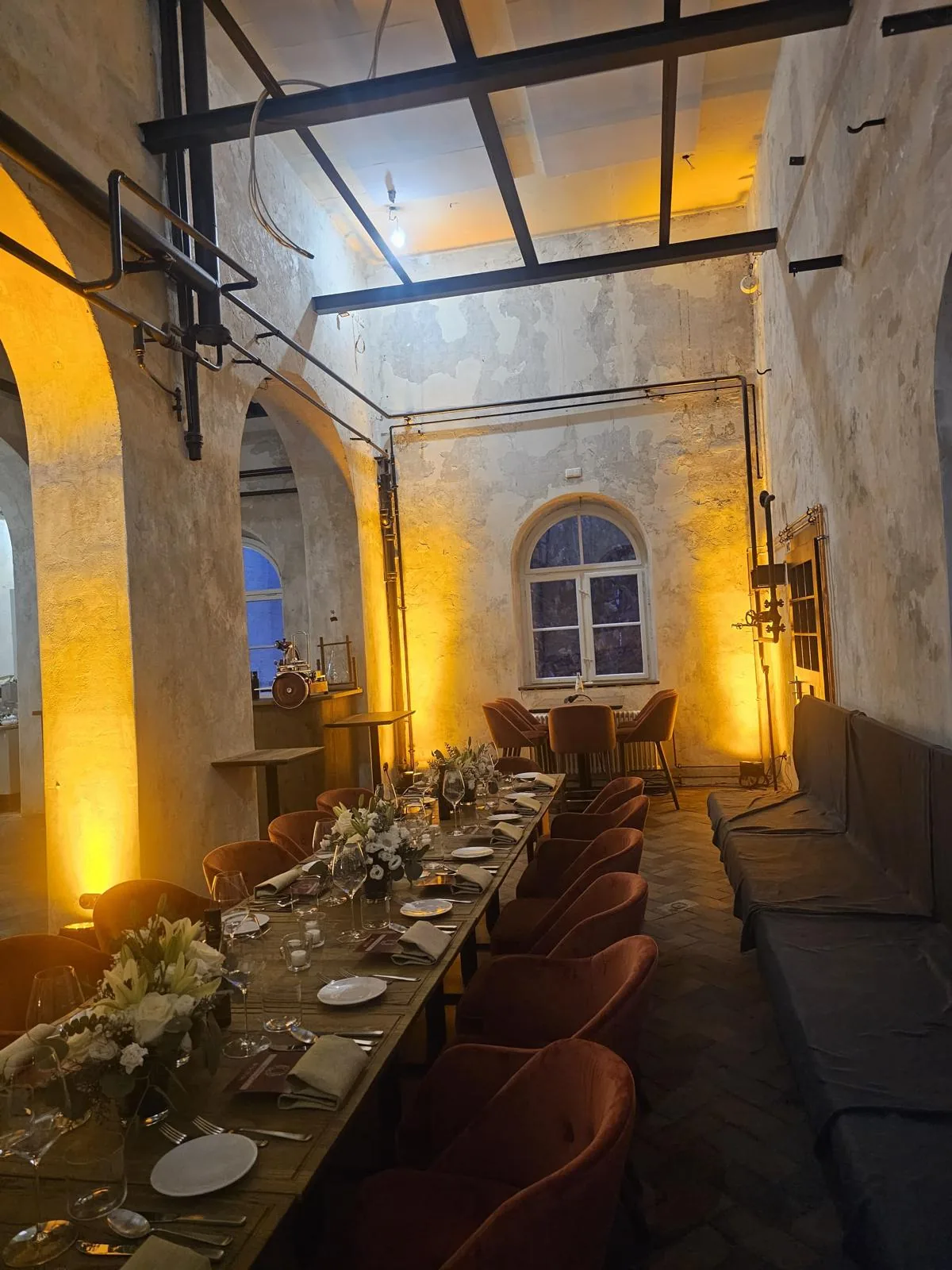
Ambient lighting reverses the direction. An uplight stands on the floor as a floor spot and casts its beam up the surface, while a light tube stands freely and glows itself. Both create bright and dark zones, and it is this contrast that creates depth. The ceiling remains dark, which makes the hall feel both taller and more intimate. Professionals call this type of illumination "uplighting."
The second effect is color. Warm amber makes wood and fabric look soft, while cold blue makes a hall look technical and vast. The same location can host two completely different evenings without anyone moving a single piece of furniture. Atmosphere is created here through contrast and color, not through more lumens.


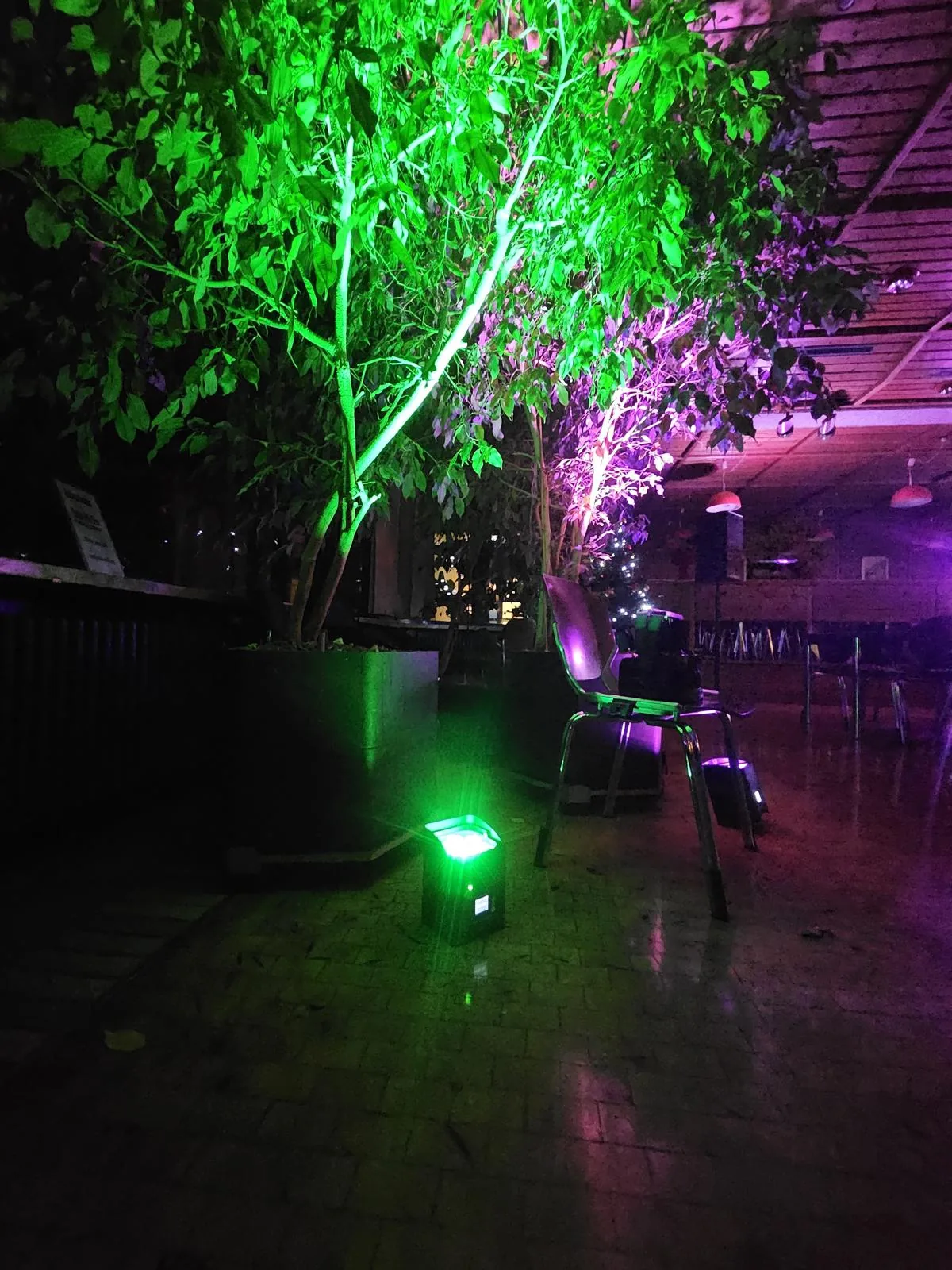


Three questions, and then the design is clear. This guide doesn't suggest a single product, but rather the type of light that suits your event. You can see which versions are available in the catalog afterward. Both types are available as individual units or in sets. For a small party, one is enough; for a larger event, plan for several.
Weddings are the most common event for ambient lighting, and for a reason that other occasions don't have: the room is occupied in the afternoon in daylight and is completely different by midnight. Uplights along the edges of the room handle this transition because you can run them at low intensity during the day and at full power from the evening onwards.
In practical terms, this means: set up the devices in the morning while the venue is still empty and don't touch them again until the evening. Because nothing is plugged into a power outlet, there are no cables lying across the path to the dance floor. This is where battery operation makes the difference, not the light output.
How the day unfolds from the ceremony to the midnight surprise is covered in our Wedding overview. For corporate events, the same technology applies but with a more sober tone; there, the ambiance is more about the brand than the mood—see Corporate event.

The room is illuminated, guests are dancing, and the atmosphere is at its peak. Wedding lighting that always fits.
There are three groups that are constantly confused in everyday life. Ambient lighting colors surfaces and remains static. Lighting effects move, flash, or rotate and belong on the dance floor. They are the loudest part of lighting technology, while ambient lighting is the quietest. A spotlight is used to specifically illuminate a person or a stage. This page exclusively features the first group.
Specifically, this means: moving heads, LED bars, and strobes are lighting effects and are not in this catalog, even though they belong to the same lighting technology category. LED floodlights, LED spots, and pinspots belong to the stage; such spots and every narrow-beam LED projector illuminate specific areas rather than surfaces, as does an LED projector with a narrow beam. A complete lighting system with a console and truss forms its own category, in addition to ready-made lighting sets and packages for an entire light show. We do not rent out string lights; you can buy them cheaper than you can rent them. Ready-made stage lighting sets and complete lighting systems also do not belong here.
A detailed classification of LED technology can be found in our guide LED lights in comparison. Everything that blinks, rotates, or reacts to the beat can be found under Party lighting, and an overview of all lighting technology, including lighting systems, spots, and floodlights, is available under Lighting technology.
Prices start at €29.90 per day for a set of two uplights. A rental day is a full 24 hours from pickup, not a calendar day. Day 1 is charged at the base price, and every additional day is 15% of that, meaning the daily rental rate decreases with the duration of the rental. The rental includes a remote control, charger, and all-risk insurance.
The calculation is per set, not per light. If you are lighting an entire hall, you book multiple sets, and from the second rental day onwards, the surcharge applies equally to each of them. Compared to the costs of an event, this is a small item: the rental for four sets costs less than a single table decoration for ten tables. The full pricing policy with calculation examples can be found under Prices.
| Set | Bild | Inhalt | 1 Tag | 3 Tage |
|---|---|---|---|---|
| Ambientlichter Set | 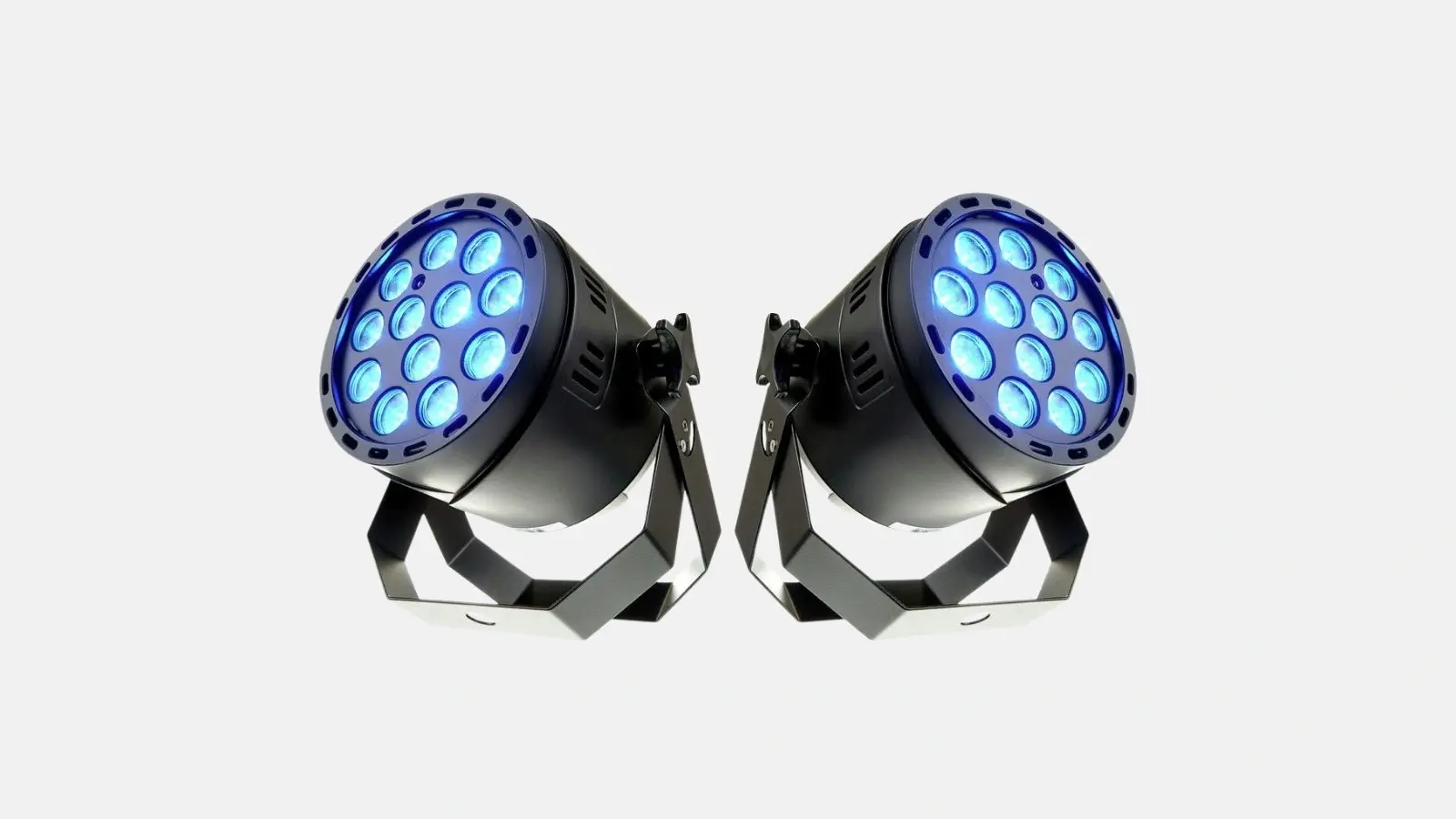 | 2 Akku-Ambientlichter | € 29,90 | € 38,87 |
| Eurolite Lichtröhren Set |  | 2 Akku-Lichtröhren | € 39,90 | € 51,87 |
You pick up the equipment from the location in your city and set it up yourself. Everything is prepared for plug-and-play, and there is a video tutorial for every device.

We bring the equipment to your venue and pick it up again after the event. You can handle the connection and setup yourself; every device is prepared for it.
We set up the equipment on-site, handle the cabling, configure the sound and lighting, and dismantle everything after the event. You receive a fully configured system ready to go.

A technician stays on-site during the event, responds to changes in the schedule, and handles the teardown afterward. The safest option for speeches and presentations.
Enter your city and date in the catalog above to see what is available.
Select your equipment and set the rental days; the price is displayed immediately.
Book online, with no deposit and no need for email inquiries.
Pick up with a briefing or have it delivered and set up for you.
Describe your event and we will suggest the right equipment for you. Our consultation is free of charge.
Available daily from 8:00 AM to 10:00 PM.
How much does the lighting cost per day?
How long does the battery last?
Do you need a wall outlet?
How many uplights do you need?
What is ambient lighting suitable for at a party?
Which colors can be set?
Does the lighting work outdoors?
What is the difference between an uplight and a light tube?
Can you control the lighting yourself?
How do you find out if something is available for your date?
Ambient light refers to the light that colors a location and gives it depth, as opposed to ceiling task lighting and dance floor light effects. We offer two types for rent: uplights (floor spots) that illuminate a surface from the ground, and light tubes that stand freely and glow themselves. Both use LED technology and come with a remote control, available either battery-powered or for a power outlet. Ambient lighting, mood lighting, and ambiance are just different names for the same thing, and LED lighting is the standard today.
The choice depends on the room. Long, straight surfaces and high ceilings are a case for uplights because the beam needs space to travel upwards. Open areas without straight sides—such as tents, barns, and terraces—are a case for tubes, because they light up themselves and don't need a surface to shine on. Most events combine both, and for outdoor areas, the IP rating also comes into play.
Classification in lighting technology: ambient light is one of several categories. Alongside it are light effects for the dance floor, LED floodlights and LED spots for the stage, and complete lighting systems with consoles, trusses, and cabling. Anyone planning a full light show for an event needs several of these lighting categories, and therefore also spots and light effects. If you only want atmosphere, ambient light alone is sufficient, which is the standard for weddings or corporate parties.
Typical occasions include weddings, corporate parties, anniversaries, birthdays, parties, and trade fair booths, as well as any private celebration in a rented hall. The same technology works for every event; only the color choice differs. For a birthday party, one set is enough; for a hall with 200 guests, you will need several. As a complement to music, lighting is the most cost-effective way to create atmosphere: a set costs less than the decorations for a single table and transforms the entire room.
Limitations are part of it. Ambient light does not replace task lighting; you will still need ceiling lights for setting up and cleaning up. It also does not replace effect lighting; if you want a dance floor, you need moving lights. And it only works from dusk onwards: no uplight can compete with daylight coming through large windows; the only solution is to darken the room or wait for the evening.
Booking is done online. You select your city and dates, see immediately which devices are available, and complete the process without a deposit or email inquiry. Comprehensive insurance is included in the rental, as are the remote control and charger. All further rental information can be found on the pricing page. If you need help with setup, you can book assistance from a service technician.
The number doesn't depend on the square footage, but on the length of the area you want to illuminate. The rule of thumb from practice is: one device every two to three meters. Placed closer together, the beams of the floor spots merge into continuous illumination; further apart, they create individual pools of light, which also look good as accents.
This table is a starting point, not a precise measurement. Three things shift the requirements upward: ceilings over four meters, dark or wood-paneled surfaces, and any form of ambient light. It shifts downward for bright, smooth surfaces. When in doubt, it is better to plan for one extra set; the surcharge is smaller than the difference in the final look. As a basis, this calculation works for any event, from a birthday party to a corporate function.
Both types are available in two versions: battery-powered and for the power outlet. If you are working next to an outlet anyway, a mains-powered device is cheaper and requires no charging. Everywhere else, battery operation determines whether lighting is even possible.
The reason is the wiring. Room lighting requires devices where there are no power outlets—in the middle of an area, behind a pillar, or at the edge of a tent. With mains power, that means extension cords across the room, cable ramps or tape, and in many venues, a conversation with the facility manager.
Battery operation eliminates all of that. The device arrives charged; you place it where you want it or on a stand and switch it on. It takes ten minutes and requires no electrical expertise. You have lighting at the touch of a button.
Battery runtimes vary significantly, and all specifications apply to the most energy-efficient mode. Color changes consume more power than a static color, and full brightness uses more than half. Therefore, plan for the lower end of the range if the evening is going to be long. A unit that needs to be plugged in for an hour during the event is not an emergency, but standard practice for long events.
Every rental unit mixes its colors using individual LEDs. How good this looks depends less on the number of colors and more on whether a dedicated white LED is included. Without a dedicated white, warm white is mixed from red and green, resulting in a reddish tint that is immediately noticeable on a light-colored surface. This doesn't matter for color accents, but it does for broad warm white lighting. The environment also plays a role: the same warm white looks different against a beige surface than it does against concrete.
The standard approach. Select color and brightness directly, with no preparation or technical knowledge required. Included with every set.
The unit changes color to the beat. This is rarely the right choice for ambient lighting, as restless light makes a room feel smaller rather than larger.
The standard for lighting technology if a console is already in use. Individual models feature an XLR connection for this purpose and can then be controlled together with spotlights and lighting effects.
Without a console, you set each unit to the same color individually. It sounds tedious, but it takes less than two minutes for eight units and stays set for the entire evening.
Calculate how much space your guests need. This determines how many units you should place along the wall.
Which type of lighting is intended for what purpose, including a breakdown of ambient light, lighting effects, and stage lighting.
Everything that flashes, rotates, and reacts to the beat. The polar opposite of calm, static lighting.
An overview of all lighting technology categories, from spots to complete lighting systems: Lighting Technology
Find the right ambient lighting to rent in your area

Wir haben dir eine Mail geschickt, bitte bestätige sie um den Rabattcode zu erhalten.