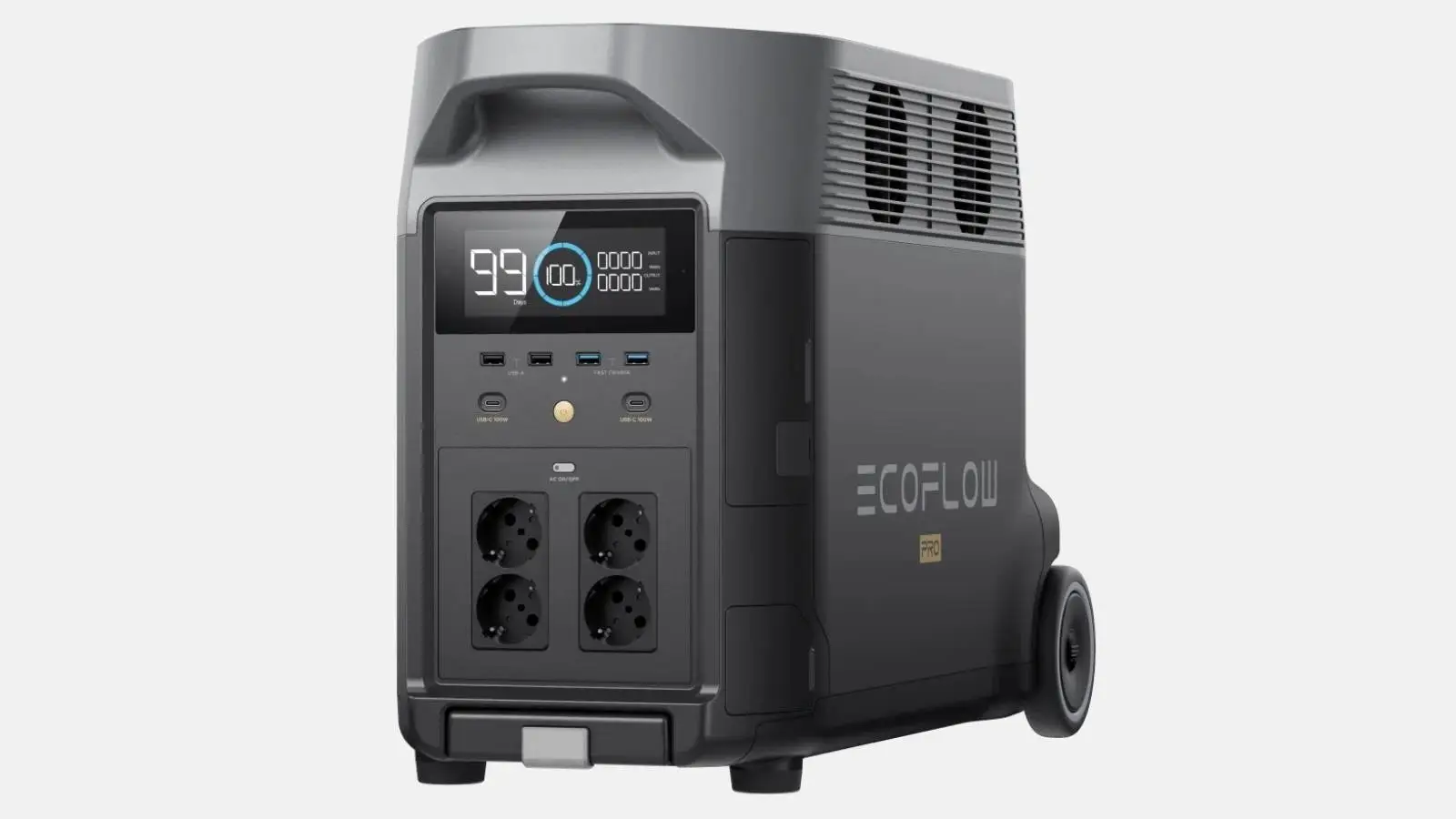
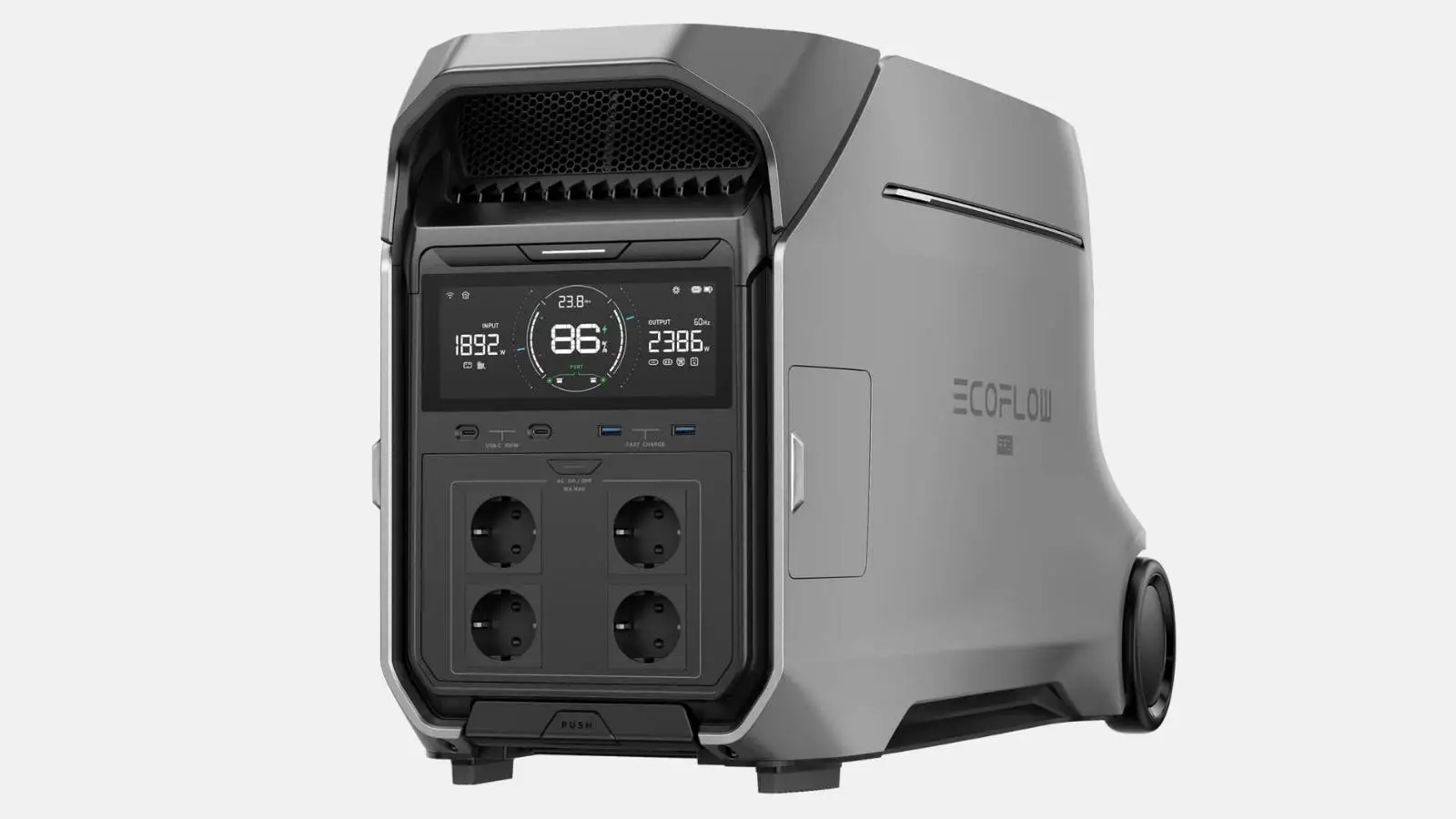
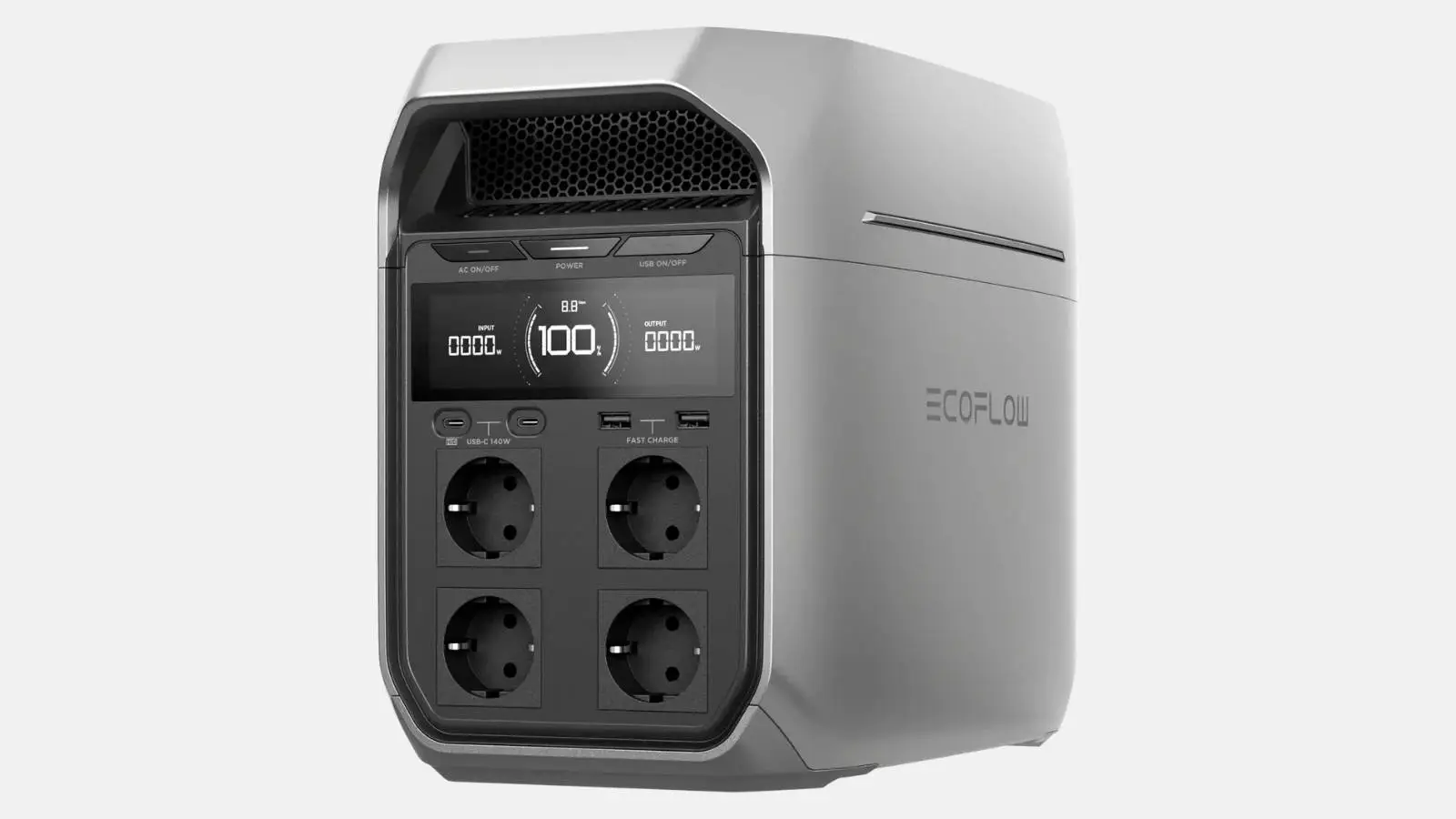
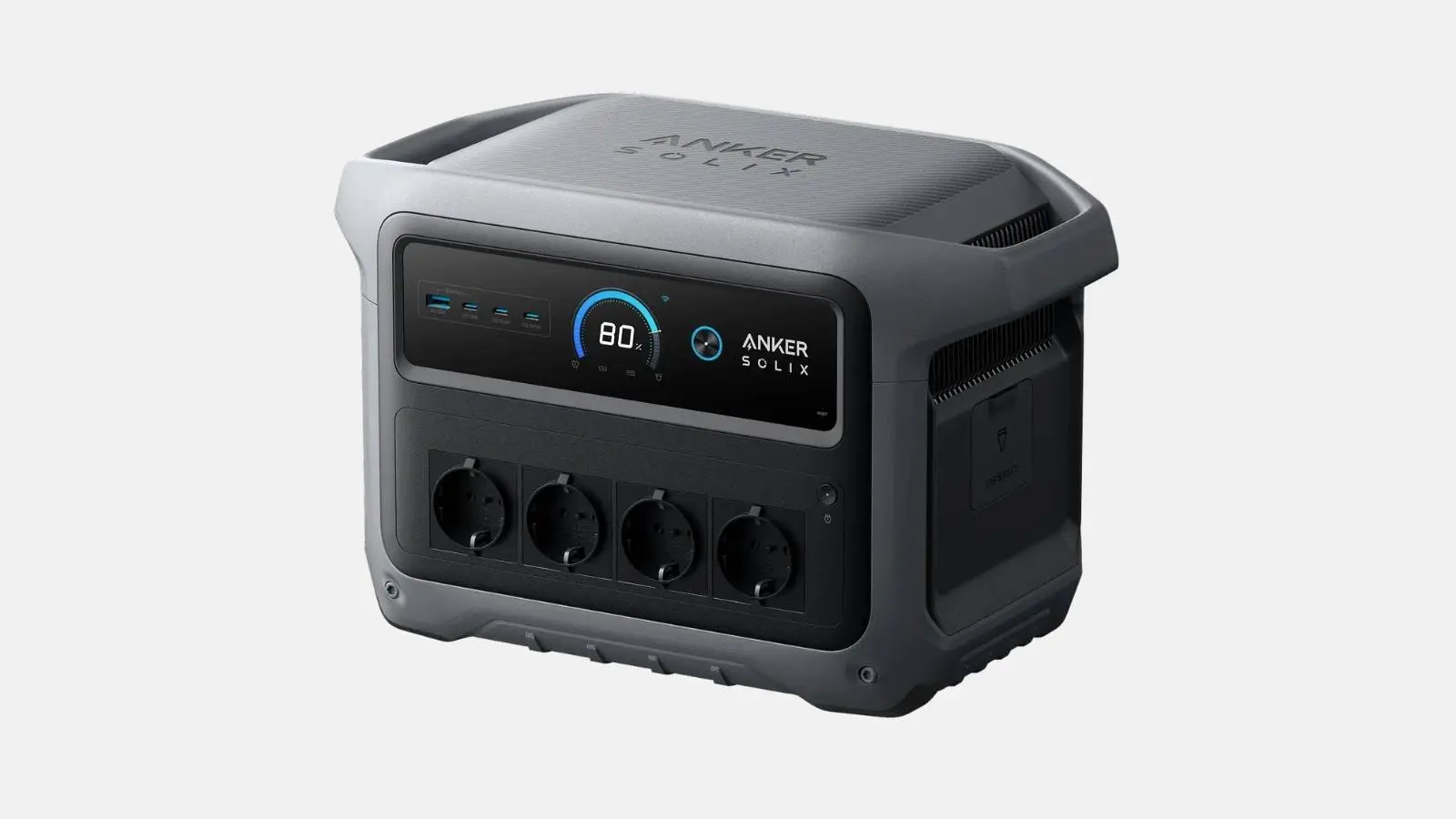
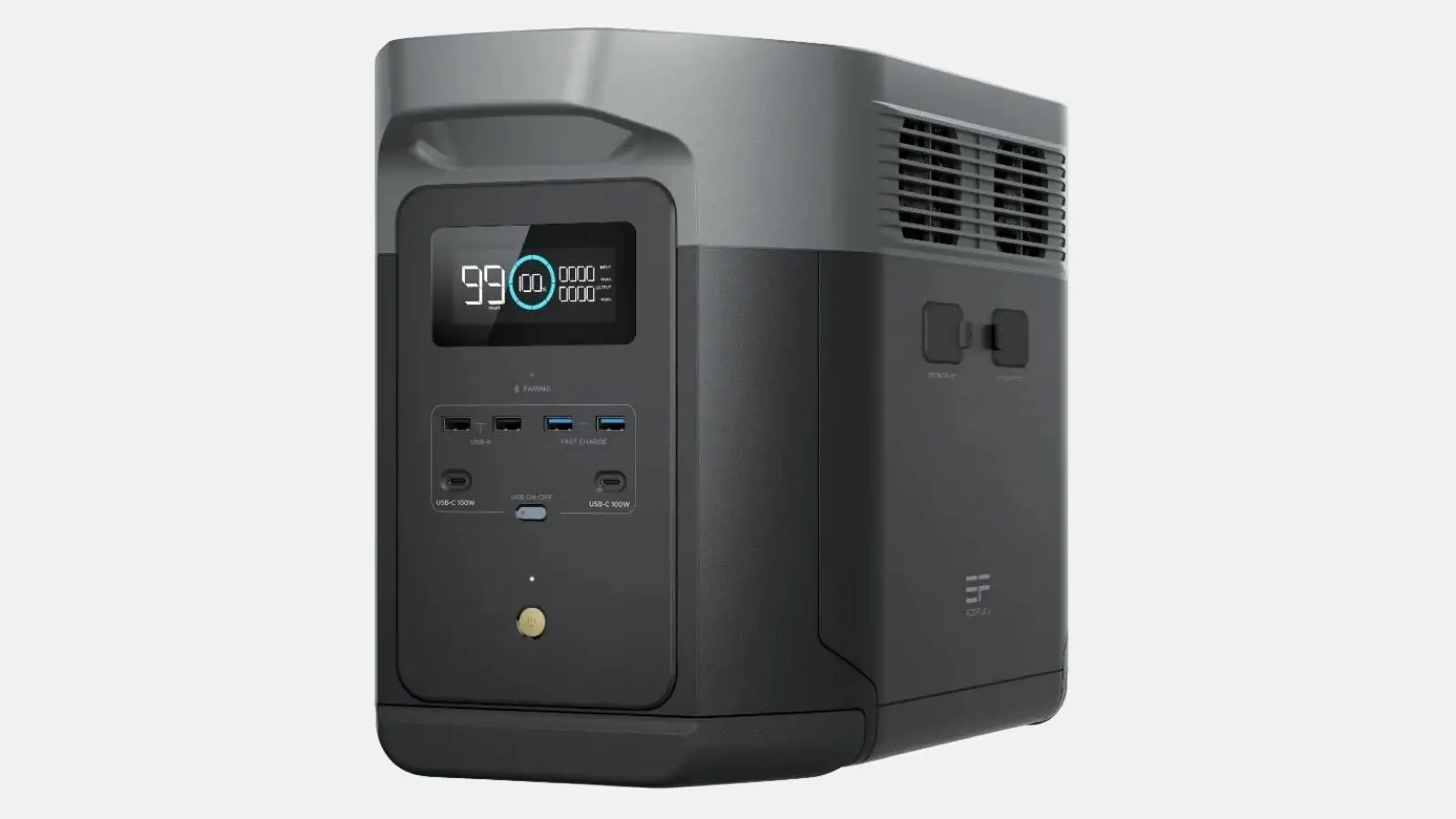
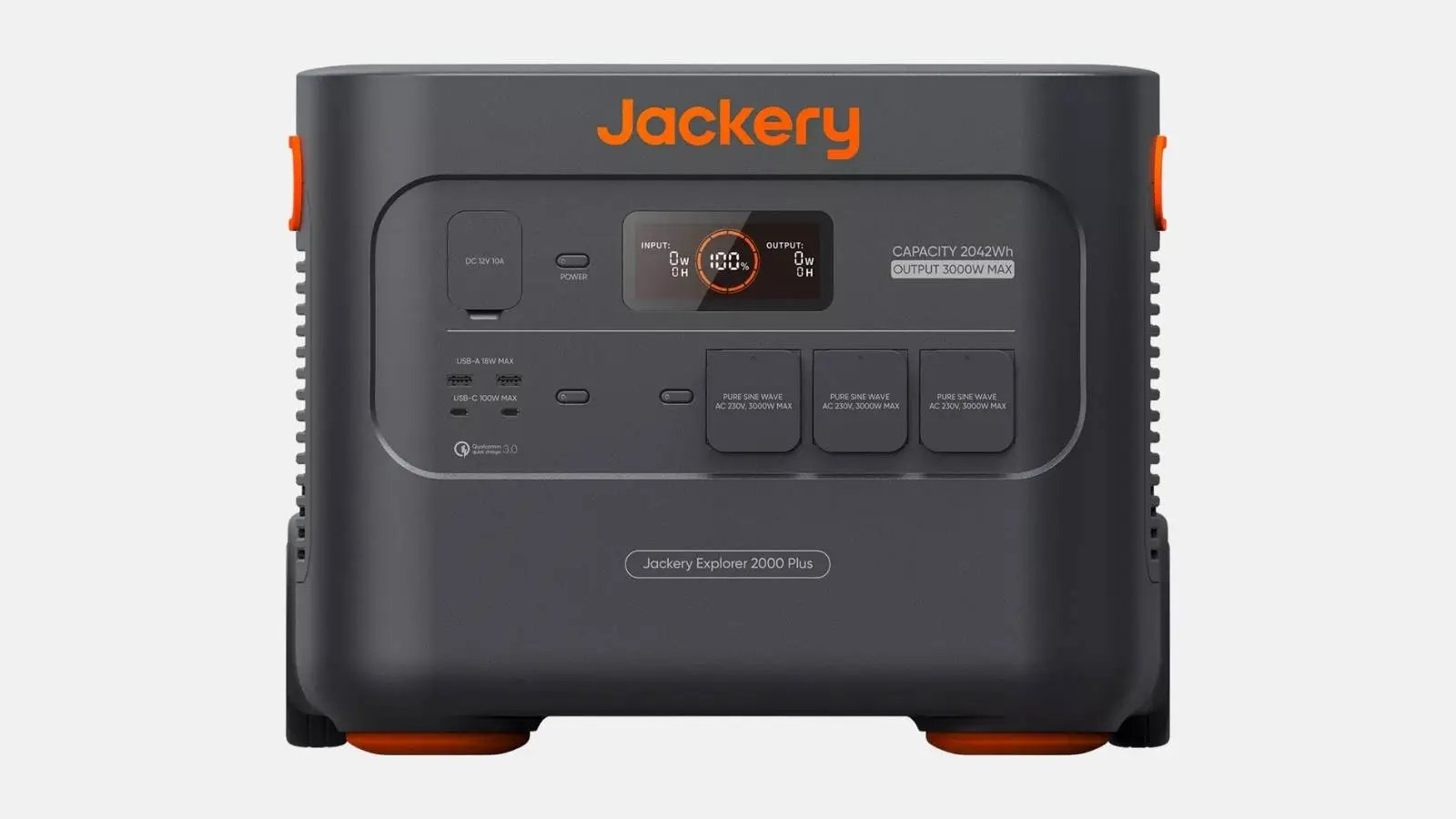
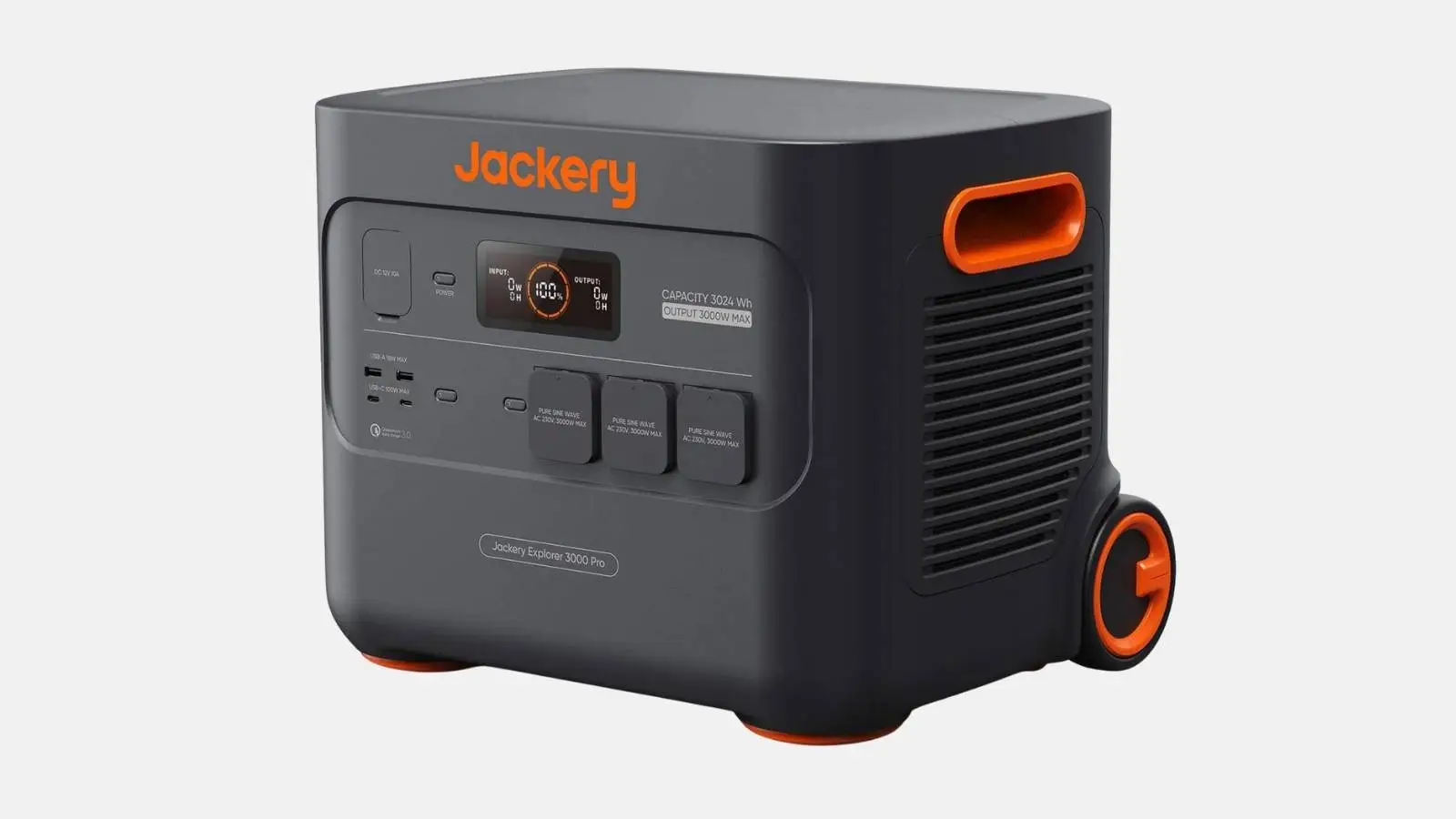
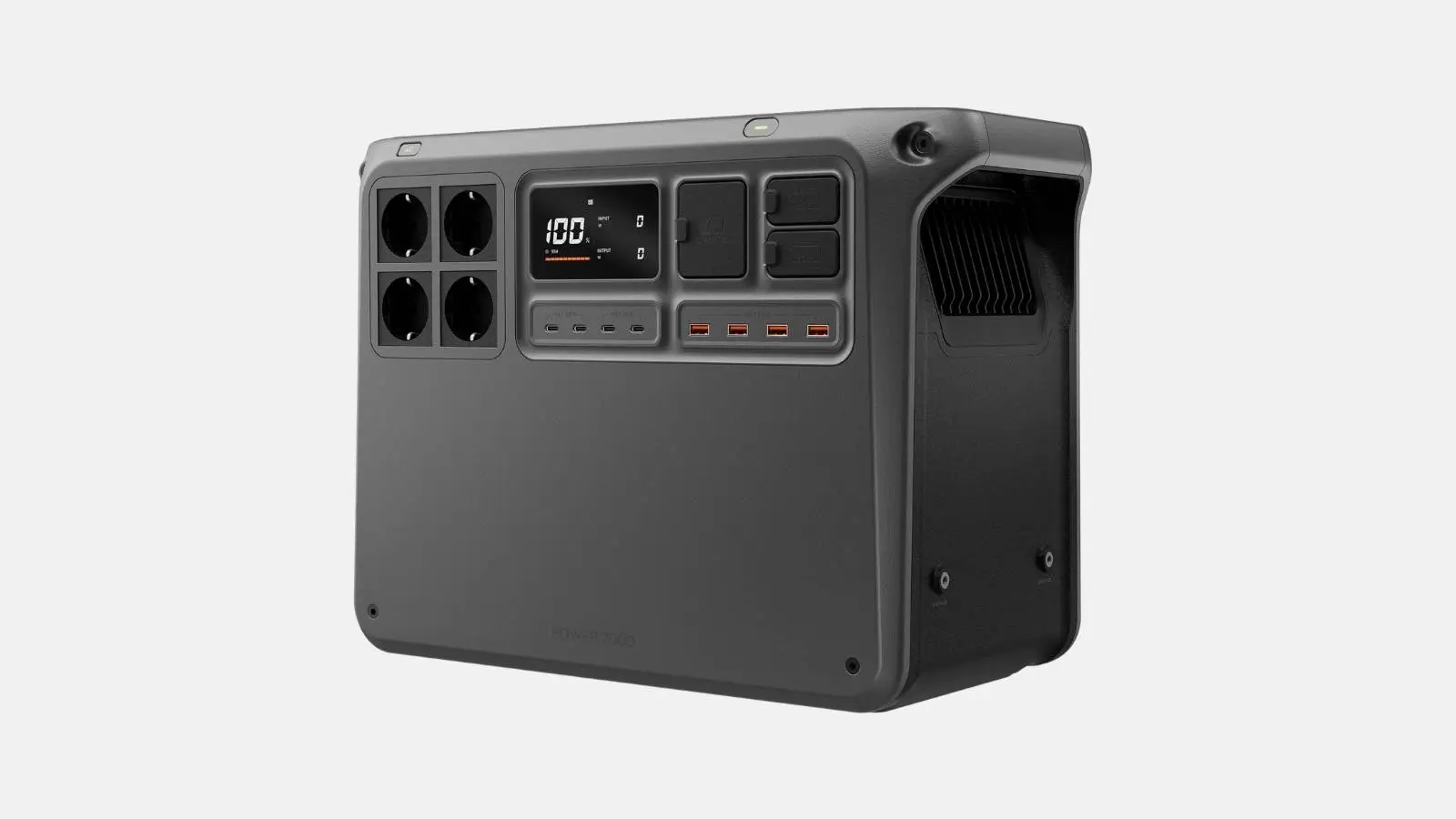
Renty rents out compact and large power stations starting at €29.90 per day. You can book online and pick up for free or have the power station delivered to you. You can see which power stations are available for your dates directly in the catalog.

A power station is a large battery—essentially a power bank with built-in standard electrical outlets. It also includes outputs for USB-C, USB-A, and 12-volt connections like those in a car. It converts the power from the battery into 230 volts, so you can plug in your devices just like you do at home. Operation is plug-and-play: turn it on, plug it in, and you're ready to go.
Two numbers determine your choice. The continuous power output in watts indicates how much power all your devices can draw at once. The capacity in watt-hours indicates how much energy is stored in the battery and, therefore, how long the power will last. A 512 Wh power station can power two speakers and a mixing console for background music for about three hours.


Three questions determine the selection: how many guests are attending, how long the power needs to last, and what will be plugged into the power station. Laptops, mobile phones, and lights run fine on a compact power station. Music for many hours requires more capacity, and a PA system with a subwoofer requires more power.
A power station is in demand wherever there is no wall outlet within reach: at outdoor events like festival campsites, garden parties at the far end of the lawn, or market stalls. For an outdoor wedding ceremony, it is also important that no engine is humming when the vows are spoken into the microphone. Where noise regulations apply, such as in residential areas, it is the quiet choice anyway.
Generators with internal combustion engines should never be used in enclosed spaces due to exhaust fumes. A power station, on the other hand, can be placed inside a marquee, a hall, or under a pavilion. This makes it ideal for events where guests are seated close to the equipment.

The power station features 230V outlets for large appliances like refrigerators, as well as USB ports for smaller devices like smartphones.
Both are mobile power sources that provide 230 volts wherever there is no wall outlet. A power station draws electricity from a battery, while a generator produces it using an internal combustion engine, usually fueled by gasoline. This leads to the differences shown in the table.
For music, lighting, and laptops near your guests, a power station is usually the better choice. If you are running a large sound system for many hours with higher power requirements, you will need a fixed power connection or a generator placed at a distance outdoors. Describe your event in a free quote request, and we will tell you which option is the right fit.
A detailed comparison, including rules for festival grounds, can be found in our guide: Power at the Festival.
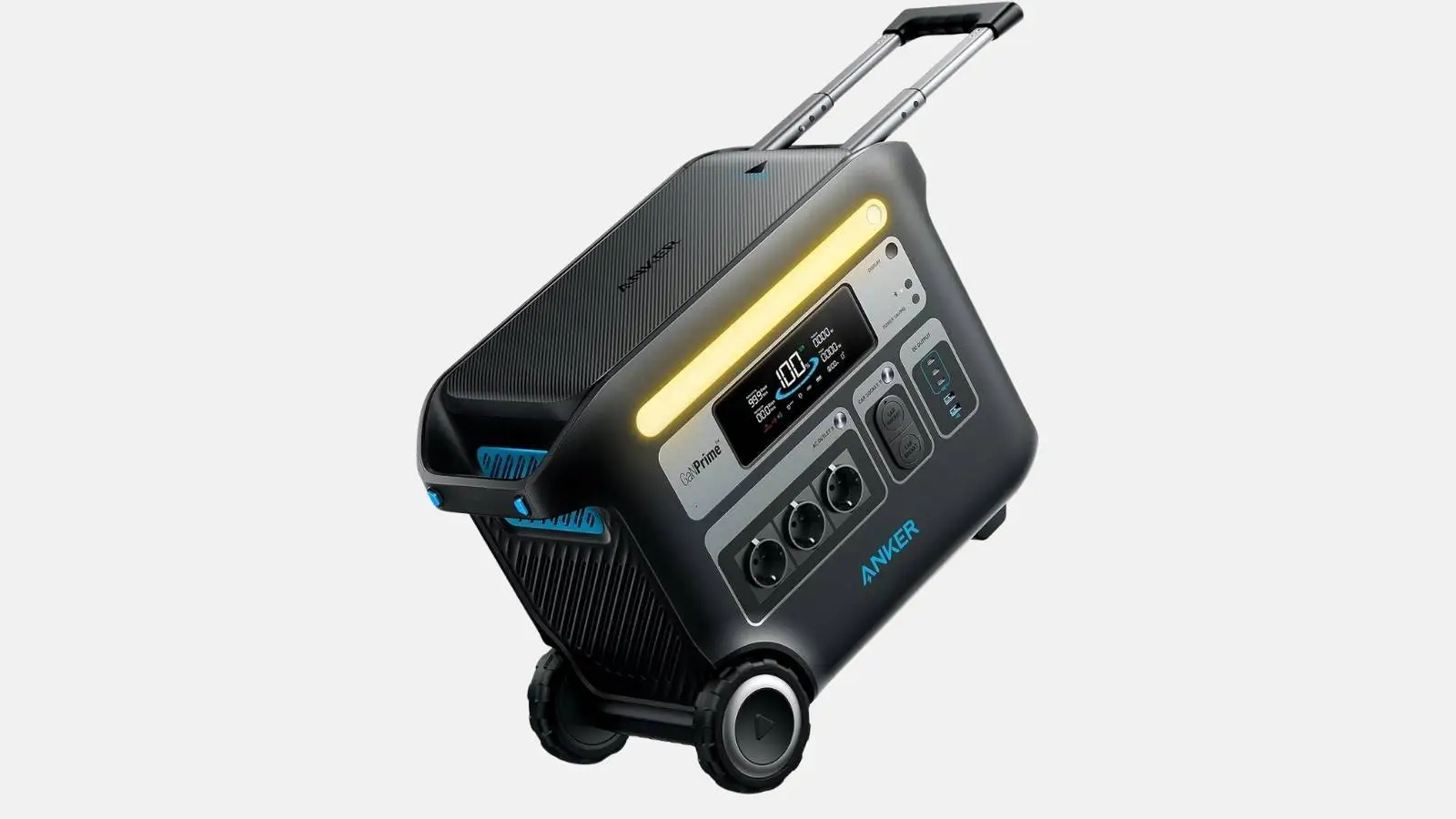
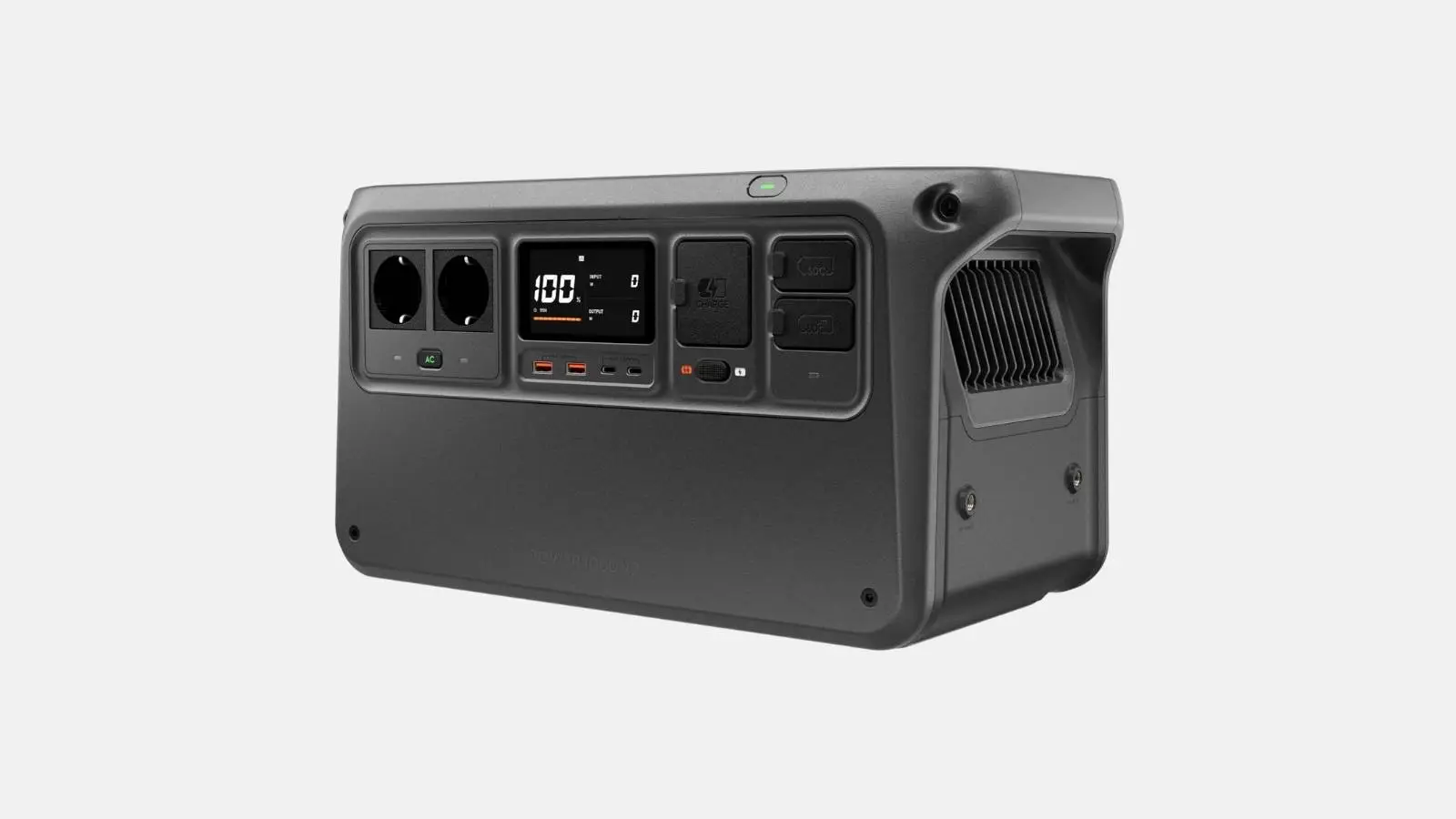
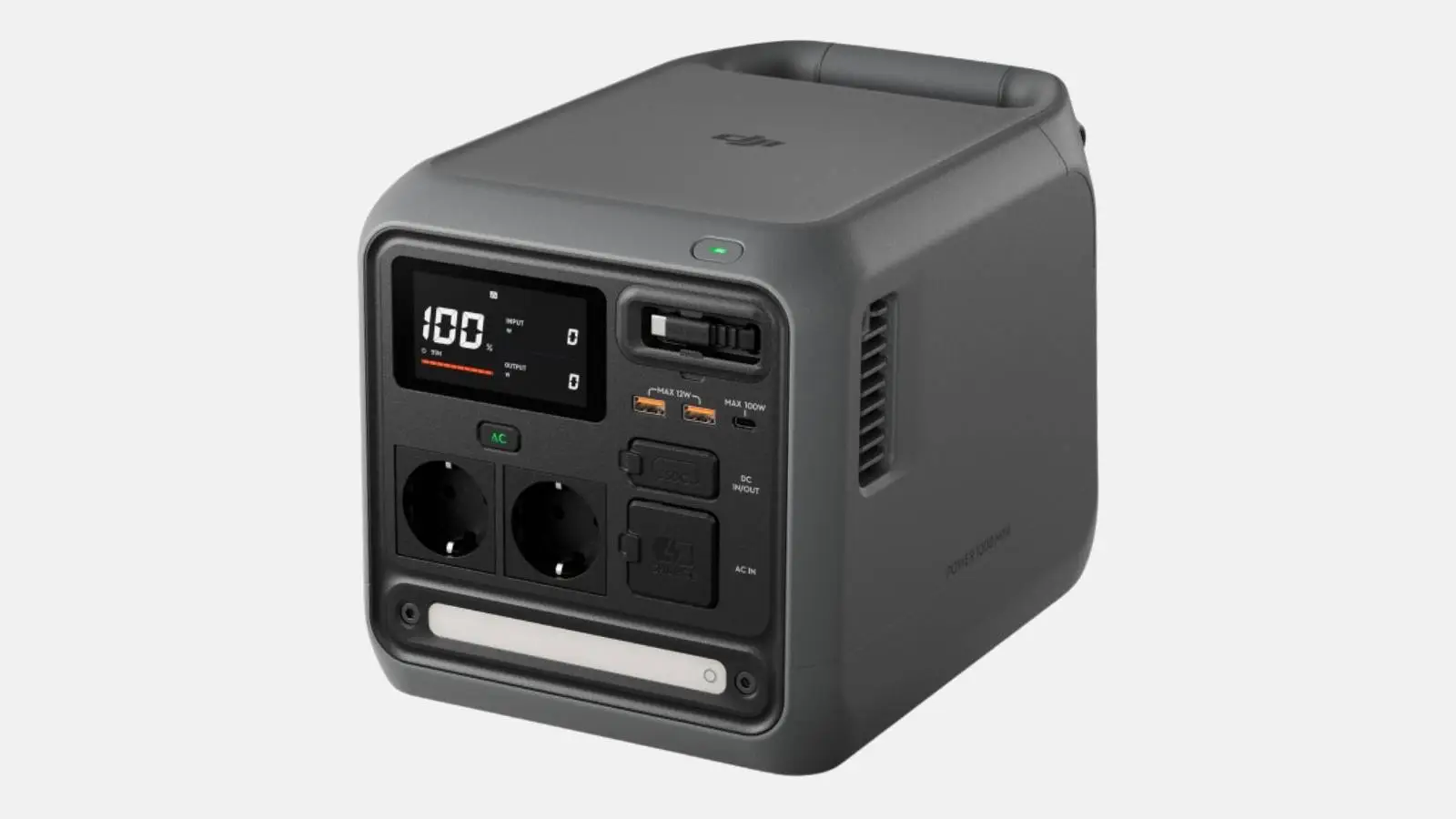
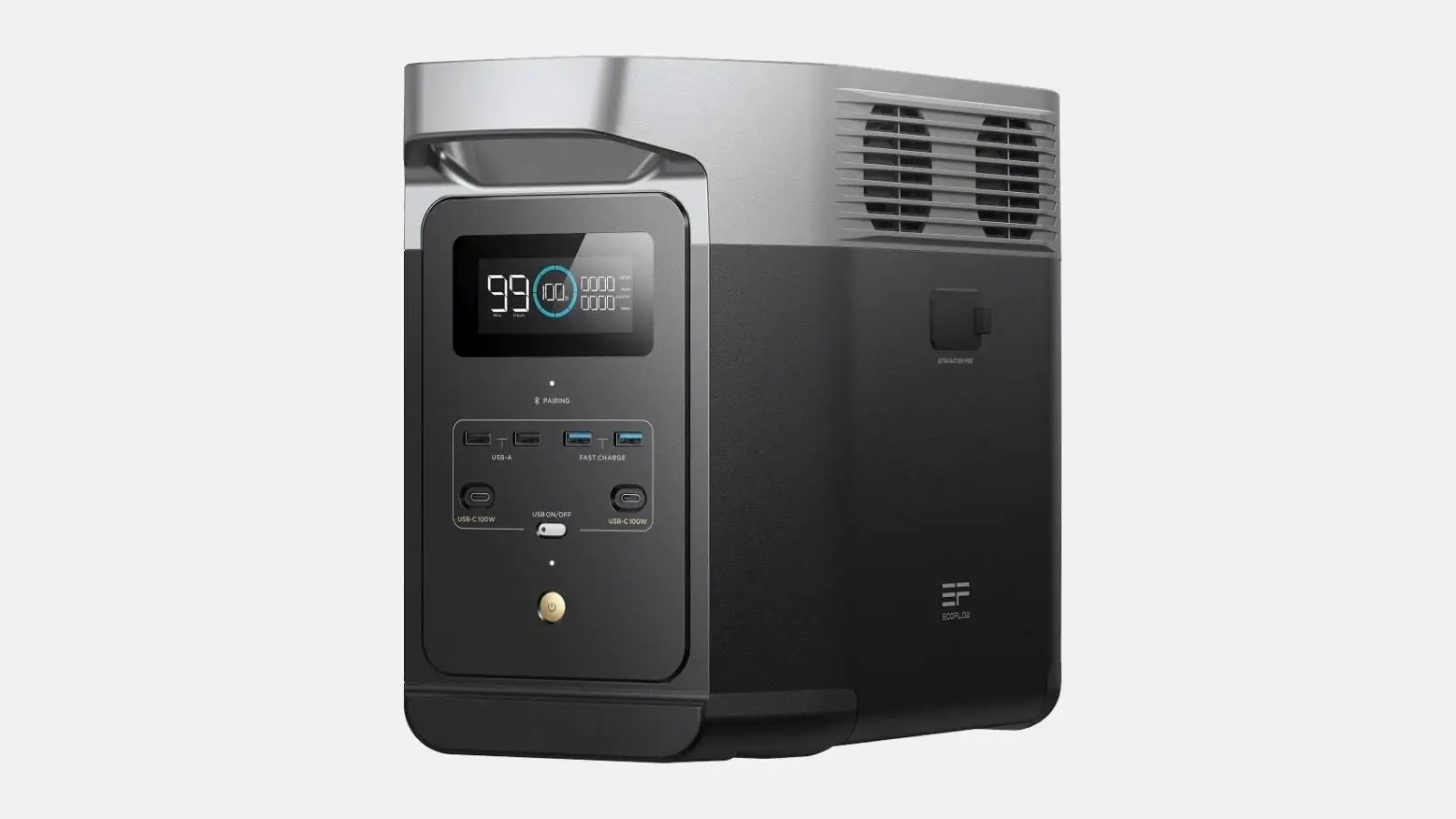
Renting a power station starts at €29.90 per day, for which you get the EcoFlow River 3 Plus. The Anker PowerHouse 535 and EcoFlow River 2 Max cost €34.90 each, and power stations with 768 to 858 Wh cost €49.90. The first day is charged at the base price, and each additional 24-hour day is 15% of that, meaning the daily rate decreases with the rental duration.
All prices are gross, include insurance, and require no deposit. You can find the rest of our selection with prices on the catalog tiles, and the pricing rule with a calculation example under Prices.
If you pick up the power station on Friday evening and return it on Sunday evening, that counts as two rental days. For the PowerHouse 535, you would pay €40.14 for this period, or €66.31 for a full week.
| Powerstation | Bild | Kapazität und Leistung | 1 Tag | 3 Tage |
|---|---|---|---|---|
| EcoFlow River 3 Plus |  | 286 Wh, 600 W | € 29,90 | € 38,87 |
| Anker PowerHouse 535 |  | 512 Wh, 500 W | € 34,90 | € 45,37 |
| EcoFlow River 2 Max |  | 512 Wh, 500 W | € 34,90 | € 45,37 |
| Anker Solix C800X |  | 768 Wh, 1.200 W | € 49,90 | € 64,87 |
| EcoFlow River 3 Max Plus | 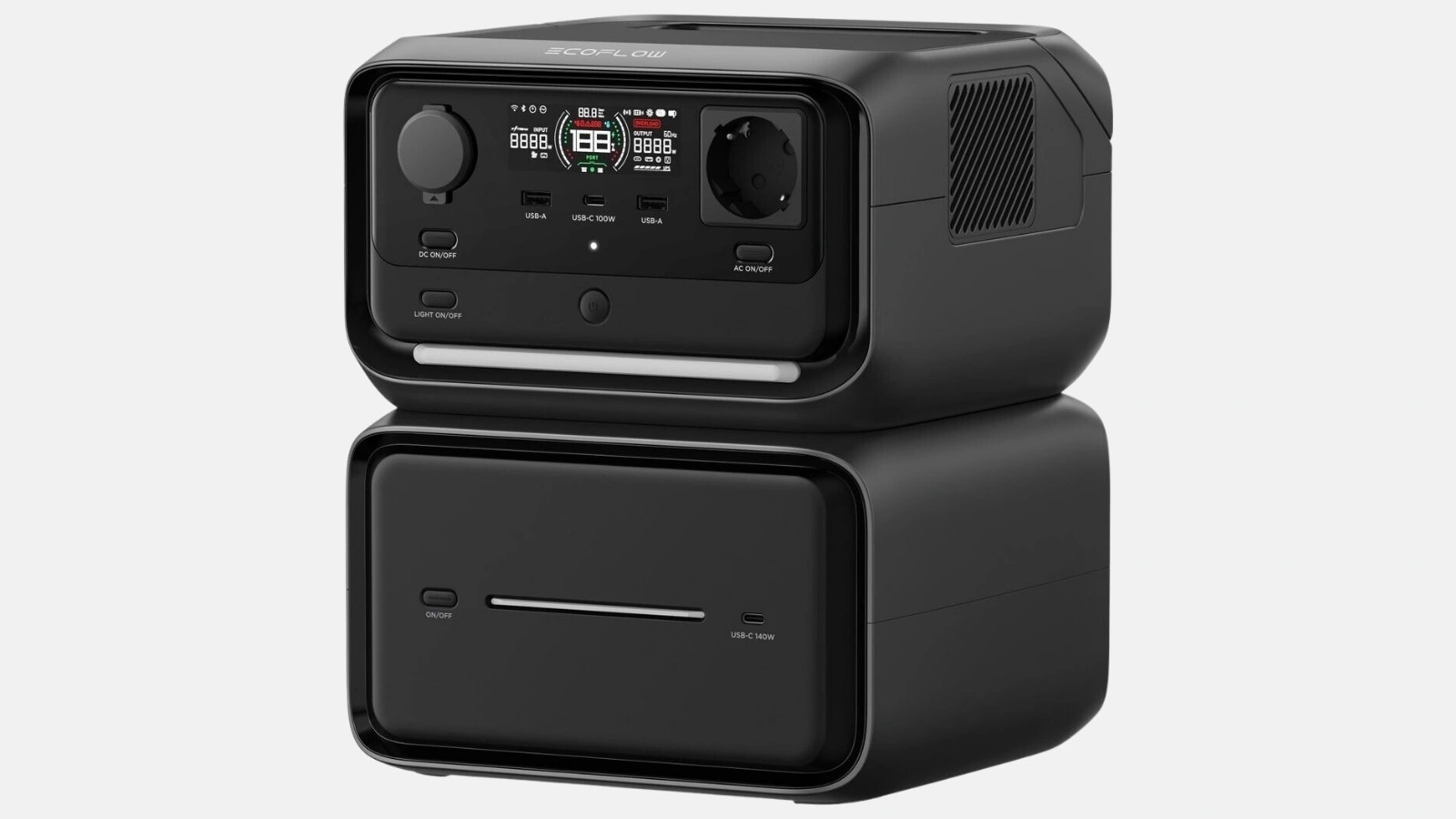 | 858 Wh, 600 W | € 49,90 | € 64,87 |
You pick up the equipment from the location in your city and set it up yourself. Everything is prepared for plug-and-play, and there is a video tutorial for every device.

We bring the equipment to your venue and pick it up again after the event. You can handle the connection and setup yourself; every device is prepared for it.
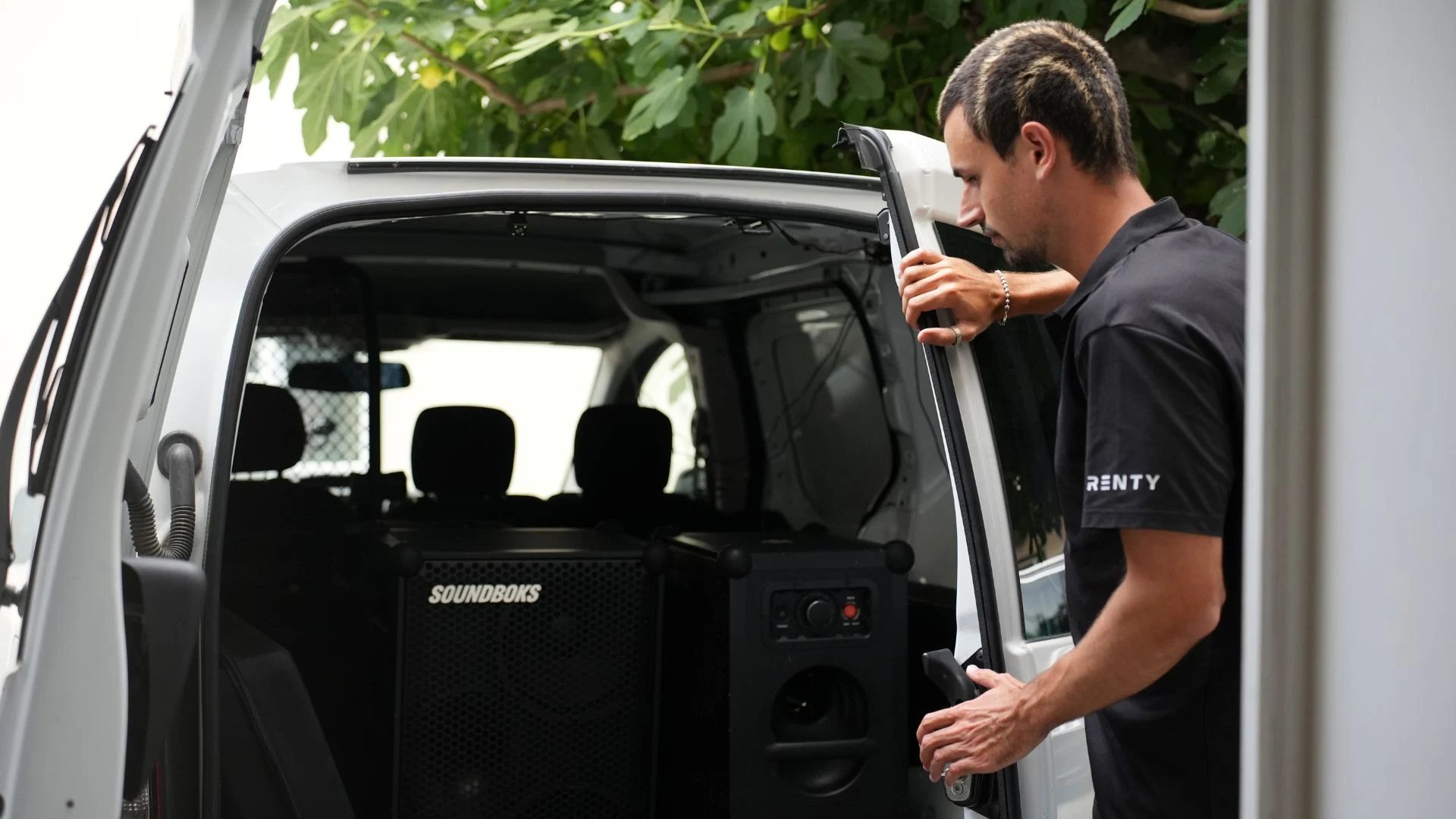
We set up the equipment on-site, handle the cabling, configure the sound and lighting, and dismantle everything after the event. You receive a fully configured system ready to go.

A technician stays on-site during the event, responds to changes in the schedule, and handles the teardown afterward. The safest option for speeches and presentations.
Enter your city and date in the catalog above to see what is available.
Select your equipment and set the rental days; the price is displayed immediately.
Book online, with no deposit and no need for email inquiries.
Pick up with a briefing or have it delivered and set up for you.
Describe your event and we will suggest the right equipment for you. Our consultation is free of charge.
Available daily from 8:00 AM to 10:00 PM.
How much does it cost to rent a power station?
Which power station is enough for music?
How long does a 500-watt power station last?
Can a power station run a refrigerator?
Can a power station be used indoors or inside a tent?
How much power does a power station need for camping?
How do you charge the power station?
Can you charge the power station with a solar panel?
What happens if too many devices are plugged into the power station?
How do you find out if a power station is available in your city?
Renting a power station is worth it for occasional outdoor events throughout the year, such as summer parties, festivals, or Christmas markets. You only pay for the days you actually need it. You can choose the size that fits your event—compact for a laptop and lights, or larger for music that lasts all day. We take care of storage and maintenance.
Renty provides event technology in person at 28 locations. Enter your city in the catalog to see the power stations available near you. Pickup is free, and our staff will show you how to operate the device when you collect it.
Compact power stations are portable and have a clear advantage when it comes to weight: the River 3 Plus weighs 4.7 kg, while the PowerHouse 535 is around 7.5 kg. Both fit into any trunk and can be carried to your spot by the handle.
If one power station isn't enough, it's better to use two smaller ones rather than one large one. This way, your music and lighting are on separate batteries. If one runs out, the other keeps going, so your power supply doesn't cut out completely.
Add up everything that will be running simultaneously, from the speaker to the projector. The total plus the reserve must not exceed the continuous power output of the power station. The power consumption calculator can calculate the values for your event equipment.
Every power adapter and rating plate shows how many watts a device draws. Add up all the devices that will be running at the same time.
Add 20% to the total. This leaves a buffer for louder music and for devices that briefly draw more power when switched on.
Watts determine whether everything can run at the same time. Watt-hours determine for how long. A large capacity doesn't help if the continuous power output is too low.
A PA system with a subwoofer draws a lot of power briefly with every bass beat. For this, you need at least 1,000 W of continuous power; you can find suitable systems under PA systems.
About 85% of the stated capacity is usable; the rest of the energy is lost during conversion to 230 volts. This turns 512 Wh into about 435 Wh. Divide this value by the wattage of your devices to get the runtime in hours.
At party volume, a sound system draws significantly more power than it does for background music, so expect a shorter runtime. The power station's display shows how many watts are currently flowing through the ports. This lets you see early on if the power supply will last until the end.
The limit is set by the continuous power output. Compact models usually manage 500–600 W, the Solix C800X 1,200 W, and large ones like the Bluetti AC200MAX 2,200 W. Anything that draws more than that continuously will cause the power station to shut down or drain it in a short time.
Fan heaters, radiant heaters, and kettles draw 1,000–2,000 W. Even if the power output is sufficient, the battery will be empty after a short time.
A fog machine draws as much power while heating up as its heating capacity indicates—1.6 kW for a 1,600 W device. Only a large power station can handle this; a compact one will not have enough power.
A sound system with two subwoofers for a packed dance floor requires more power than a single station can provide for hours on end. A fixed power connection is the reliable solution here; outdoors, a generator is also an option.
If you're running a lot of equipment from morning till night, even a large battery won't last without a recharge. Plan for a wall outlet to charge it, or split your devices between two power stations.
Calculate the total power draw of your devices to see which power station you need.
Everything for your camp in a checklist, from tents to tech—also available as a PDF.
Speakers and columns for the music powered by your station.
Projectors, screens, and everything else for visuals and presentations: Media technology

Wir haben dir eine Mail geschickt, bitte bestätige sie um den Rabattcode zu erhalten.