


Jakob Puck is a co-founder of Renty and writes about event planning for the Renty guide. Since 2014, he has worked as a DJ, event manager, and entrepreneur, supporting over 3,000 events. His focus is on scheduling, budgeting, and concepts for weddings, birthdays, and corporate events.

Jakob Puck is a co-founder of Renty, where he oversees business development, marketing, sales, and the development of the booking system. His experience in events began in 2014, first as a DJ and then as an organizer, conceptualizing and executing his own formats ranging from club nights and weddings to corporate events. It was during this time that he developed an eye for what actually causes a celebration to fail, and it is rarely the technology. It is unrealistic schedules, venues booked too late, and budgets with missing line items.
Jakob holds a Master’s degree in Entrepreneurship & Sales Management from the FH CAMPUS 02 in Graz. In 2022, he co-founded Renty in Graz with André Deutsch and Simon Illedits with the goal of making event technology bookable online instead of through email inquiries and cash deposits. To date, he has supported over 3,000 events.
In the Renty guide, Jakob writes about event planning: schedules and timelines, budget calculations, guest counts, and concepts for weddings, birthdays, garden parties, and corporate events. His articles require no prior knowledge and identify the areas where the effort is simply not worth it.


The basic equipment for a workshop consists of a moderator kit, flipchart or whiteboard, projector, and a way to document results. Everything else depends on the method and group size. Here are the checklists for materials, technology, room, and catering, categorized by in-person, online, and hybrid formats.

A wedding playlist follows the flow of the evening: calm for the reception, understated for dinner, and building up from the first dance. Plan for about 20 songs per hour and ensure there are no gaps between tracks. Here you will find the structure by phase, song suggestions, and the technology needed for a DIY playlist.
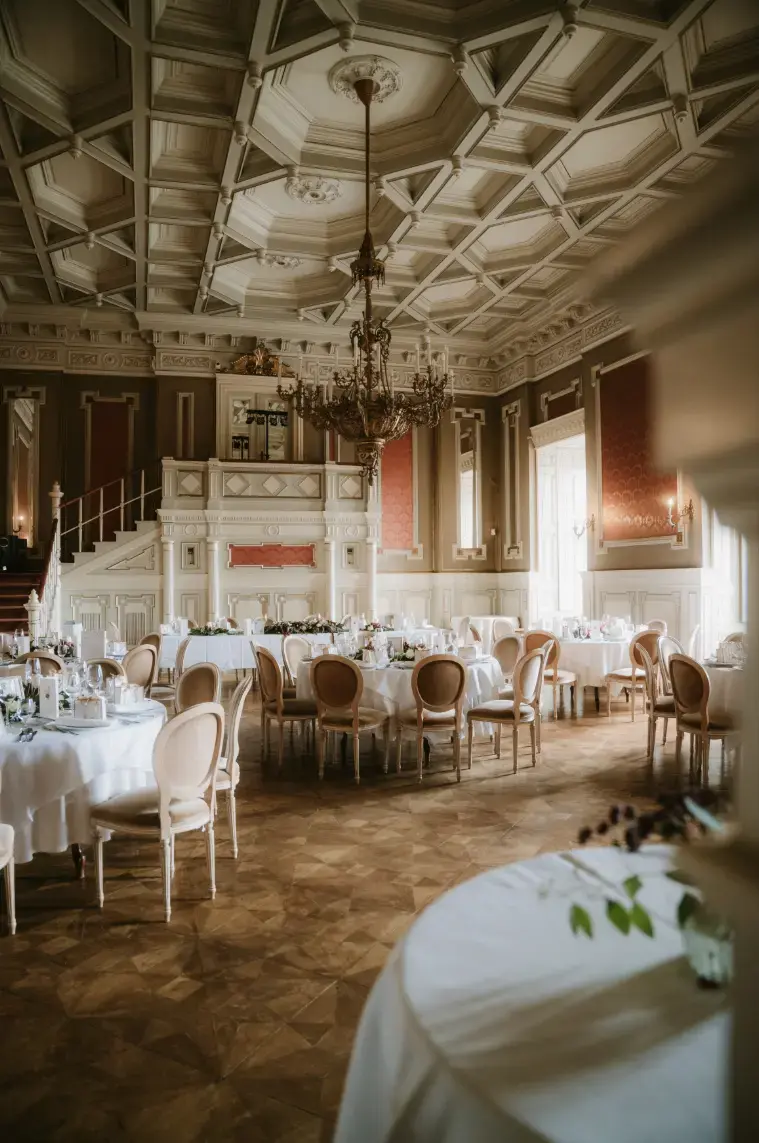
A wedding day consists of five blocks: getting ready, the ceremony, the champagne reception with a photo shoot, dinner, and the party. You need 15 to 30 minutes of buffer time between each block, otherwise a single delay will push through the entire day. Here you will find sample schedules with times for three different types of weddings.

You can tell a good theme party by how naturally the dress code, decor, and music fall into place. Themes where only the decor fits tend to fizzle out as the evening progresses. Here are 15 proven themes for adults, each with a dress code, decor elements, music style, and snacks, plus an overview based on effort.

A humanist wedding is a symbolic ceremony with no legal standing; a visit to the registry office remains necessary. The ceremony almost always follows the same sequence: entrance, welcome, wedding speech, ritual, vows with the "I do," ring exchange, and exit, lasting 30–45 minutes. Here you will find the timeline, cost breakdown, six rituals, and the technology needed for an outdoor ceremony.

A bachelor party is planned in four phases: brainstorming, setting the budget and date, booking, and finalizing the schedule. The most important rule is to clarify the budget before brainstorming, otherwise, people will drop out later. Here you will find roles, a timeline, activities, and a complete checklist.

A first dance song must meet three criteria: it means something to you, it is danceable, and it fits the mood of the moment. The tempo is more important than the genre. Here you will find song lists by style, plus tips on length, starting, and transitioning into the party.
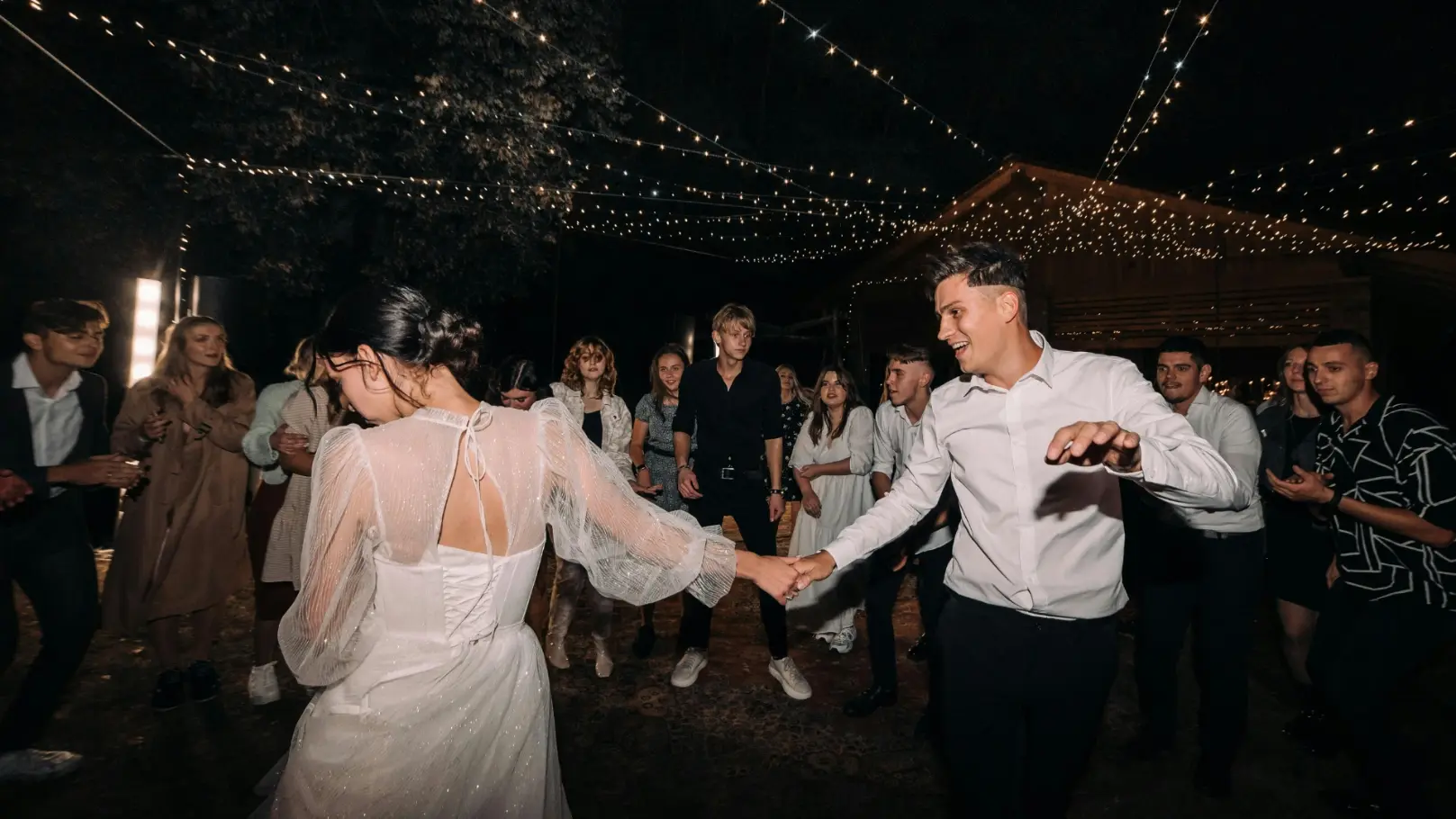
When it comes to wedding music, the number of guests determines the format: for up to 60 guests, a well-curated playlist carries the evening; beyond that, a DJ plays to their strengths, while a live band is particularly effective for the ceremony and reception. Here, you will find a comparison of the three options, the right sound and lighting equipment for your guest count, and the common pitfalls of the DIY approach.

You can plan a wedding in five phases over 12 to 18 months: budget and guest list, venue and date, vendors, decor and details, and finally, the schedule and logistics. If you leave the budget and guest list until last, you will end up planning twice. Here, you will find all the phases along with a checklist, timeline, and budget framework.

A rave or open-air event requires three approvals before technology even comes into play: permission from the property owner, registration with the local municipality, and noise control regulations you can live with. Here, the concept, permits, safety, technology, and budget are listed in the order they need to be addressed.

A schedule should contain four columns: time, program item, person responsible, and required resources. Anything beyond that won't be read on the day of the event. Here you will find templates to download, the structure of the modules, and a checklist for on-site tasks.

Event insurance is not a single product, but a modular system consisting of four services: organizer liability for third-party damages, event cancellation for called-off events, equipment protection for technology, and weather coverage for outdoor events. Which ones you need depends on the risk, not the size of the event. For small to medium-sized events, costs are usually in the low three-digit range per event. If you are renting event technology, it is worth checking the rental terms first, as an included all-risk insurance policy may make equipment protection redundant.

Wir haben dir eine Mail geschickt, bitte bestätige sie um den Rabattcode zu erhalten.


