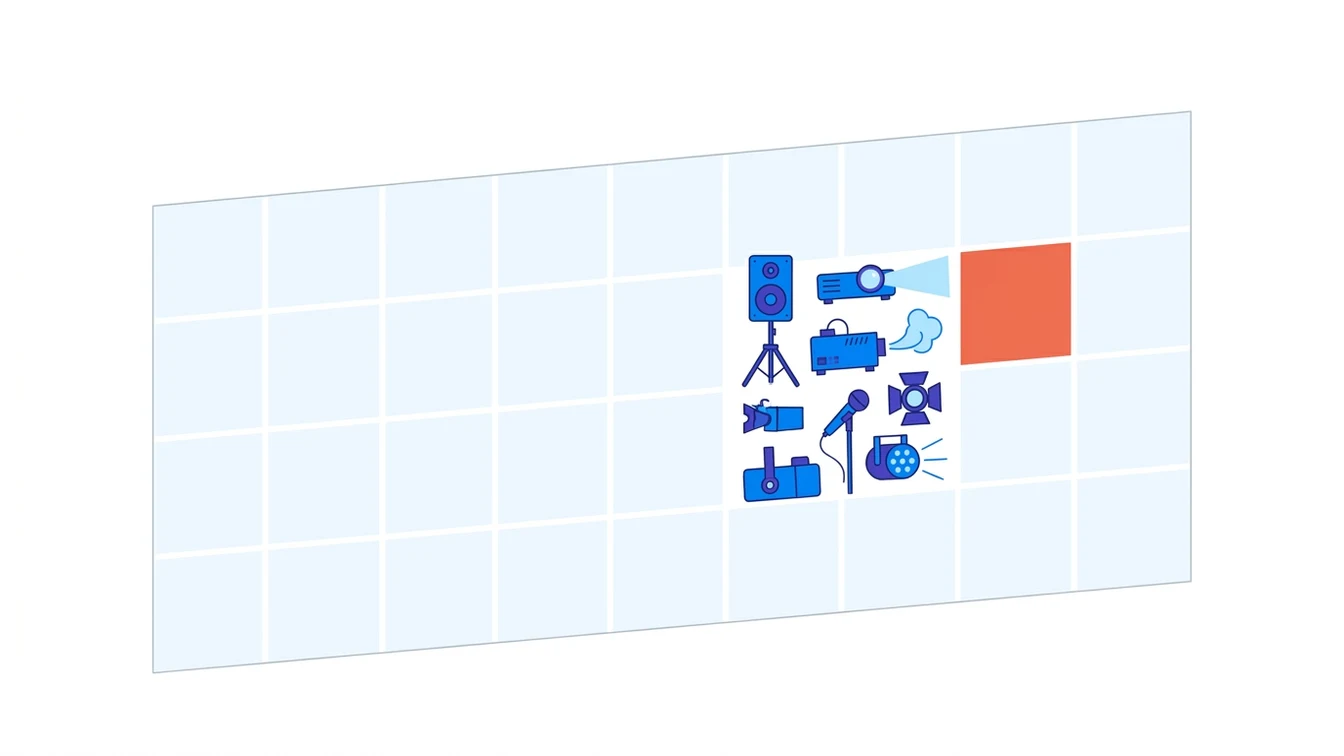
A wedding playlist follows the flow of the evening: calm for the reception, understated for dinner, and building up from the first dance. Plan for about 20 songs per hour and ensure there are no gaps between tracks. Here you will find the structure by phase, song suggestions, and the technology needed for a DIY playlist.

To create a perfect wedding playlist and save up to 2,000 euros on a professional DJ, it is best to calculate 15 songs per hour, totaling 120 to 160 tracks for the entire evening. Instead of playing all tracks in a random, uncontrolled mix, ideally create four to five separate lists for the ceremony, champagne reception, dinner, and party, and enable a three-to-five-second crossfade in advance to avoid annoying gaps on the dance floor. To ensure your homemade music selection sounds great even for large groups, you can find professional PA systems and smart battery-powered speakers. This compact guide shows you the right songs for every phase and explains why you should definitely save all tracks offline.
A custom playlist is a brilliant alternative to a classic entertainer, giving you complete control over every single song and leaving absolutely no room for unwanted cheesy hits. From the first second of the ceremonial entrance to the relaxed background music during dinner and the absolute peak time at midnight, the mood must be built very deliberately. We show you all the typical beginner mistakes and provide valuable tips for a smooth technical execution.
👉 If you want to get started right away: With our free Spotify Playlist Generator, you can create a finished wedding playlist in just a few clicks, tailored to your musical taste and your celebration.
A wedding DJ essentially does two things: plays music and reads the room. Your playlist handles the playing. And the mood? You control that through the structure, provided you know which songs are coming when.
Advantages of a DIY playlist:
What you need for it: A well-thought-out playlist, a decent sound system (not a Bluetooth speaker!), and a person to keep an eye on the tech on the wedding day. More on that later.
The biggest mistake with DIY playlists: throwing all songs into one list and hitting shuffle. A wedding celebration has a clear progression, and the music must follow that progression.
The entrance is the first musical moment of your wedding day. Every note counts here, because the song you walk down the aisle to will stay in your memory for a lifetime.
Song selection for the entrance:
For the ceremony itself: Instrumental versions of your favorite songs as background music. During the vows, the music should be quiet and unobtrusive. The words should take center stage.
For the recessional: This is where the mood can shift to something cheerful, relieved, and celebratory. Classics like “Signed, Sealed, Delivered”, Stevie Wonder or “L-O-V-E”, Nat King Cole set the perfect tone.
After the ceremony, you need relaxed, lounge-style background music. Guests are congratulating you, drinking, and chatting. The music should provide an atmosphere without dominating.
Style: Acoustic versions, jazz, bossa nova, easy listening. No vocals that drown out conversation.
Song ideas:
Tip: Plan for about 30-40 songs here. It’s better to have too many than too few in case the reception lasts longer than planned.
Music can play during dinner, but keep it low. Guests want to talk, not shout over the sound system. Instrumental music or quiet vocals work best.
Important: When speeches are being given, the music must be turned off completely. Plan for this in your playlist, either as a manual pause or as a separate “dinner” playlist that you control independently.
Song ideas for dinner:
The opening dance is the emotional highlight of the evening. All eyes are on you. Choose a song that has real meaning for you as a couple. Your guests will feel the difference between "just any pretty song" and "this is our song."
Popular wedding dance songs:
Tip: Practice your wedding dance 2-3 times at home beforehand. Not for a choreographed routine, but so you feel comfortable and can enjoy the moment instead of nervously staring at your feet.
Now it's time to dance. The party is the longest part of the evening and the one where most DIY playlists fail because they run out of hits after an hour.
The golden rule: Build the energy gradually.
Warm-up (first 30-45 minutes): Right after the opening dance. The dance floor should fill up, but not explode just yet. Feel-good hits that everyone knows:
Peak Time (1-2 hours): The dance floor is packed, and the energy is at its peak. Here are your ultimate party anthems:
Tip: Intentionally mix hits from different generations. Your wedding guests range from 8 to 80; there needs to be something for everyone, from grandparents to college friends. Elvis Presley alongside Bruno Mars, Whitney Houston alongside Ed Sheeran. That’s what makes a great mix.
Late Night (from approx. 11:00 PM): The mood is relaxed, and ties are coming off. Now it’s time for the songs everyone loves to sing along to:
Last Song: The final song of the night is the one people remember. Choose something emotional that brings everyone together, like “All You Need Is Love,” The Beatles or “Forever Young,” Alphaville (slow version).
Plan for approx. 15 songs per hour. For a full wedding reception (6-8 hours of music), you will need:
| Phase | Duration | Number of songs |
|---|---|---|
Processional & Ceremony |
30 to 60 min. | 5 to 10 |
Champagne Reception |
1 to 2 hours | 20 to 30 |
Dinner |
2 to 3 hours | 30 to 40 |
First dance |
1 song | 1 |
Party |
3 to 5 hours | 50 to 75 |
Total |
~8 hours | ~120 to 160 songs |
Always include a buffer of 20-30 extra songs. If the party goes on longer than expected, you don't want the music to stop.
1. Create separate playlists for each phase Don't just use one giant list on shuffle; create 4-5 playlists: Ceremony, Reception, Dinner, Party Warm-up, and Party Peak. This helps you maintain control over the flow of the event.
2. Designate a "Playlist DJ" Someone needs to start the playlists on the wedding day, switch between them, and manage the volume. Assign this task to a groomsman or a friend and brief them thoroughly beforehand.
3. Test the transitions Spotify and Apple Music have a crossfade feature. Set it to 3-5 seconds to ensure there is no silence between songs. Nothing kills the mood on the dance floor faster than 10 seconds of silence between two hits.
4. Ask your guests for requests Add a small field to your invitation: "What song is guaranteed to get you on the dance floor?" You'll get wedding song suggestions you never would have thought of, and your guests will be thrilled when their song actually plays.
5. Avoid breakup songs It sounds obvious, but it happens faster than you think. Check the lyrics of your selections; some songs sound upbeat but are actually about heartbreak or saying goodbye. "I Will Always Love You" sounds romantic, but it is a breakup song.
6. Pay attention to volume transitions Dinner music should be significantly quieter than party music. Adjust this beforehand via the sound system settings, rather than relying on trial and error on the wedding day.
7. Have a backup plan Phone battery dead, Wi-Fi drops out, Spotify has an update—it’s all happened before. Download your most important playlists offline and have a second device ready as a backup.
The best wedding playlist is useless if it’s playing through a tiny Bluetooth speaker. For a wedding with 50+ guests, you need a professional sound system, especially if you’re celebrating outdoors.
What you need:
PA systems, Soundboks, and wireless microphones are available without a deposit. Just set them up, connect your phone via Bluetooth, and start the playlist. No degree in engineering required, and no need to buy DJ equipment.
Playlist ready? Then all you need is the right sound: Our Wedding Music & Entertainment Guide shows you everything about sound systems, lighting, and games. And for the entire wedding planning process from A to Z: Planning a Wedding: Guide & Checklist (2026).
Is Spotify enough for a wedding?
How many slow songs does the party playlist need?
Should I ban certain songs?
What if the dance floor stays empty?
Do I need a DJ if I have a playlist?
Can I just put all my favorite songs into one big list and hit shuffle?
Check event equipment, book in 90 seconds, and choose pickup or delivery. Deposit-free and insured throughout Germany and Austria.

Wir haben dir eine Mail geschickt, bitte bestätige sie um den Rabattcode zu erhalten.