Wedding Planning: The Ultimate Guide incl. Checklist (2026)
You can plan a wedding in five phases over 12 to 18 months: budget and guest list, venue and date, vendors, decor and details, and finally, the schedule and logistics. If you leave the budget and guest list until last, you will end up planning twice. Here, you will find all the phases along with a checklist, timeline, and budget framework.
0:00 - 0:39 With this wedding checklist, your big day is guaranteed to be a success. First, set the date and create a rough schedule. Think about your budget and book your dream location early. The best spots go quickly. Then, create the guest list and choose a theme or color concept that suits you. Ask your maid of honor, best man, and bridesmaids in good time. Secure a photographer and your favorite DJ or band. About 6 months before, it's time to contact vendors. Inquire about catering and floral decor and send out the invitations.
0:39 - 1:09 Don't forget to plan your honeymoon. A few months before the big day, choose your wedding rings and finalize the seating plan. Shortly before the wedding, it's time for fittings and beauty appointments. A photo booth and professional equipment ensure unforgettable moments. You can easily rent these at Rentyen. You can find the complete checklist for free at rentebevent.com. Enjoy the planning process.
Jetzt Wedding Checklist herunterladen
Key Takeaways
Ideally, wedding planning should begin 12–18 months before the wedding date.
This guide leads you through the entire wedding planning process, from 18 months to 2 months before the big day, divided into 5 clear phases with checklists to tick off.
The guide is specifically designed for newly engaged couples who are organizing a wedding for the first time and need a clear roadmap.
At the end of the article, you will find a comprehensive wedding checklist as a PDF download that you can print or use digitally.
Detailed topics such as budget, music and entertainment, the daily schedule, types of ceremonies, and wedding ideas are covered in linked specialized guides, keeping this article focused.
The focus is on relaxed, well-structured organization without the stress: step-by-step to your dream wedding, without feeling overwhelmed.
How far in advance should you plan a wedding?
For a wedding with 60 to 120 guests, a lead time of 12 to 18 months is realistic. The bottleneck is rarely the decor, but rather the venue and the ceremony date: popular venues and registry offices are often booked a year in advance for Saturdays during peak season. If you have less time, consider a Friday or the off-season, in which case six to nine months is feasible.
Introduction: Planning a wedding without stress—how to use this guide
Congratulations on your engagement! An exciting time begins now, along with the actual planning of your wedding. You are probably wondering where to start.
Ideally, wedding planning should begin 12–18 months before the wedding date. A structured wedding checklist helps you keep track of all important tasks and ensures that no details are forgotten.
Finding a venue, creating a guest list, organizing the ceremony, renting equipment, choosing decor—the many to-dos can seem overwhelming at first. That is exactly why we created this guide: it structures your wedding preparation chronologically into 5 phases from approximately 18 to 2 months before the celebration.
Each phase consists of a short introductory text followed by checklist items to tick off. This helps you keep an overview and always know what is coming up next. Details on budget, entertainment, the daily schedule, types of ceremonies, and ideas can be found in separate articles, which we link to at the appropriate points.
This article is intentionally focused on theorganizational steps, not on detailed decor inspiration or styling tips. Let’s get started!
Phase 1: Budget, Guest List & Date (12–18 months before)
In this early phase, the big decisions are made: When will you get married? How much money is available? And how large will the celebration be? These cornerstones determine all further steps of your wedding planning.
Regarding the budget: First, set a rough framework and define your priorities together: is the venue more important to you than the decor? Is the food more important than the stationery? You can find all the details on cost items, sample calculations, and money-saving tips in the separate article Planning Your Wedding Budget: The Cost Guide.
Phase 1 Checklist
[ ] Set a rough timeframe: Determine your preferred month and season (e.g., May to September 2026), and note preferences for the day of the week (Friday/Saturday)
[ ] Coordinate preferred dates: Select 2–3 possible dates and roughly check them with your closest family members (parents, siblings, maid of honor/best man)
[ ] Define the scope of the wedding: Decide between a small civil ceremony vs. a secular ceremony plus a big party, indoors vs. outdoors
[ ] Creating a guest list is an important step in wedding planning. The guest list should be created before choosing the venue to ensure the venue is the right size. Also consider whether children and colleagues should be invited.
[ ] Create a preliminary guest list: Gather family, closest friends, and colleagues, and define a target guest count (e.g., 60–80 people)
[ ] Clarify child-friendliness: Decide whether children will be invited, and make a rough estimate for daytime guests vs. evening guests
[ ] Determine the type of ceremony: Civil ceremony in a small circle plus a larger secular or religious ceremony? (More on this later under Planning a Secular Ceremony and → Civil Ceremony)
[ ] Outline style and mood: Note initial ideas (urban, rustic, boho, elegant); for inspiration, see → Ideas & Themes for Weddings
[ ] Create a planning folder: Create a shared folder (digital or physical) for quotes, contracts, and notes
[ ] Rough milestone plan: Record deadlines for when the venue should be booked, when invitations must be sent out, etc.
Now the cornerstones are being finalized: What type of ceremony do you want? Where will the celebration take place? These decisions make many further steps possible, and they should be made early on.
Popular wedding venues and registry offices in the DACH region are often booked up 9-12 months in advance. In metropolitan areas like Berlin, Munich, or the Rhine-Neckar region, the waiting time can be even longer. Taking care of this early gives you more options and less stress.
Phase 2 Checklist
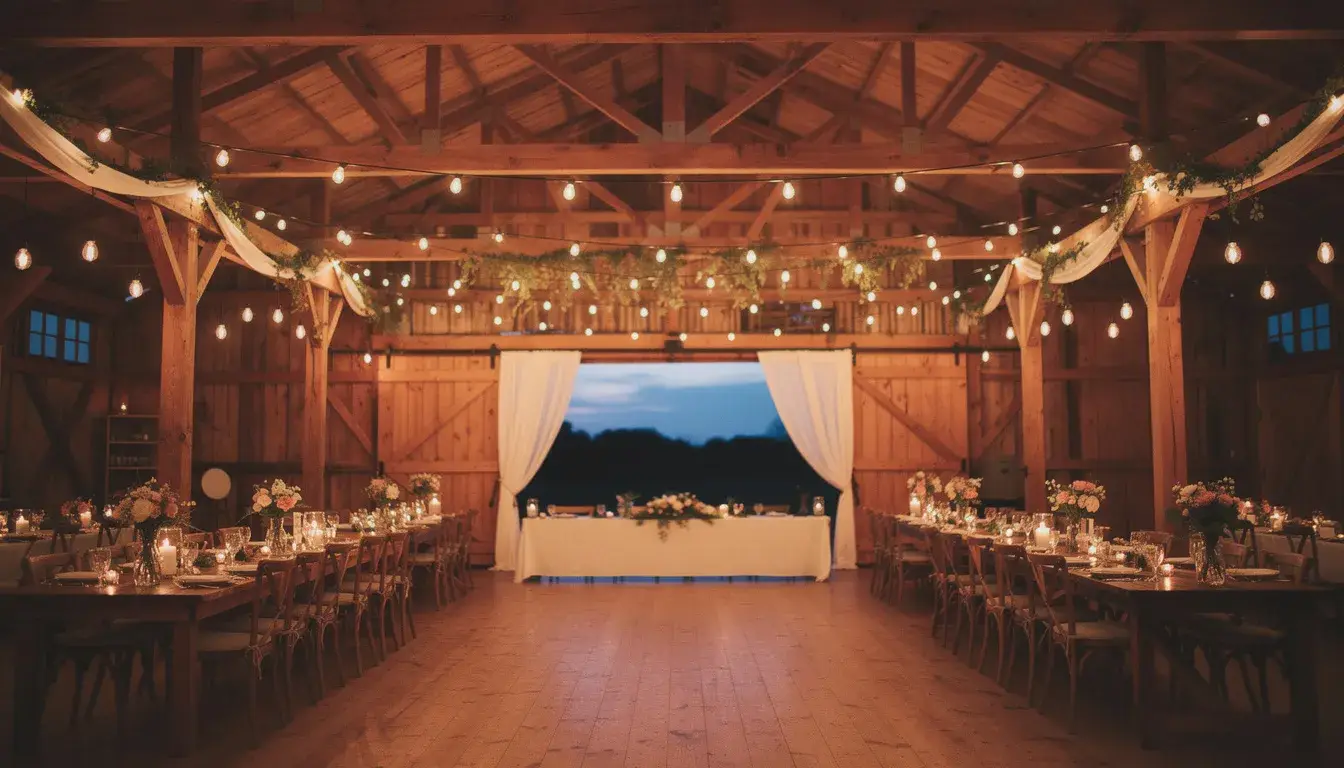
[ ] Plan registry office appointment: Decide whether the civil ceremony will take place on the wedding day or separately → Civil wedding ceremony: Ideas for an intimate gathering [ ] Research registry office: Identify the locally responsible registry office, check lead times (registration is usually possible from 6 months in advance) [ ] Clarify secular ceremony: If desired: make a fundamental decision, inquire with initial wedding officiants → Planning a secular ceremony [ ] Check church wedding: If interested, roughly clarify which parish or church is an option [ ] Create venue longlist: Collect potential locations (manor, barn, restaurant, rooftop, industrial loft) [ ] Arrange viewings: Select 3-5 locations, make appointments, and note guest capacity, public transport connections, and curfews [ ] Check ceremony at the venue: Check if the ceremony and reception can be held at the same location (e.g., secular ceremony in the garden) [ ] Send Save-the-Date cards: As soon as the location and rough date are set, inform guests so they can block the day [ ] Research accommodation for guests: Compile hotels and vacation rentals in the vicinity of the venue [ ] Venue tech check: Check if basic equipment (power, sound system, microphones) is available or needs to be rented externally, details in Phase 3 [ ] Officially ask witnesses: Outline their role (organization, contact with service providers, coordination of games) [ ] Note deadlines: Record by when final commitments must be made to the venue, registry office, and, if applicable, the church
Phase 3, Wedding Music & Event Technology (8-10 months before)
Weddings are the longest-planned occasion of all: In August, the month with the highest share of weddings, the measured lead time is 11.68 days, almost twice as long as in January. The analysis can be found in the Renty Event Report 2026.
Now it's time to focus on the atmosphere of your celebration: music, sound, lighting, and technical extras significantly determine how your wedding feels. In this phase, you will make the fundamental decisions.
Important: Music and entertainment are only touched upon here as organizational points. You can find all detailed questions, DJ vs. band, game ideas, and technical setups in the comprehensive Wedding Music & Entertainment Guide.
Many venues do not provide their own event technology. This belongs on your question list during the viewing; otherwise, you might end up without a sound system eight weeks before the celebration. If you need a sound system for weddings or accessories like microphones or lighting: We offer uncomplicated, deposit-free rentals for weddings throughout the DACH region.
Phase 3 Checklist
[ ] Decide on music format: DJ, band, or curated playlist? Details in the Wedding Music & Entertainment Guide [ ] Get quotes: Inquire with 2-3 service providers (DJ/band) or plan an alternative solution (your own playlist + technology) [ ] Note music requirements: Music styles, must-play songs, no-go songs, party length, technical needs [ ] Clarify technical needs: Check what is available at the venue (PA system, microphone, lighting) and what needs to be rented additionally [ ] Plan extras: Decide if a photo booth, ambient lighting, or outdoor sound reinforcement is desired [ ] Roughly plan music blocks: Ceremony, champagne reception, dinner, party, without working out the entire daily schedule [ ] Reserve microphone for speeches: Book a wireless microphone and, if necessary, speakers in good time [ ] Decide on tech rental: Organize locally or rent via a specialized provider such as → Event technology for weddings
All questions regarding music selection, game ideas, and technical setups are answered in detail in the Wedding Music & Entertainment Guide.
One detail from this phase is regularly overlooked: the ceremony, speeches, and moderation need their own microphone, independent of the music system. Outdoors, nothing will be heard in the third row without amplification. The overview of wireless microphones for ceremonies and speeches shows which design is suitable for the ceremony and evening program.
Phase 4, Schedule & Further Wedding Preparation (4-6 months before)
Your rough vision is now becoming a concrete plan: daily structure, fine-tuning service providers, outfits, rings, and formalities are on the agenda. In this phase, your wedding celebration really takes shape.
The detailed schedule for the wedding day itself is described in its own article → Wedding schedule: The perfect timeline. Here, we focus on the preparation to-dos.
Phase 4 Checklist
[ ] Finalize outfits: Select wedding dress and groom's outfit, commission alterations, schedule fitting appointments (including 1-2 months before the wedding) [ ] Order wedding rings: Choose and buy rings, allow a buffer for engraving (4-6 weeks) [ ] Finalize service provider bookings: Bindingly commission catering, photo/video, floristry, DJ/band, and determine required hours [ ] Register at the registry office: Bindingly register the ceremony, clarify documents → Civil wedding ceremony [ ] Conduct ceremony consultation: For a secular or church wedding, have an initial conversation with the wedding officiant or pastor → Planning a secular ceremony [ ] Send invitations: Design, text, dress code, gift wishes, send out at least 3-4 months before the wedding [ ] Update guest list: Record responses, keep an overview of confirmed, pending, and declined RSVPs [ ] Arrange menu tasting: Clarify the menu, beverage packages, and allergies/intolerances with the caterer or venue [ ] Roughly plan the daily schedule: Ceremony, reception, dinner, speeches, opening dance, party, details in → Wedding schedule: The perfect timeline [ ] Brief helpers: Prepare witnesses and close friends for their tasks (contact with service providers, organizing games, guest contributions) [ ] Clarify transport: How will you get to the ceremony and venue? Reserve a wedding car or shuttle for guests if necessary [ ] Note legal matters: Name changes, leave entitlements, insurance, keep these on your radar
Phase 5, Details, Decor & Final Touches (2-4 months before)
Now comes the part that brings everything together visually and emotionally: decor, floristry, stationery, seating plan, wedding cake, and small extras. This phase makes your dream wedding visible.
This section lists the to-dos but does not provide a long collection of ideas. For inspiration, take a look at the separate article Ideas & Themes for Weddings.
Phase 5 Checklist
[ ] Finalize color concept: Define decor style (e.g., white & sage green, modern minimalist), plan matching elements
[ ] Discuss florals: Bridal bouquet, boutonnieres, wedding arch, table decor, flower children if applicable, confirm delivery times
[ ] Order wedding cake: Book cake and/or dessert buffet with the pastry chef, clarify delivery time
[ ] Design seating plan: Based on the final guest list, taking family dynamics and special needs into account
[ ] Finalize stationery: Menus, place cards, and seating cards, possibly programs or schedules
[ ] Organize wedding favors: Decide and order in the desired quantity or start DIY projects
[ ] Set beauty plan: Hairdresser, makeup, manicure (possibly a barber for the groom), block appointments 2-3 weeks before the day
[ ] Music fine-tuning: First dance song, processional music, special songs, details in the Wedding Music & Entertainment Guide
[ ] Pack emergency kit: Band-aids, blister pads, sewing kit, pain relievers, power bank
[ ] Create contract overview: Collect all vendor contacts, arrival times, payment deadlines, and pass them on to the maid of honor/best man
[ ] Finalize location: Hold final meeting (setup times for decor/tech, catering access, storage areas)
[ ] Schedule buffer time: Consciously reserve time slots without tasks to enjoy the anticipation
Phase 6, One week before
The final days before the wedding are here. Now it's time to bring all the threads together and prepare for the big day.
Phase 6 Checklist
[ ] Brief maid of honor/best man and helpers: Final meeting, discuss tasks, exchange emergency contacts
[ ] Prepare dress and suit: Put everything together, check accessories, iron if necessary
[ ] Conduct final fitting: Try on the wedding dress one last time, pick up rings or confirm pickup
[ ] Confirm styling appointments: Finalize makeup and hair appointments, set the schedule for getting ready
[ ] Go through final details: Work through the complete checklist, check off open points, discuss the schedule for the big day
[ ] Check final payments: Settle outstanding invoices, prepare cash for tips
[ ] Enjoy the anticipation: Consciously relax, go to bed early, allow yourself to feel the excitement
After the final preparations are complete, the big day is just around the corner; now it's time to put the plan into action.
Wedding Checklist: On the Big Day
The wedding day is here! Here are the most important points to ensure everything runs smoothly:
Aufgabe
Verantwortlich
Notizen
Zeitplan ausdrucken und verteilen
Trauzeugen
Für alle Dienstleister und Helfer
Ansprechpartner bei Location benennen
Trauzeugen
Zentrale Kontaktperson für den Tag
Styling-Ablauf überwachen
BrautjungfernTrauzeugen
Puffer einplanen, entspannt starten
Ruhephasen für das Paar einplanen
Trauzeugen
Mind. 30 Min. nur zu zweit
Hochzeitsdeko und Sitzordnung checken
Helfer
Vor Ankunft der Gäste final prüfen
After the wedding day has been successfully mastered, it is important not to forget the tasks that follow the wedding.
After the Wedding: To-Do List
The wedding checklist should also include tasks for after the wedding. This ensures that all aspects of wedding planning are covered and nothing is overlooked.
Send thank-you notes: Thank your guests with personal words. A small photo from the wedding makes the card especially personal. Ideally, send them within 4-6 weeks after the celebration.
Save and sort wedding photos: Capture the most beautiful moments. Create a backup (cloud + external hard drive) and sort the images for a photo book or album. Editing by the photographer usually takes 6-12 weeks.
Check and finalize invoices: Keep things organized by systematically collecting all invoices and important information. Check that all deposits have been credited and archive the receipts.
Work through honeymoon checklist: If you are going on your honeymoon after the celebration: check documents, create a packing list, set up an out-of-office reply. Enjoy your first days as a married couple!
Extra Tips for Wedding Planning
Planning a wedding is an exciting but demanding task that requires strong organizational skills. With a clear structure and a well-thought-out schedule, you can keep track of all the details and avoid unnecessary stress. It is important to start preparations early, set realistic budgets, and delegate tasks effectively.
This way, you can enjoy the anticipation of the big day and ensure that everything runs smoothly. Use checklists, planning tools, and the support of friends or a wedding planner to minimize the effort and react flexibly to unexpected mishaps. With good preparation, nothing stands in the way of your unforgettable wedding day!
Tipp
Warum es hilft
🤝
Aufgaben sinnvoll delegieren
Trauzeugen, Familie und Freunde wollen helfen, lass sie! Das entlastet euch und gibt anderen das Gefühl, Teil der Organisation zu sein.
⏳
Puffer im Zeitplan einplanen
Verzögerungen passieren immer. Mit Pufferzeiten bleibt ihr entspannt, auch wenn etwas länger dauert.
💰
Budget-Reserve empfehlen
Plane 10-15 % des Budgets als Reserve ein. Unvorhergesehene Kosten tauchen fast immer auf.
😊
Spaß nicht vergessen
Die Hochzeitsplanung ist zwar mit vielen Aufgaben verbunden, sollte aber auch Freude und Vorfreude auf den großen Tag bringen. Genießt die Vorbereitungen gemeinsam!
💡
Kreative Ideen sammeln
Inspirationen aus dem Internet, von Freunden oder aus Magazinen helfen, eure Hochzeit individuell zu gestalten und persönliche Akzente zu setzen.
❓
Offene Fragen klären
Sorgen lassen sich durch gute Organisation und rechtzeitige Entscheidungen reduzieren. Scheut euch nicht, Dienstleister oder Location-Anbieter gezielt zu fragen.
📁
Ordnung halten
Eine klare Struktur bei der Planung, ob digital oder analog, sorgt für Überblick über Gästelisten, Angebote und alle wichtigen Details.
Jetzt Wedding Checklist herunterladen
Originally published on
August 30, 2026
.
Last updated on
November 2, 2026
.
FAQ
Still have questions? Here are the answers
How far in advance should you start planning a wedding?
How much does a wedding cost on average?
How do I plan the schedule for the wedding day itself?
How do I keep track of so many to-dos?
We have less than 12 months. Can a wedding still be planned stress-free?
Which vendors should we book first after the venue?