A good team event depends on the goal. For getting to know each other, conversation-promoting formats like city rallies or cooking nights work well; after a project completion, action like go-karting or Highland Games is great; and for breaking down silos, cooperative building challenges help. The ideas here work for 8 people up to large groups, indoors and outdoors, including a format table, budget notes on the 110-euro tax-free allowance, and the three steps to ensure a lasting impact.

A well-chosen team event today is far more than the classic company party with a buffet and standing tables. Team events break up the daily office routine and strengthen the sense of unity, provided the format suits the team. Surveys among companies regularly show that a clear majority consider team events crucial for fostering collaboration and cohesion. The question is therefore not whether, but which ideas really work.
| Format | Group size | Duration | Teambuilding effect |
|---|---|---|---|
| 📍GPS City Rally | up to 150 | 3-4 hrs. | |
| 🏴Highland Games | 30-200 | 3-4 hrs. | |
| 🛶Raft Building | 15-80 | 3-4 hrs. | |
| 🔐Escape Game | 3-100 | 1-2 hrs. | |
| 🎤Quiz Show | 10-200 | 2-3 hrs. | |
| 🍳Cooking Workshop | 10-40 | 3-4 hrs. | |
| 🎨Graffiti Workshop | 15-80 | 3-5 hrs. | |
| 🏎️Go-Karting | 10-60 | 1.5-3 hrs. |
Team events and team-building events are often used interchangeably, but they mean the same thing: shared activities that strengthen communication, trust, and team spirit. The four main categories are: outdoor team events (city rallies, Highland Games, raft building, go-karting), indoor formats (escape games, quiz shows, cooking workshops, VR), creative events (graffiti, chain reaction construction, improv theater), and athletic challenges (team Olympics, climbing, laser tag). Digital versions can also be organized for remote and hybrid teams.
Outdoor formats encourage informal conversation and physical activity, two factors that are often neglected in the daily work routine. They are ideal after intense project phases because they provide a noticeable change of perspective and can be perfectly combined with a summer party or company outing. Important: professional guides for safety, adaptation to different fitness levels, and a clear bad-weather option.

Teams of 4-6 people navigate through the city using smartphones or tablets, solving puzzles and mastering photo and video challenges. Scalable up to 150 participants, typically lasting 3-4 hours (compact versions from 2 hours). The learning effect: role clarification, decision-making under time pressure, and creativity. City rallies are particularly suitable for heterogeneous groups with mixed technical and fitness levels and work just as well as a supporting program after workshops as they do as a standalone event.
Log rolling, rubber boot throwing, straw sack slalom: Highland Games bring Scottish charm to the corporate workday. The focus is not on strength, but on fun, tactics, and coordination; every team member finds a role, regardless of their fitness level. Ideal for 30-200 people in a meadow or city park, with an awards ceremony and an optional BBQ to finish. Short disciplines with immediate scoring provide the quick sense of achievement that brings a team together.
Using barrels, boards, and ropes, teams construct a seaworthy raft and then put it to the test on the water. Planning, material distribution, and trusting your own construction become a real litmus test—the analogy to project work is clear, without it feeling like therapy. For 15-80 participants, 3-4 hours including construction and water test, season May to September.
Qualifying, main races, and team relays turn individual lap times into a teamwork experience, complete with pit strategies and driver changes. For non-drivers, there are alternative roles: grandstand, moderation, and side challenges. 10-60 people, 1.5-3 hours, helmets and safety briefing included.
Indoor formats offer reliable conditions with no weather risk and are the safe choice for kick-off events, after-work gatherings, or the Christmas party. They are also better suited for new or sensitive team dynamics where familiarity still needs to grow.
A mobile escape game turns any meeting room into a puzzle room: under time pressure, teams combine clues, solve logic and physics puzzles, and must utilize all their skills. Played in groups of 3-8 people, the format scales up to about 100 participants using parallel sets; duration 60-120 minutes.
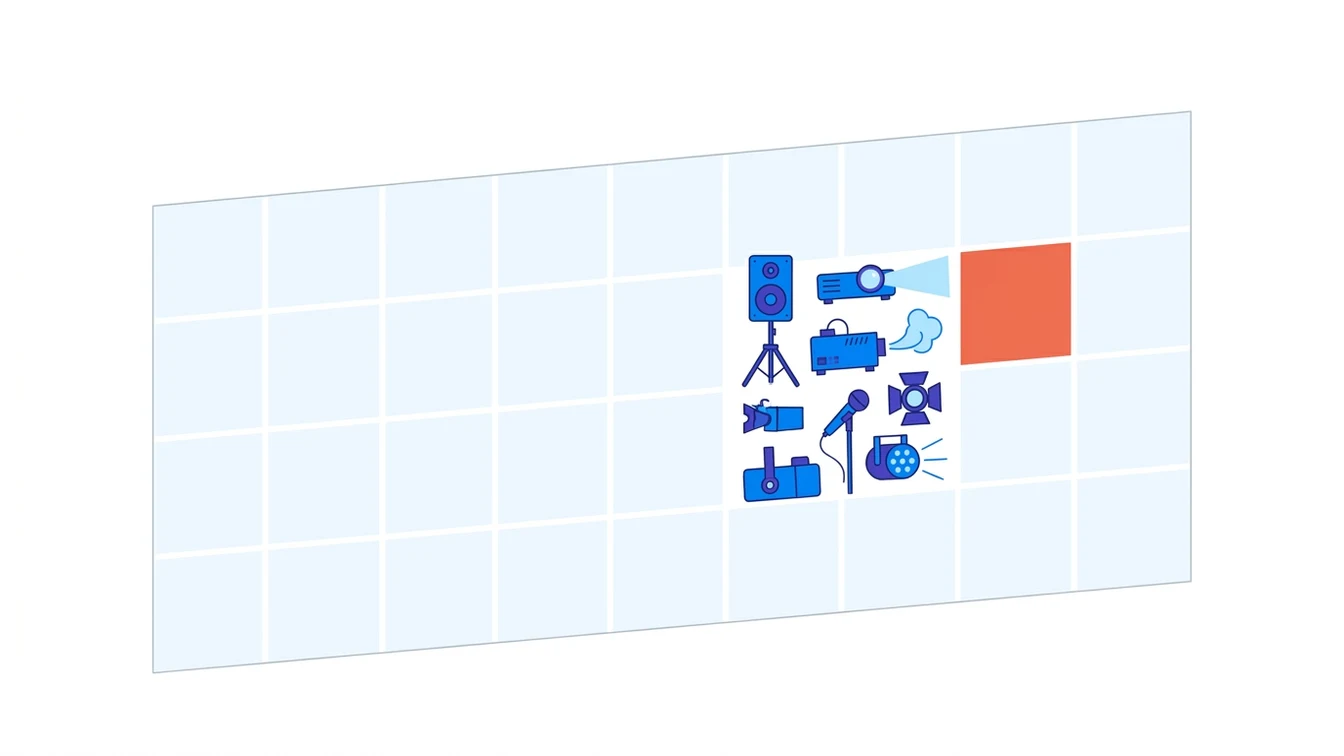
A moderated quiz show featuring general knowledge, company insider questions, and music trivia engages everyone—introverts and extroverts alike—without putting anyone on a permanent stage. Technically, the range spans from low-tech with pen and paper to a full setup with projectors, buzzers, and sound; the right presentation equipment for a company quiz is available from Renty, deposit-free and with all-risk insurance included. Proven time slot: 6:00 PM to 9:00 PM including a break, ideally combined with finger food.
In cooking schools or show kitchens, teams prepare a multi-course menu—Mediterranean, Asian, or street food. The distribution of tasks among the prep team, decor crew, and dessert group mirrors typical team roles, and eating the dishes they've created is a built-in sense of achievement. Alternatively: cocktail workshop or barista workshop. 10-40 people, 3-4 hours.

Co-op games, virtual escape rooms, and joint missions bring innovation to the team program, accessible even to skeptics thanks to short tutorials. Plan session lengths and breaks carefully to prevent motion sickness.
Creative formats reveal new sides of colleagues; the focus is on a positive attitude toward mistakes, not artistic talent. They are particularly suitable after intense project phases, for teams with high screen time, and as a contrast to competitive formats.
Graffiti workshop or street art workshop. Under professional guidance, teams create a large canvas or mural featuring company values: introduction to spray techniques, a sketching phase in small groups, and final execution. The artwork remains in the office as a memento. 15-80 people, 3-5 hours, protective clothing included.
Chain reaction construction. Each group builds a section out of wooden blocks, ramps, balls, and pipes that must interact with the others with millimeter precision at the end. The parallel to corporate silos is obvious: the system only works if the handovers are correct. Ideal as a highlight for strategy days, approximately 3 hours.
DIY workshops. Macramé, screen printing on team shirts, concrete decor, or painting ceramics: the calm, focused atmosphere is good for teams that rarely have time for reflection, and everyone goes home with a finished result.
Improv theater. Warm-up exercises, spontaneous scenes, and the "Yes, and" principle encourage courage, active listening, and quick perspective shifts without putting anyone on the spot. 10-25 people per trainer, 2-3 hours.

Sports-based formats are a great fit for athletic groups, sales teams, and young start-ups, but they can also work for mixed groups if alternative roles like coaching, tactics, or moderation are included. Always combine action with breaks, catering, and a brief reflection.
The location is often the key: In North Rhine-Westphalia, options range from city rallies in Düsseldorf and Cologne to the industrial backdrop of the Zollverein Coal Mine or wine hikes in the Siebengebirge for 10–200 people. Major cities like Berlin, Frankfurt, and Munich score points with urban formats, street art tours, culinary city tours, and escape games in the business district. A word of advice: book early, as these locations are in high demand.
Natural regions provide a change of pace: raft building on Bavarian lakes, task-based hikes in the Black Forest, or wine tastings along the Moselle or Neckar rivers. Combo packages featuring a conference, an outdoor event, and an evening program get the best of both worlds; just be sure to clarify travel, public transport, and accommodation early on.
Not every format fits every occasion; the goal comes before the idea:
Preparation. Define your goal (team spirit, breaking down silos, getting to know each other), analyze the participant structure (age mix, fitness level, languages, inclusion needs), and plan for a lead time of 4–8 weeks; for large groups and complex outdoor events, allow 3–4 months. Regarding the budget, the tax framework helps: there is a tax-free allowance of 110 euros per participant per company event (Section 19 EStG, maximum two events per year). This calculation includes food, drinks, travel, and gifts; your tax advisor can clarify the details. Small teams of 8–20 people benefit from intensive workshops, while large groups of 100+ benefit from scalable rallies and Olympics.
Execution. Clear roles (moderation, atmosphere, safety, photos), scheduled breaks and catering, and intentionally breaking down hierarchies: use mixed teams and don't automatically make managers the captains. Small competitive elements with humorous prizes motivate without embarrassing anyone, and the pace should intentionally alternate between active and quiet phases.
Follow-up. The real value shows afterward: adopt 1–2 concrete insights as team rules (e.g., "We address problems early," "We test handovers together"), schedule a short team check-in after 4–6 weeks, and share a photo gallery and internal recap. Recurring events like an annual offsite stabilize team spirit in the long term.

The cost per person for a team event depends on the format, region, and group size: a quiz show in your own meeting room is significantly cheaper than a full-day team event with guides, a venue, and catering. Furthermore, prices from specialized providers in Munich or Hamburg are usually higher than in smaller cities. For budget planning, obtain two or three quotes based on identical assumptions and include food, travel, and a small buffer.
Many team-building activities are modular, allowing you to adapt the event to your budget rather than the other way around. For successful organization, finalize the number of participants early, as this determines the venue, provider capacity, and pricing tiers. Sending an invitation that outlines the goal, schedule, and dress code also helps put the team at ease before the big day.
How long should a team event last?
Which team event is suitable for large groups of 100 people or more?
How much does a team event cost per person?
Indoor or outdoor—which is better?
How do we prevent the impact from fading?
Are team events possible for remote teams?
Check event equipment, book in 90 seconds, and choose pickup or delivery. Deposit-free and insured throughout Germany and Austria.

Wir haben dir eine Mail geschickt, bitte bestätige sie um den Rabattcode zu erhalten.