

A wedding candy bar is a self-service sweets buffet set up on its own table, decoratively staged with glass vessels, tiered stands, and wedding-themed stationery. As a rule of thumb, plan for 100–200g of sweets per guest and 8–12 varieties. Set it up 1–2 hours before guests arrive, and open it traditionally after the cake cutting. Here you will find planning guides, quantity calculators, decor ideas, and modern variations from salty bars to hot chocolate bars.

Hardly any wedding trend has become as firmly established in Germany as the candy bar. Since around 2015, this lovingly designed sweets buffet has been one of the most popular elements at wedding celebrations, and for good reason: it’s a photo-worthy eye-catcher, a casual meeting point for guests, and a hit with children and adults alike. In this guide, you’ll learn everything about planning, quantities, cost estimates, DIY tips, and whether it’s worth renting one.
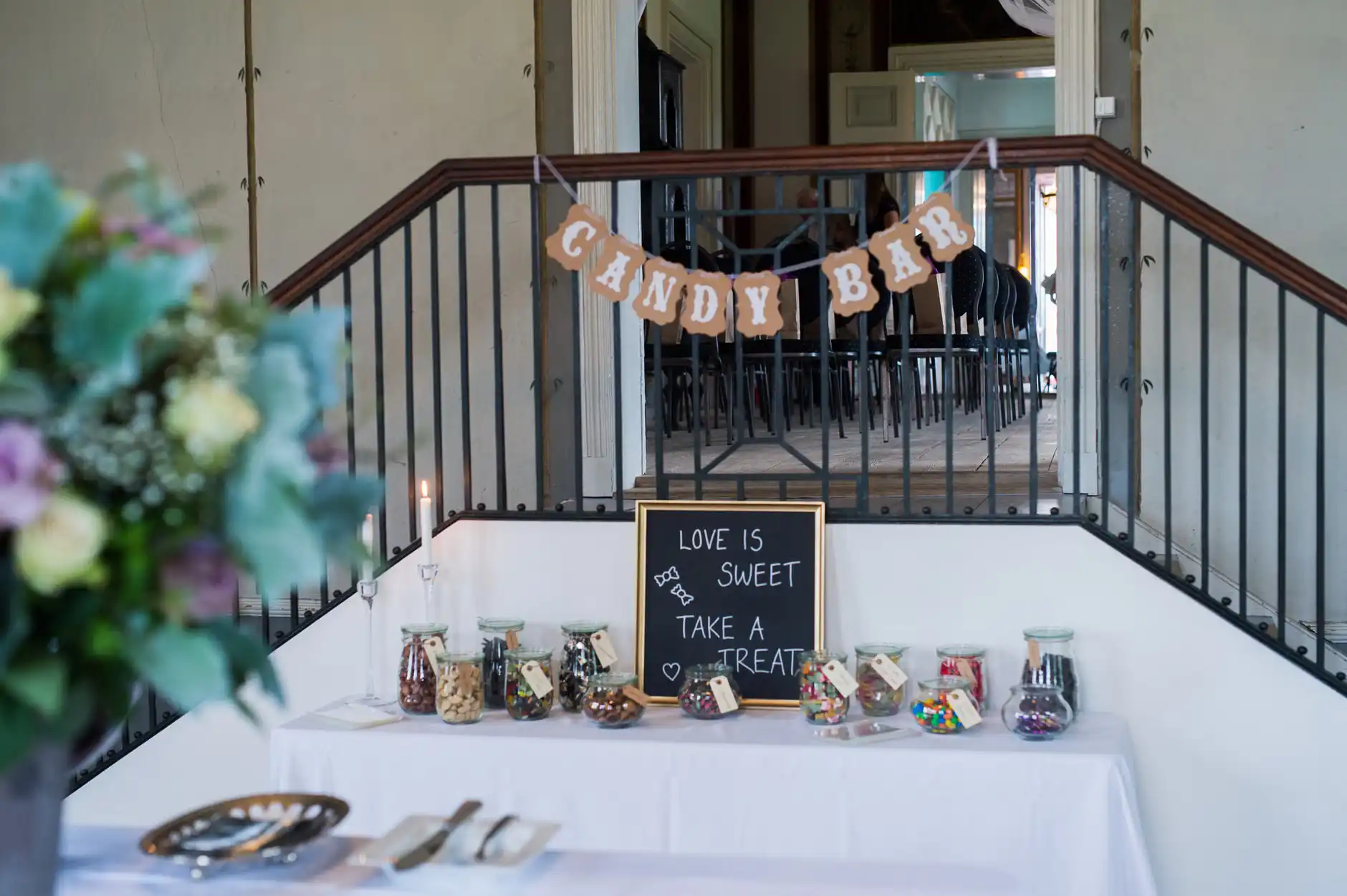
Unlike a classic dessert buffet with fixed portions, a candy bar is a relaxed snacking station where guests can help themselves at any time. The focus is on loose sweets and elaborate decoration: a white wooden table, glass vessels of varying heights filled with pastel-colored treats, subtle flowers, and warm lighting as an accent—and you have an instant eye-catcher. Typical components include candies and lollipops, chocolates in various shapes, marshmallows, gummy bears, cake pops, dragées, and classic sugared almonds.
The concept works not only for the wedding reception itself but also for civil ceremony receptions, pre-wedding parties, or after-wedding celebrations.
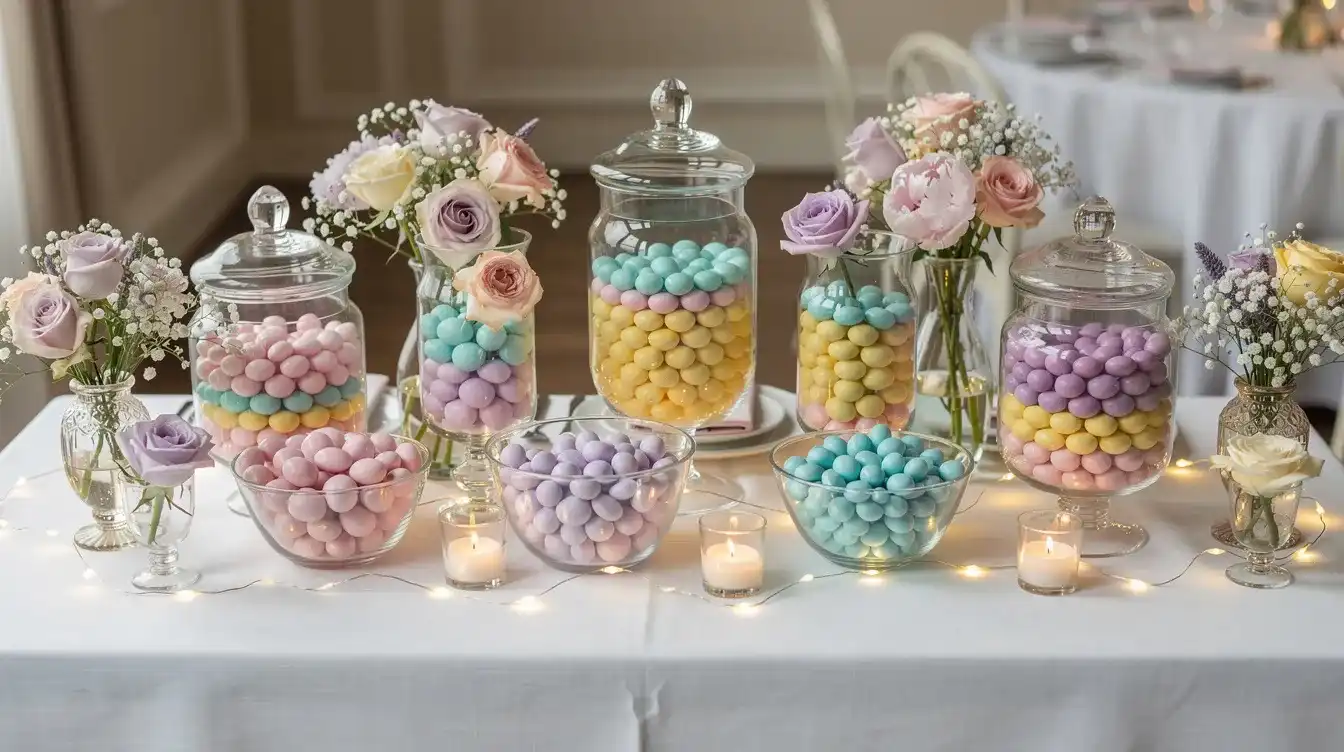
There are three bar concepts that can be combined beautifully:
| Concept | Focus | Ideal for |
|---|---|---|
| 🍬Candy Bar | Loose sweets, lollipops, jelly beans | Evening snack bar, all-night treat |
| 🧁Sweet Table | Includes cake, cupcakes, macarons | Dessert after the meal, coffee table |
| 🥨Salty Bar | Pretzels, nuts, nachos, cheese cubes | Late evening hours, midnight snack |
For an extensive dinner, a candy bar alone is often enough; for long party nights, a savory addition is worth it starting around 10 PM. Design the salty bar to provide a deliberate contrast: use rustic wooden crates, slate platters, darker colors, and clear labels.
The proven rule of thumb is 100-200g of candy per guest. If there is also a dessert, 100-150g per person is sufficient; if the candy bar is the main sweet attraction of the evening, calculate 150-200g. If you have many children and teenagers, be more generous—they are the biggest sweet tooths. Calculate your quantity right here:
Example: 80 guests x 150 g equals 12 kg, divided into 10-12 varieties. Store reserve boxes under the table and refill as needed instead of putting everything out at once; this keeps the bar looking fresh and full all evening.
Costs depend heavily on whether you do it yourself or hire a service. As a rough guide: A DIY candy bar usually costs a few euros per person, primarily for the sweets themselves. A professional provider including delivery, setup, breakdown, and cleaning of containers costs significantly more per person and starts at a fixed base price depending on the region—get specific quotes for this. The biggest cost factors are the sweets, the containers (candy jars, tiered stands), decorations, stationery, and, if applicable, staff.
Potential savings: Bulk packs from wholesalers, renting containers instead of buying them, and second-hand decorations via classifieds. Set a budget cap first and then prioritize the individual elements.
The photo of your trial display is worth its weight in gold: it allows your maid of honor, best man, or helpers to recreate the bar exactly on the day while you take care of more important things. When the bar opens depends on the schedule of your wedding day; the moment right after cutting the wedding cake has proven to be a good time.
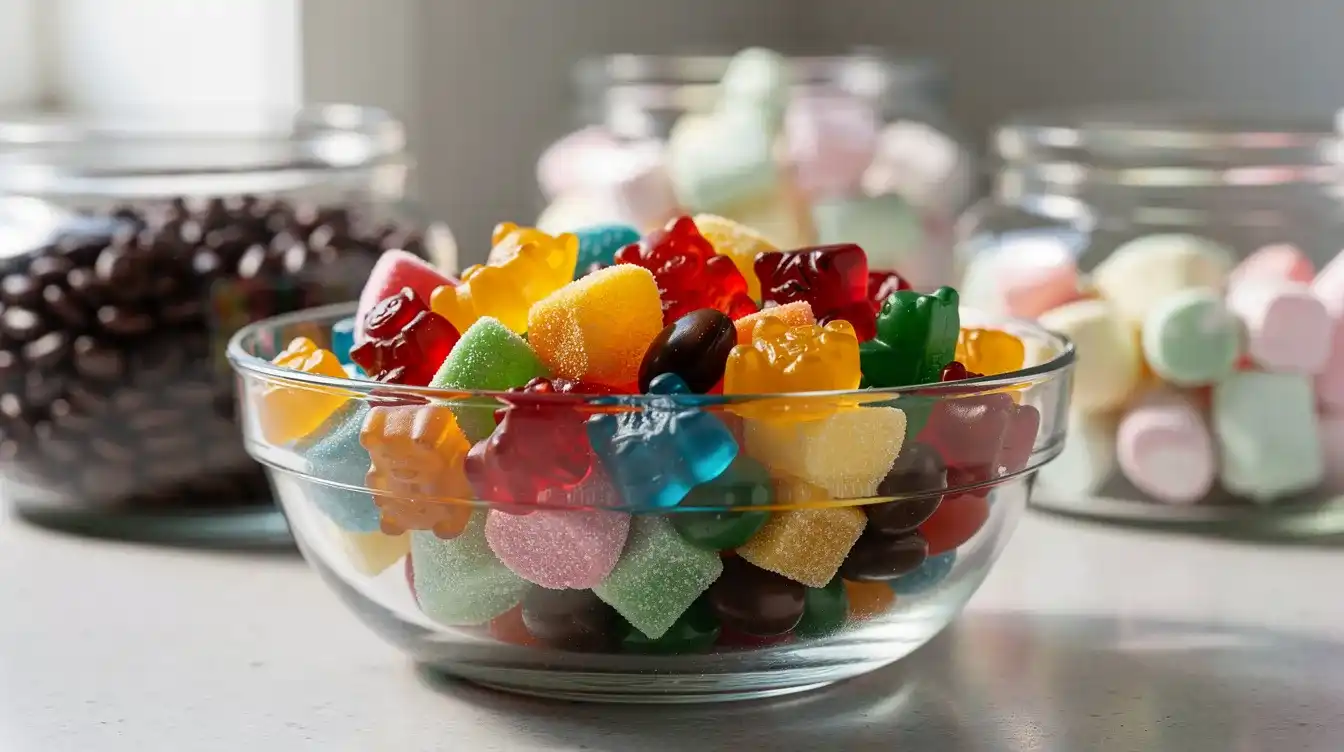
A colorful mix with variety in texture and taste works best: gummy bears and fruit gums (soft, fruity), hard candies and sour drops for variety, chocolate in different shapes, marshmallows, crunchy chocolate-coated candies, and jelly beans, plus sugared almonds as a classic. Personalized sweets like chocolate bars printed with your wedding date make the bar unique.
Include 8-12 different varieties; this keeps it varied without looking cluttered. Very important: clearly label allergens like nuts, gelatin, gluten, and lactose, and set up a small separate corner with alternatives for guests with allergies. Small scoops and tongs prevent direct hand contact, and using several small bowls instead of one giant one keeps everything fresher.
The candy bar needs a prominent, well-lit spot: next to the dance floor, in the foyer, or right by the photo booth—that’s where the best pictures happen when the snack bar and photo booth with props form a shared corner. Avoid high-traffic areas and direct sunlight; chocolate doesn't forgive either. For 50 guests, a table of about 1.2–1.5 m is sufficient; for 80–120 guests, plan for 1.8–2.2 m or two stations.
Containers and tiered heights. Glass jars offer visibility and that nostalgic candy-shop look; alternatives include ceramic bowls, wooden boxes, vintage cups, or mason jars. Tiered stands, crates, and pedestals add height to the display. Practical tips: wide openings for easy grabbing, shatterproof materials in areas with children, non-slip mats under heavy containers, and lids or glass domes for outdoor celebrations.
Decor ideas for your candy bar and stationery in wedding style. A "Love is sweet" sign with your date, a eucalyptus garland or a balloon arch as a backdrop, color-coordinated treat bags, and ribbons. Repeat fonts, colors, and symbols from your other stationery to create a cohesive overall look. Label each variety with small signs that include allergy information.
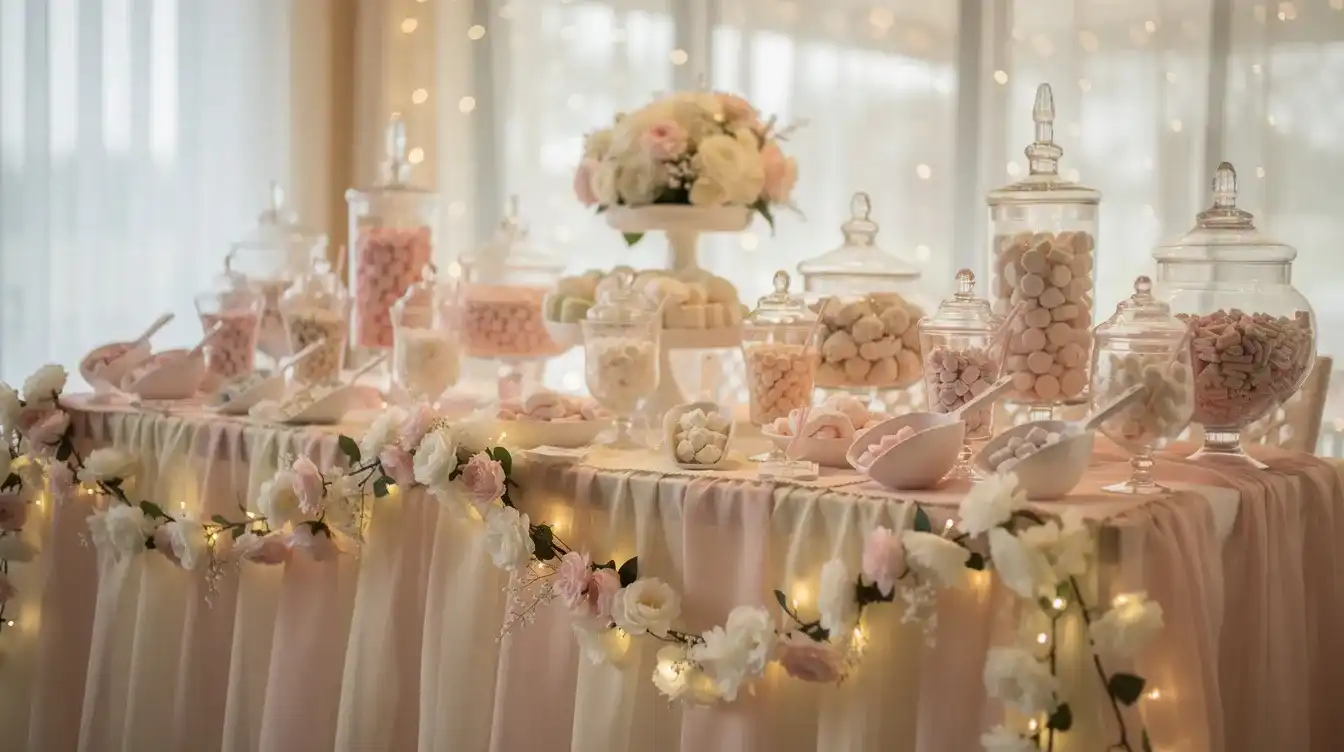
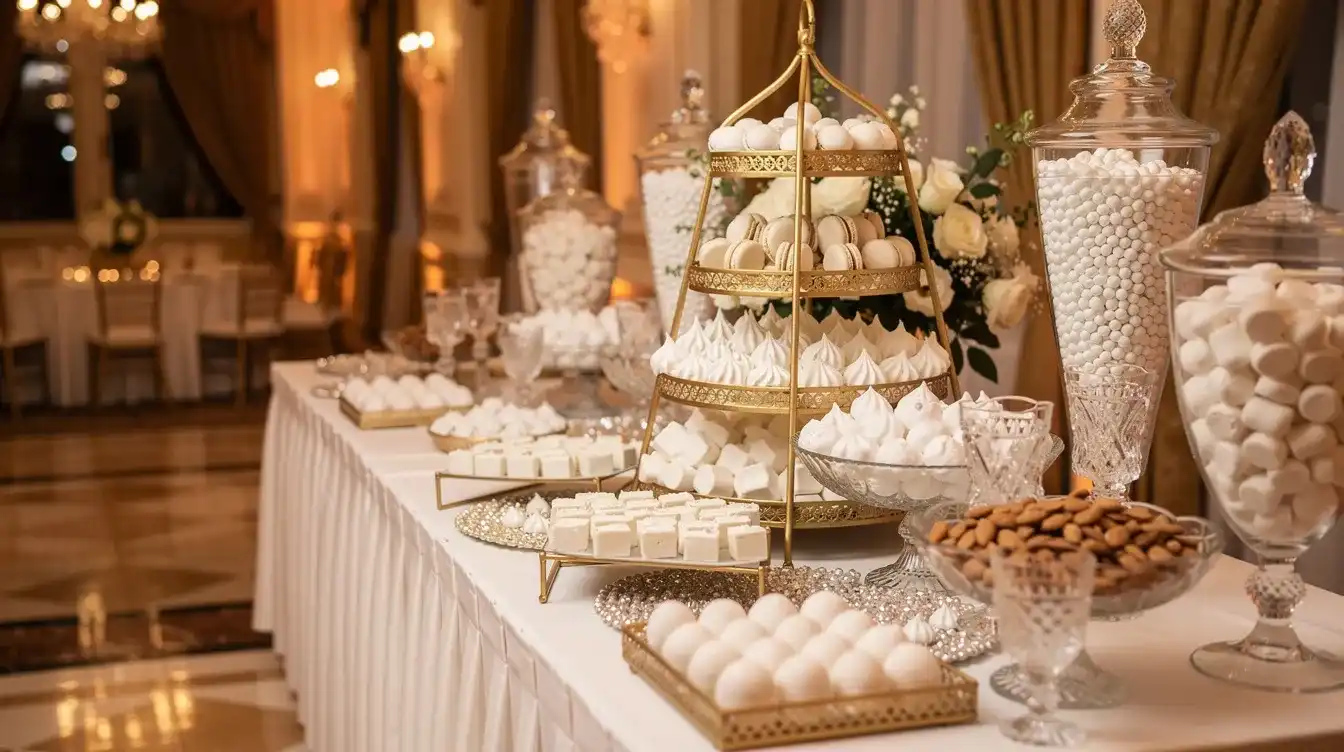
By wedding style: Boho focuses on wood, macramé, and natural-colored sweets; vintage on lace tablecloths, old suitcases as pedestals, and retro candies; urban/industrial on metal shelves and monochrome candy in white, black, and silver; glamour on gold tiered stands, crystal glasses, and chocolate lentils with gold dust.
| Season | Colors | Sweets | Extra |
|---|---|---|---|
| Spring | Pastel, rose | Strawberry candies, lemon cake pops | Floral decor |
| Summer | Citrus, tropical | Gummy candies, marshmallows | Separate shaded area |
| Autumn | Copper, gold, rust | Caramel candies, cinnamon almonds, apple chips | Rustic wood |
| Winter | White, silver, dark red | Speculoos, peppermint chocolate | Hot Chocolate Bar |
Incorporate regional and seasonal products—strawberries in June, chestnuts in October—to add authenticity to your celebration.
Bars are now designed to be modular, with the candy bar often being just one part of the ensemble: a gin bar with 3–5 gins, various tonics, and botanicals like rosemary and cucumber; a Prosecco bar with fruit purées and fresh berries; or, for autumn and winter weddings, a hot chocolate bar with syrups, cinnamon, marshmallows, and whipped cream. For alcoholic bars, ensure they are clearly separated from the candy bar and comply with age-restriction regulations.
Heat, insects, and wind are the enemies of any snack bar. The solutions: glass domes and lids to keep insects out, a shaded spot instead of direct sunlight, cooling pads under the tablecloth for delicate chocolate, and only serving melt-prone items pre-packaged or in the evening. For tent weddings, avoid placing the bar right by the entrance (due to drafts and dust) and have a backup plan for rain. You can find more on outdoor arrangements in our guide Garden Wedding.
A clever dual-purpose idea: guests fill their own bags to take home, saving you the need for separate wedding favors. Paper candy bags with a monogram, kraft paper boxes with stickers, or small jars work perfectly for this. A sign ties it all together: "Fill your bag—our sweet thank you to you." Keep separate, specially designed bags on hand for children.
Clear roles are crucial: bridesmaids, groomsmen, or designated friends should set up according to a photo guide, one specific person should be responsible for refilling at set times and clearing away empty packaging, and the venue staff should handle the teardown.
The most important rule: the bride and groom should have nothing to do with the candy bar on the day itself. Any leftover non-perishable sweets can be given as a thank-you to vendors, used as an after-wedding brunch snack, or donated to social organizations.
How many sweets per guest should we plan for?
When should the candy bar be opened?
How many varieties are ideal?
Should you rent a candy bar or DIY?
What should you do for an outdoor summer wedding?
Does the candy bar replace the wedding cake?
Check event equipment, book in 90 seconds, and choose pickup or delivery. Deposit-free and insured throughout Germany and Austria.
Wir haben dir eine Mail geschickt, bitte bestätige sie um den Rabattcode zu erhalten.