On a carnival float, it’s not the wattage that counts, but how long the system can play at full volume, as a parade lasts several hours without access to a power outlet. Active battery-powered speakers are the simplest solution for most floats; passive systems are only worth it for larger setups. Here you will find types, sizes, platform placement, and power planning.

To professionally sound-equip a carnival float, you need vibration-resistant and weather-proof active speakers, ideally set up as a combination of compact top speakers and floor-level subwoofers. For absolutely safe, continuous operation on the road, use an emission-free mobile power station instead of loud gas generators, and always secure all power cables with an RCD circuit breaker. This guide compares the best sound systems for your carnival float and shows you exactly how to set up the perfect sound with maximum reach.
What really gets the crowd going at a parade is entirely down to the right sound system on your float. But the conditions are extremely tough: limited space, changing weather, and constant vibrations. A standard sound system from your home party basement often gives up the ghost, smoking, after just one hour on the trailer bed. We clarify the most important questions regarding the necessary bass pressure, the best system choice, and a direct price comparison so your party doesn't end in a washout. You can find the comprehensive guide to parades, halls, and balls in our Carnival & Fasching Guide.
A clean sound setup for a carnival parade has three goals: consistent volume along the route, clear speech intelligibility for announcements, and robust equipment that can withstand three to five hours of continuous operation.
Fun thrives on sound. To ensure people on the sidelines don't just feel the bass but also understand the host and announcements, you need a balanced sound system. A hi-fi combo from the living room isn't enough, partly because vibration and moisture will destroy such speakers within hours. What sounds good at a small backyard party quickly falls apart on an open carnival route.
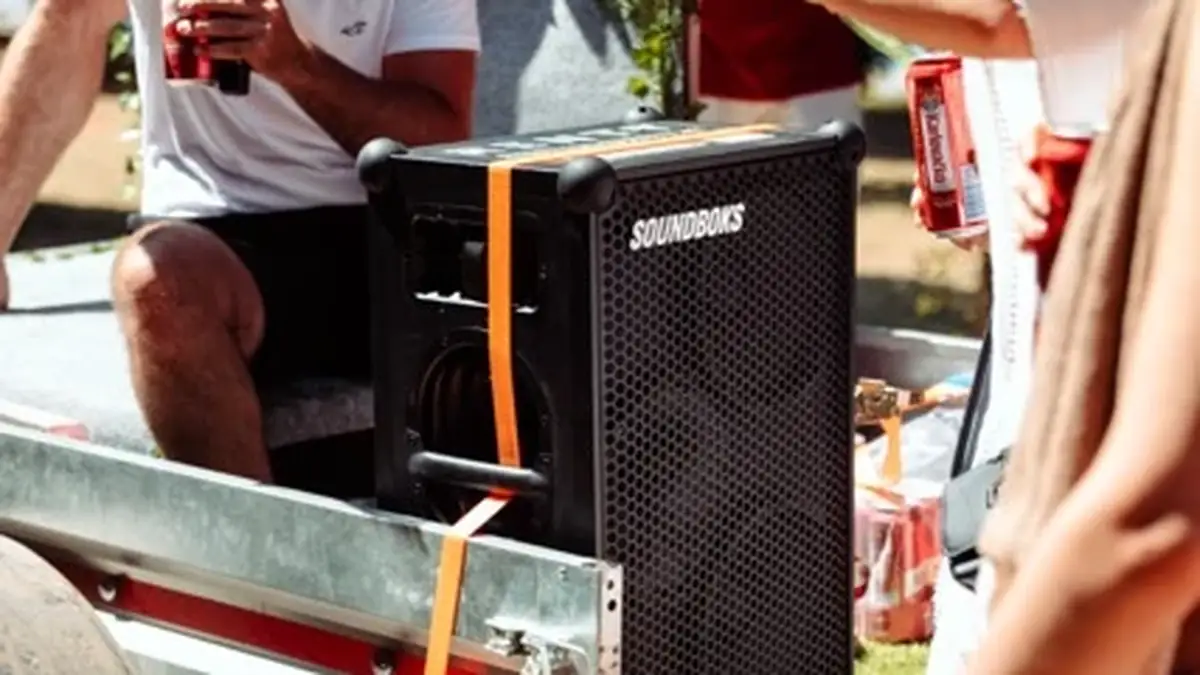
The market is confusing. The following categories will help you with your preliminary selection before you commit to specific models. Every carnival party and every float has its own requirements; the size of the audience and the length of the route make all the difference.
Active speakers have the amplifier and often a DSP plus limiter integrated. You only need power and an audio source. Passive speakers work with external amps, which offers more flexibility but also more cabling and a higher risk of failure. For a carnival float with a short setup time, an active system is usually the more practical choice. Active speakers are the default for many clubs; passive is only worth it for larger events or long-term club use.
Full-range boxes play everything from a single cabinet; they are lighter and save space, but provide significantly less bass pressure. The classic mix of 10 to 12-inch tops and 12 to 18-inch subs delivers more punch on the street. For Schlager, carnival hits, and electronic tracks, the bass determines the mood, which is even more important during evening routes.
For smaller carnival floats, compact full-range boxes are sufficient. From ten meters in length, a combination of tops and subs makes sense to keep the volume consistent along the entire side. More bass usually also means more boxes and more weight on the platform.
Plastic is the standard for parades. Wood shows its advantages in indoor venues, but the application there is different.
The following overview shows models that regularly prove their worth at carnival parades:
| Model | Technical type | Suitability & area of use |
|---|---|---|
| Soundboks 4 | Active / Battery-powered | Robust battery-powered speaker that doesn't require a generator; ideal for small carnival floats. |
| Soundboks 3 | Active / Battery-powered | Market standard on many trailers, weather-resistant and with swappable batteries. |
| JBL PartyBox 1000 | Active / Mains-powered | Up to 120 dB volume, integrated lighting, perfect for larger setups. |
| Teufel Rockster Air 2 | Active / Battery-powered | Compact format with high output and extremely long battery life. |
| HK Audio Linear 5 MK II | Complete system | Professional PA for large floats, a classic choice for clubs and associations. |
| RCF ART 910-A + Sub 708 | Two-way PA | High performance and crystal-clear speech intelligibility over long distances. |
At Renty, you get this equipment with no deposit and full insurance included. Our range of models spans from compact battery-powered speakers for small clubs to large PA systems for entire parade floats. This reduces the risk if a speaker happens to bump against the edge of a trailer or a connection gets damaged during setup or teardown. The Soundboks has become the standard for many carnival floats, making the classic generator obsolete for many applications.
The choice between an active system and a passive system affects almost everything: setup, maintenance, power consumption, the amount of cabling, and potential points of failure.
| Criterion | Active system | Passive system |
|---|---|---|
| Operational advantages | Minimal cabling required Preset audio profiles Integrated DSP limiters protect equipment | Components can be replaced individually On-site repairs are often easier Load can be distributed across multiple amplifiers |
| Disadvantages & risks | If one active speaker fails, that individual system stops working Electronics repairs are often more expensive | Additional amps take up significant space Complex cabling is prone to errors |
| Budget focus | Lower initial purchase cost Very good price per watt | Generally requires a higher starting budget Costs increase with every amplifier module |
If you are working with a limited power supply, modern Class-D amplifiers in an active system have a clear advantage. A passive solution is the right choice if you need higher volume levels and have an experienced technician or DJ on your team. For private carnival party formats or small club gatherings, the application is usually very simple, but it becomes more demanding for large events with multiple sources.
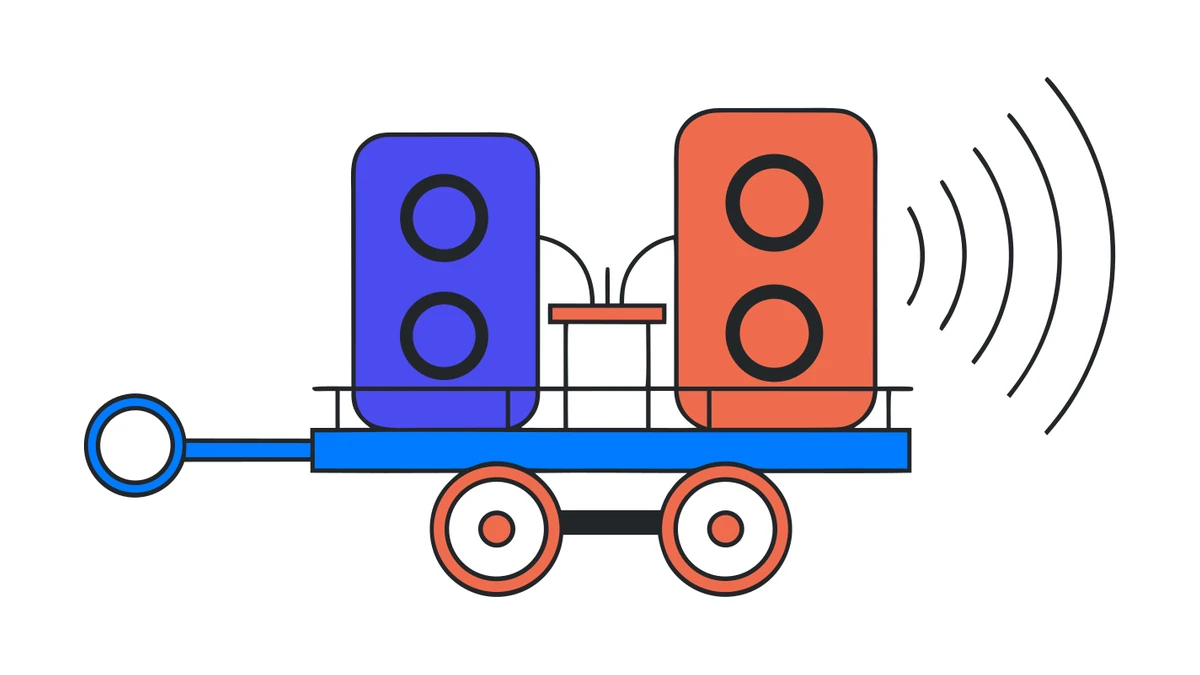
The best speaker is useless if it's positioned incorrectly. Three principles for your layout:
A compact mixer with four to eight inputs is sufficient for most setups. You need inputs for a DJ deck or smartphone, a wireless microphone for the host, and possibly a second source. A crossover is only relevant if you are working with a passive setup and separate paths for tops and subs, meaning you are driving one amplifier per path. If you want to go without a mixer, you can use the Bluetooth input directly on the Soundboks, which is enough for many carnival parties on smaller setups.
Weather covers for the tops and rubber dampers between the speakers and the frame are not optional extras. Boxes that sit directly on a surface transfer vibrations unfiltered to the speaker chassis.
Your energy requirements determine the entire setup. As a rule of thumb:
Traditional gasoline generators provide power but create noise, exhaust fumes, and often lack a clean sine wave. An inverter generator with AVR is mandatory as soon as sensitive DSP electronics are on board. An unsuitable power unit will eventually damage your amplifiers and mixer. Modern battery power stations like the EcoFlow Delta Pro have replaced the classic generator on many carnival floats. They provide you with quiet, emission-free, and stable power without needing to refuel during the parade.
| Power requirements | Suitable hardware setup | Typical use case |
|---|---|---|
| 1 to 3 kW | Compact active systemsSetups with one or two battery-powered speakers (e.g., Soundboks) | Small to medium carnival floats, private groups |
| 3 to 6 kW | Medium-sized systemsTops and one subwoofer, combined with some LED lighting | Longer parade floats (10 meters and up), club floats |
| 6 to 10 kW | Large PA systemsMultiple power amplifiers, subs, tops, and extensive lighting | Large parade floats, evening routes with high lighting requirements |
Electrical safety
Sound carries the mood, but lighting makes the parade float visible. A few battery-powered LED bars, a small fog machine, and a strobe light take up little space and significantly improve the overall impression. If you're using a JBL PartyBox, light show features are already built in. For larger setups, separate lighting equipment is worth it so your float doesn't disappear in the shadow of the vehicle behind you. On evening routes, lighting is just as important as sound.
A fog machine adds density to the stage and the area around the float, especially at dusk or during night parades. Small battery-powered fog machines don't require a permanent power connection. If you place the fog machine directly behind the side wall on one side, you get the effect without obstructing the view for the driver on the other side. A little light and some fog are often enough to create a theme where sound alone might feel flat. Especially for carnival, a small fog machine plus two LED bars turns a float into an eye-catcher that works throughout the entire route.
Fog does something on a float that light alone cannot: it makes light beams visible and makes the setup look larger from a distance. It is important to have a device with its own power supply and enough lead time to heat up. The overview of fog machines by output shows which size is sufficient for the parade.
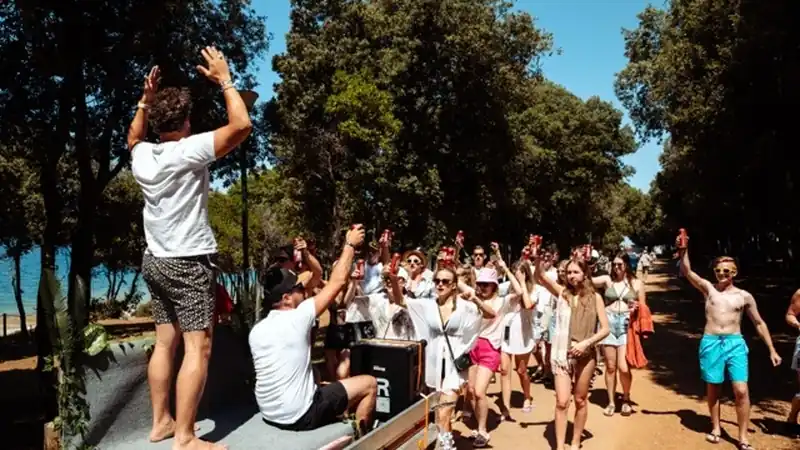
Even the best equipment will fail if it isn't installed properly. The setup often has a greater impact on the sound than the choice of speakers themselves.
After use: Let speakers and connections dry out before putting everything back into the case. Moisture during transport is the number one killer of electronics; it silently eats away at chassis and contacts over the course of weeks.
If you are torn between different designs, it is best to compare three values side-by-side: continuous power, battery life, and weight. This will determine whether an active speaker fits on the float or if a passive system makes more sense. The overview of battery-powered speakers shows these values directly side-by-side.
Before you book or buy, go through these points in order. The sequence is more important than it might seem at first glance, as every decision influences the next.
Anyone who checks off these points will have the main risks under control. Last-minute decisions on the day of the parade are the most common cause of failure, as there is usually neither the time for spare parts nor the patience for adjustments.
Which speakers are best suited for a carnival float?
Do I need an active or a passive sound system for the parade?
How do I optimally position the speakers on the carnival float?
How do I power my sound system on the carnival float?
Is a mixing console absolutely necessary on a carnival float?
How do I protect my speakers from rain and vibrations?
Check event equipment, book in 90 seconds, and choose pickup or delivery. Deposit-free and insured throughout Germany and Austria.

Wir haben dir eine Mail geschickt, bitte bestätige sie um den Rabattcode zu erhalten.