As soon as music is played publicly at your event, GEMA fees apply, whether it's a live band, DJ, or playlist. The deciding factor is the public nature of the event, not the admission fee. This guide explains when fees apply, how tariffs are calculated based on area and admission, and how to register in time to avoid late-filing surcharges.

GEMA (the German society for musical performing and mechanical reproduction rights) represents the rights of composers, lyricists, and music publishers in Germany. If you use music publicly, for example at events, in the hospitality industry, or online, you must pay GEMA fees. These fees ensure that music creators receive compensation for the use of their works.
A large portion of the revenue is distributed as royalties to GEMA members, including composers, lyricists, and music publishers. GEMA acts as an intermediary: it collects the fees and distributes them to the rights holders of the works actually performed.
Private vs. public: As long as music is played only within the closest circle of family or friends, no registration is required. It becomes public as soon as people are present who have no personal relationship with the organizer. From this point on, GEMA fees apply.
If you need the exact amount for your event, the GEMA calculator saves you from having to navigate tariff tables: enter the event type, area, and admission fee to see the total.
GEMA charges fees for every form of public music use. This applies to a wide range of events and types of usage:
GEMA fees also apply to events without an admission fee as soon as music is played publicly. The admission fee does not determine whether you pay, but rather how much: without an admission fee, the lowest tier of the tariff table simply applies. As a rule: as soon as people are present who are not part of your private circle, the use of music must be registered. Every organizer bears the responsibility here.
For events with an admission fee, registration with GEMA is mandatory in every case. You can check in one minute whether your event is considered public and what it will cost using the GEMA calculator.
Registration must take place before the event. GEMA does not specify a fixed deadline, but their recommendation is: the earlier, the better. Registering early allows you to clarify any open questions in peace and secure potential discounts. GEMA provides an online portal for this purpose, through which the entire process is handled digitally.
The following information is required for registration in the online portal:
In the GEMA online portal, you can register your events, select the appropriate tariff, and calculate the price directly. The integrated price calculator takes into account the area, admission fee, and type of music usage. A repertoire search is also available, allowing you to check whether specific works are subject to GEMA licensing. You can download forms and confirmations or receive them via email directly through the online portal.
Tip: Create an account in the online portal. This allows you to keep track of all your registrations, payments, and receipts.
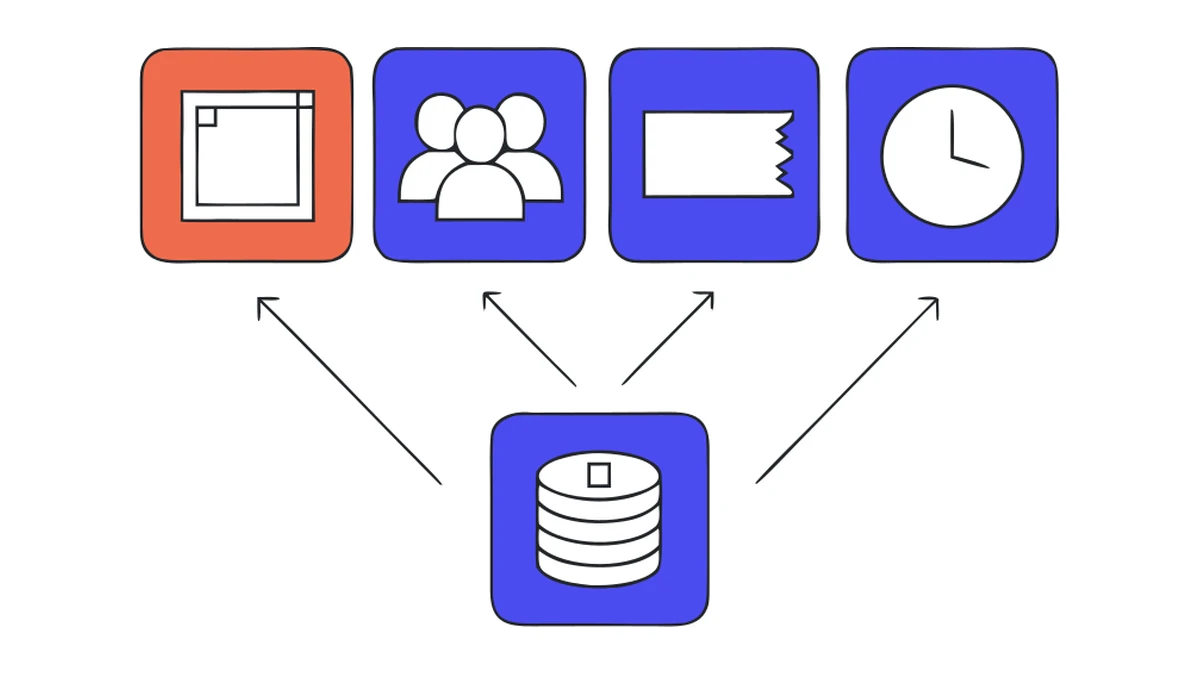
The cost of GEMA fees depends on several factors. For events, GEMA uses a linear tariff structure: the remuneration increases proportionally to the area.
The most important influencing factors:
The number of visitors is intentionally not included in this list. This is the most common misconception regarding GEMA calculations: for events, GEMA calculates based on floor space and admission fees, not the number of guests. While you do provide the number of guests during registration, it does not factor into the remuneration.
Remuneration rates vary depending on the tariff and type of usage and are adjusted annually. You can get an initial estimate using the GEMA calculator, but the final binding invoice is issued by GEMA itself via their portal at gema.de.
Example: Club event with recorded music: A club event in a hall, 150 m² in size, with a DJ and no admission fee. This falls under tariff M-V and, based on 2026 rates, costs around 55 euros net, or just under 59 euros gross for the day of the event. If the same event takes place outdoors, tariff U-ST applies, and the amount drops to approximately 43 euros net. Sports clubs and other associations may be eligible for additional discounts through collective agreements held by their umbrella organizations.
Example: DJ event with admission: A dance event with 200 m² of space and a net admission fee of 10 euros costs around 282 euros net, or about 301 euros gross. The number of visitors is irrelevant; the deciding factors are the floor space and the admission price bracket.
Example: Background music in a shop: Tariff M-U applies to background music in a retail store. Billing is based on floor space as an annual contract, not per event. GEMA publishes the specific rates in their tariff sheet.
Do you want to know what costs to expect before you register? With our free GEMA calculator, you can calculate the GEMA fees for your event in just a few seconds. Simply enter the event type, floor space, and admission fee to receive an estimate based on the official remuneration rates. This allows you to factor the costs into your event budget early on.
GEMA distinguishes between several tariff groups based on the type of music usage. The logic behind the abbreviations is simpler than it looks: U stands for music performed by musicians themselves, M for music from recordings. U-ST is the special case for outdoor events.
Tariff M-V (Recorded music playback with event character): Applies to events where music is played from recordings, such as by a DJ, via a playlist, or a sound system. This is the standard for weddings, company parties, celebrations, and balls. It is calculated based on the event floor space and the net admission fee.
Tariff U-V (Events with musicians): Applies when musicians perform live, such as at balls, club festivals, tent festivals, church fairs, or dance events. This is also based on floor space and net admission fee. If the event lasts longer than eight hours, an additional 25 percent of the base fee is added for every two hours thereafter.
Tariff U-ST (Outdoor events): Applies to community festivals, street fairs, village festivals, and city festivals, as well as cultural, social, and religious events held outdoors without an admission fee. It is calculated based on the total event area per day, measured from the first to the last stall, including walkways and escape routes. A special discount of 15 percent is already incorporated into these rates, which is why an outdoor event is significantly cheaper than the same event held in a hall.
Tariff U-K (Concerts and spoken-word cabaret): Applies to entertainment music concerts, spoken-word cabaret, and comedy. Here, GEMA calculates based on its own rates, usually based on revenue. Not to be confused with M-SP, which applies to sports events.
Clubs are not exempt from GEMA; this is the most persistent myth in club life. Even a non-profit organization pays for public music usage; they just often pay less. There are three ways to lower the amount:
Clubs and associations should check with their umbrella organization to see if such an agreement is already in place.
Fees apply not only to physical events. The use of music on the internet is also subject to GEMA fees as soon as copyrighted works are made publicly accessible.
This includes, among other things:
Remuneration rates for digital use differ from those for events. On the internet, the price is usually based on the type and scope of use, such as the number of downloads or streams. A license from GEMA is required in any case.
One point that is often overlooked: standard streaming subscriptions are licensed exclusively for private use. For public playback in a shop or at an event, you need a commercial music source, in addition to your GEMA registration. The two are completely separate matters.
There are cases where no GEMA fees are due:
Public domain works: Music by composers who have been deceased for at least 70 years is in the public domain. Many works from the Baroque, Classical, and Romantic periods fall into this category. Anyone can use this music without paying GEMA fees.
Music by non-members: Artists who are not members of GEMA or other collecting societies can label their works as GEMA-free. You can find GEMA-free music for download on various websites, some of which is free of charge.
Please note: Incorrectly declared GEMA-free status can lead to back payments and legal consequences. GEMA initially assumes that protected music was played; this is known as the "GEMA presumption." You must be able to refute this presumption, so keep your playlists and proof of licensing. In case of doubt, you can clarify whether a work is subject to GEMA fees via the repertoire search on the GEMA online portal.
Anyone who uses music publicly without registering and paying the fees risks serious consequences. In addition to the back payment, GEMA charges a surcharge for inspection costs, which can double the original fees. Discounts are forfeited in such cases.
Furthermore, you may face claims for damages and, in severe cases, criminal charges. This applies to all events, whether they are parties, sporting events, concerts, dance events, or anything else. The GEMA requirement also applies to free events that feature music.
The rule is simple: it is better to register once too often than once too little. And if you have forgotten, register after the fact anyway. The inspection surcharge is a one-time fee, whereas an unauthorized use remains an outstanding liability.
For registration, it does not matter what equipment you use to play the music. For the evening itself, it does: the tariffs are based on the area, and the sound system should match that size. If you are measuring the area for GEMA anyway, you will have the figure ready for the appropriate sound system.
Planning an event and need the right equipment? In our event planning guide you will find everything else you need to know about venues, technology, and organization.
Are GEMA fees due even if I don't charge admission for my event?
How can I calculate the GEMA costs for my event in advance?
Is there a GEMA fee table to quickly compare prices?
How much is the GEMA fee?
When do you have to pay GEMA fees?
Which events are exempt from GEMA?
Check event equipment, book in 90 seconds, and choose pickup or delivery. Deposit-free and insured throughout Germany and Austria.

Wir haben dir eine Mail geschickt, bitte bestätige sie um den Rabattcode zu erhalten.