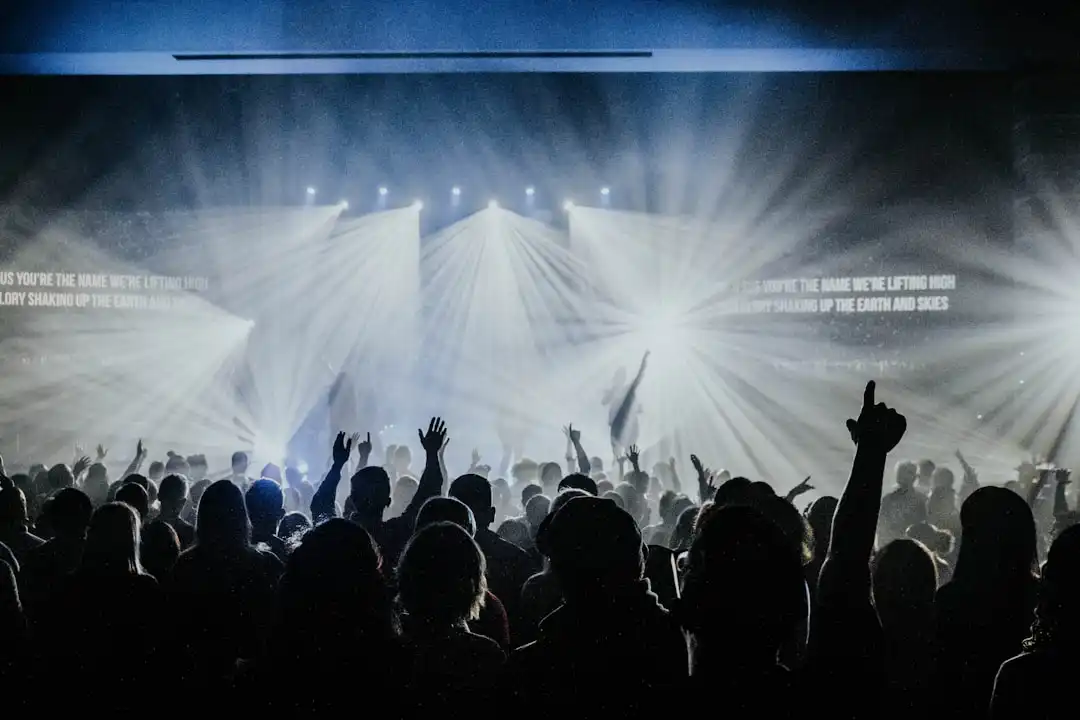
A warm-up lasts five to fifteen minutes and has one clear goal: to get every participant to speak at least once before the actual work begins. If you skip this step, you will end up debating with the same three people for half the day. Here you will find check-ins, energizing exercises, and formats for brainstorming.

For the perfect start to a productive workshop, you need targeted warm-ups like quick check-ins to gauge energy levels, energizing exercises like counting in a circle to build team dynamics, and creative methods like silent brainwriting for subsequent ideation. An effective start ideally takes five to fifteen minutes and creates the psychological safety needed for complex tasks like a SWOT analysis in a strategy workshop. This guide covers the best exercises for moderators and leaders. For seamless preparation, our comprehensive workshop planning guide is also available.
The first few minutes of a workshop significantly determine the rest of the day. If participants sit stiffly in their chairs at the start, staring expectantly into the room, every subsequent discussion will be a struggle. If the group starts with a good warm-up, the ice is broken long before the actual work begins. We show you proven methods for seminars and meetings to take your team's focus and creativity to a whole new level.
👉 Still working on your overall plan? Then feel free to check out our workshop planning guide.
Warm-ups are short exercises that boost attention, creativity, and team dynamics before the core work phases. When it comes to starting a strategy workshop or meeting productively, warm-ups help participants mentally align with the shared goal.
The goal is not just entertainment. Effective warm-ups lower barriers to entry and improve the quality of later discussions. They build trust and create psychological safety so that all participants contribute openly and honestly. This is crucial in a strategy workshop, where the focus is on developing new measures and evaluating perspectives. Without this start, strategic discussions often remain superficial.
These methods can be used not only in workshops but also in meetings, seminars, and team days. The choice depends on the goal, group size, situation, and available time.
A check-in is the simplest warm-up format. Each person answers a short question that reveals their energy level and expectations. Creative variations like weather metaphors ("What is your inner weather today?"), a battery scale, or visualizing one's state on a sheet of paper quickly generate comparable signals without becoming too personal.
Plan for 60 to 120 seconds per person. For a group of 15, that is a maximum of 30 minutes. For larger groups, digital tools (e.g., Mentimeter or Miro) are suitable, allowing everyone to answer simultaneously. As a moderator, the check-in gives you an immediate picture of where the group stands and helps you adjust the rest of the agenda.
Energizing warm-ups bring energy into the room and ensure that participants get out of "listening mode." They are particularly suitable after breaks, after long presentations, or right at the beginning of a workshop.
| Exercise | Duration | Group size | Effect |
|---|---|---|---|
|
🔢
Counting in a circle
|
3-5 min. | 5-20 |
Readiness to listen
Non-verbal coordination
|
|
✊
Rock-Paper-Scissors Tournament
|
5-8 min. | 8-40 |
Energy
Humor
Group dynamics
|
|
🧘
Short movements / Stretching
|
3-5 min. | Any |
Physical alertness
Concentration
|
|
✈️
Paper Airplane Contest
|
5-10 min. | 6-25 |
Playful competition
Collaboration
|
Counting in a circle: The group stands in a circle and counts together from 1 to 20 without two people speaking at the same time. If it happens, the round starts over. This exercise trains non-verbal coordination and breaks the ice between participants in just a few minutes.
Rock-Paper-Scissors Tournament: A fast-paced game that boosts energy and creates humorous group dynamics. The losers cheer on the winner in the next round until only one person remains at the end of the tournament. It’s fun and requires zero preparation.
Paper Airplane Contest: Everyone builds a plane, throws it, and the group evaluates them. It encourages non-verbal collaboration and produces immediately visible results. It works particularly well as an opener when participants don't know each other yet.
When team members don't know each other, or only superficially, the workshop needs an icebreaker step before the actual work begins. These methods reduce social distance and create the foundation for open collaboration.
Partner interview: Two people interview each other on three questions (e.g., role, expectations for the workshop, hidden talent) and then introduce each other to the group. This creates new perspectives and helps team members recognize their strengths and roles within the team.
Superpower and Kryptonite: Each participant names their greatest strength (superpower) and their greatest weakness (kryptonite) in a work context. This reveals work preferences and facilitates later role distribution in the strategy process. Leaders and key personnel should go first to set the tone.
Dream job introduction round: Lightens the mood and allows for quick personal connections without becoming too private. It also works well in groups that already know each other because the answers are often surprising.
Creative sessions and strategy workshops require a different kind of opening than a reporting meeting. These warm-ups prime participants for divergent thinking and break through linear thought patterns.
Silent Brainwriting: Everyone writes ideas on cards in silence, without speaking. After a set time, the cards are passed on and added to. This method generates many ideas in parallel and reduces the dominance of individual voices in the discussion. It is a powerful format, especially in strategy workshops with mixed-hierarchy groups.
Provocation Cards: Cards with deliberately exaggerated statements or questions stimulate unusual perspectives. For example: "What would happen if we gave our core product away for free?" Such prompts open the door to ideas that would never emerge in a standard discussion.
Combined Association Games: Connect insights from warm-ups directly to strategic questions. The transition from the exercise to the actual work becomes fluid rather than abrupt, effectively focusing the workshop on the core topic.
SWOT analysis is one of the most frequently used methods in strategy workshops. It bundles internal strengths and weaknesses as well as external opportunities and threats to evaluate and prioritize corporate measures.
Preparation: Market and resource information collected in advance increases the validity of the results. Anonymous pre-surveys reduce the dominance of individual opinions. Stakeholders and key personnel should be involved during the preparation phase to integrate relevant perspectives.
Process: First, analyze internal factors, then the external environment. This contrast increases clarity regarding strategic levers. The results of a SWOT analysis should provide concrete derivations for strategic goals and measures, not just a list. Weight the entries by impact and probability of occurrence to reach targeted decisions. Using SWOT is useful for companies of all sizes and systematically supports strategy development.
Transfer: Link the SWOT results directly to initiatives, responsibilities, and metrics. Without this step, the analysis remains a document that ends up in a drawer.
Many of these exercises require a shared surface that everyone can see. A flipchart is sufficient for up to about twelve people; beyond that, the back half of the room can no longer read it. For groups of this size, a projection is necessary. Our <a href="#">projectors for workshop rooms</a> are categorized by room size.
Warm-ups should be considered during the workshop planning phase. 5 to 15 minutes per warm-up is enough to achieve an effect without slowing down the agenda. Execution should take place within a clear organizational framework that structures the process.
The selection must match the workshop's goal. An energizing game before a creative session works differently than a check-in before a strategy discussion. Some exercises scale well for large groups, while others only work in circles of 6 to 12 people. Adapt the warm-ups to the age, hierarchy, and cultural norms of the participants. What works in a casual team can backfire in a formal setting.
At the end of the workshop, there should be a clear conclusion: document results, define next steps, and assign responsibilities. Consistently track the implementation of agreed-upon measures and plan regular follow-ups.
Overly long warm-ups that last more than 15 minutes steal time from the content phases and frustrate participants who came for results. A mismatch between the warm-up format and company culture reduces acceptance. Warm-ups without a thematic bridge to the strategy or the workshop topic create no relevance and feel like a waste of time.
The biggest mistake: not considering the participants' needs. If you overwhelm a group of introverted developers with a dance game, you will lose them for the rest of the day. Good warm-up exercises meet the group where they are and lead them to where they need to be for teamwork and collaboration.
Are you planning a workshop and need the right technology in addition to good methods? In our <a href="#">guide to workshop planning</a>, you will find everything you need regarding preparation, process, and technology.
Why are warm-ups important in workshops?
How long should a warm-up last?
Which warm-up exercise is suitable for large groups?
How do I choose the right warm-up for my workshop?
Can warm-ups also be used in virtual workshops?
What are common mistakes when conducting warm-ups?
Check event equipment, book in 90 seconds, and choose pickup or delivery. Deposit-free and insured throughout Germany and Austria.

Wir haben dir eine Mail geschickt, bitte bestätige sie um den Rabattcode zu erhalten.