

A graduation speech should last five to eight minutes and follow a simple structure: a shared opening, three retrospectives with concrete scenes, thanks, and an outlook. Names are more powerful than numbers, and inside jokes are more effective than clichés. Here you will find the structure, phrasing aids, examples, and the most common mistakes.

For the perfect graduation speech, you should ideally use a classic three-part structure consisting of a strong opening, an emotional main body, and a concise conclusion, with a maximum length of five to ten minutes. In terms of content, combine funny anecdotes from school life with sincere thanks to dedicated teachers, but avoid inside jokes that only a few classmates will understand. To master the performance in front of several hundred guests completely stress-free, a sound check with a good wireless microphone is also recommended. This guide shows you exactly how to reduce nervousness and master your speech with confidence.
The graduation speech is that special moment when an entire class comes together one last time before everyone’s paths diverge for good. A truly great graduation speech stays in the memories of many guests for years—but unfortunately, a truly bad one does, too. This detailed guide shows you exactly how to write a speech that really hits the mark: from the first captivating sentence and the central theme to the best tips for a confident performance on the big stage. If your committee needs additional support with the overall organization in addition to the emotional speech, you will find all other important steps in our comprehensive graduation ball planning guide.
The graduation speech marks the transition from daily school life to a new chapter in life. It provides an emotional framework for the graduation and creates a shared feeling that resonates beyond the ceremony itself. For the graduates in the audience, the speech is often the moment when their time at school finally feels complete.
The speech strengthens the sense of unity within the class. It brings back shared memories, honors teachers and parents, and looks toward the future. At the same time, the public nature of the event increases the pressure of expectations. This makes good preparation all the more important. The following sections provide all the tips you need for a successful graduation speech.

A graduation speech follows a clear triad: a strong opening, a content-rich main body, and an emotional conclusion. Keep this structure in mind while writing.
The first 20 to 30 seconds determine whether the audience stays engaged or starts to drift off. A strong opening can be a quote, a short anecdote, or an image that everyone in the room immediately recognizes. Alfred Hitchcock is said to have remarked: "The length of a film should be directly related to the endurance of the human bladder." This also applies to speeches. Anyone who starts with a line like that has the audience's attention.
A reference to the class motto or a shared experience of the graduating class creates immediate identification. A subtle joke lightens the atmosphere without offending teachers or guests.
The main body is the heart of the graduation speech. This is about your time at school, formative experiences, and the people who accompanied the class. Choose three to four episodes that resonate with as many classmates as possible. Inside jokes that only four people understand do not belong in a speech in front of 300 listeners.
Alternate between humor and serious moments. A graduation speech that is only funny remains shallow. One that is only emotional becomes exhausting. The mix makes the difference. Thanking teachers, parents, and other supporters is a fixed part of the program. Keep it concrete and brief. An example: "Thanks to Mr. Müller, who taught us that chemistry is more than just copper sulfate and panic" works better than a general "Thanks to all the teachers."
The conclusion of your graduation speech should convey a single, clear message. Not a collection of advice, but one thought, wish, or image that sticks. A short closing quote or a personal remark that ties back to the opening makes it easier for the audience to remember. End the speech in a way that allows for a smile and perhaps a tear at the same time.
When writing a graduation speech, fixed building blocks serve as a helpful guide. You don't have to use all of them, but they provide a structure you can work along.
First days of school and development: The first day of upper school is a great starting point. What was it like to walk into those new classes for the first time? How have things changed over the years? This narrative arc makes the class's development tangible.
Final exams and shared experiences: The final exams are the one experience that connects all graduates. Exam stress, study groups, the moment after the last test—these are images everyone in the room knows. Look back on your time in school without slipping into an endless list.
Friendships and teachers: Mention specific examples, but make sure they are inclusive. Anyone who doesn't see themselves in the speech will feel left out. It is better to describe general scenes than to single out individuals (except for thank-yous).
Wishes and perspectives: At the end, look ahead. Not everyone knows where their path leads—university, vocational training, travel, work. A good graduation speech connects with all fellow graduates, regardless of their goals. Formulate wishes that are open enough to fit various life paths.
Balancing humor and seriousness is the biggest challenge when writing a graduation speech. Humor works best when it is inclusive. Jokes at the expense of individual students almost always backfire, especially when parents, teachers, and school administrators are in the audience.
Irony can create tension if it remains universally understood. Politically sensitive topics and offensive jokes are off-limits. A joke that gets a laugh but causes trouble afterward isn't worth the moment. The rule of thumb: if you're wondering if a joke goes too far, it does.
A practical tip from the editorial team: Test your best punchlines in advance on two or three people who aren't in your inner circle. If they laugh, the humor will work in front of the large audience, too.
Acknowledgments are an expected part of any graduation speech. Keep them brief and specific. General platitudes like "Thanks to everyone who accompanied us on this journey" fall flat. It is better to name specific groups (teachers, parents, janitorial staff, administrative staff) and find a concrete connection for each group.
Public recognition for special contributions strengthens the sense of community. Small symbolic gifts are a nice gesture, but not a must. Ensure that honors do not take up too much time; they should be part of the speech, not an event in their own right.
The recommended duration for a graduation speech is five to ten minutes. This corresponds roughly to 700 to 1,400 words of spoken text. Less is often more. A speech that ends with a strong conclusion after seven minutes is more memorable than one that peters out after fifteen.
Plan for pauses of one to two seconds after key points. This gives the audience time to process and gives you room to breathe. Coordinate the speech duration with the ceremony's schedule so you do not run into other program items.
Even the best speech will not be effective if the delivery is off. Eye contact with different areas of the audience creates a sense of connection. Do not just look at the front row; look toward the back and the sides as well.
Vocal variation and clear articulation help maintain attention, even without perfect microphone technique. A calm posture and controlled gestures convey confidence. If you are nervous, you can rest your hands on the lectern. This is calming and looks professional.
Tips for stage fright: Take three deep breaths before you start. Speak slower than you think you need to. And remember: a slip of the tongue is not a disaster. The audience forgives mistakes if the speaker comes across as authentic. A smile after a slip-up is more endearing than a perfect delivery that lacks any sense of humanity.
If you need help writing, you can find numerous templates and phrasing suggestions for graduation speeches online. Sample speeches in various styles (humorous, emotional, short) provide guidance. Compare different templates and combine aspects that fit your graduating class.
Example speeches with time indicators (3 to 5 minutes, 6 to 8 minutes) help with realistic planning. Use templates as a starting point, not as a finished speech. The best graduation speeches are those that sound personal and authentic, not those read directly from a template.
Do a technical check before the ceremony. Test the microphone, volume, and the position of the lectern—you should clarify all of this beforehand. A printed manuscript as a backup provides security in case the technology fails or stage fright kicks in.
Confirm your time limit in the program schedule and clarify who will introduce you and how the transition to the next program item will work.
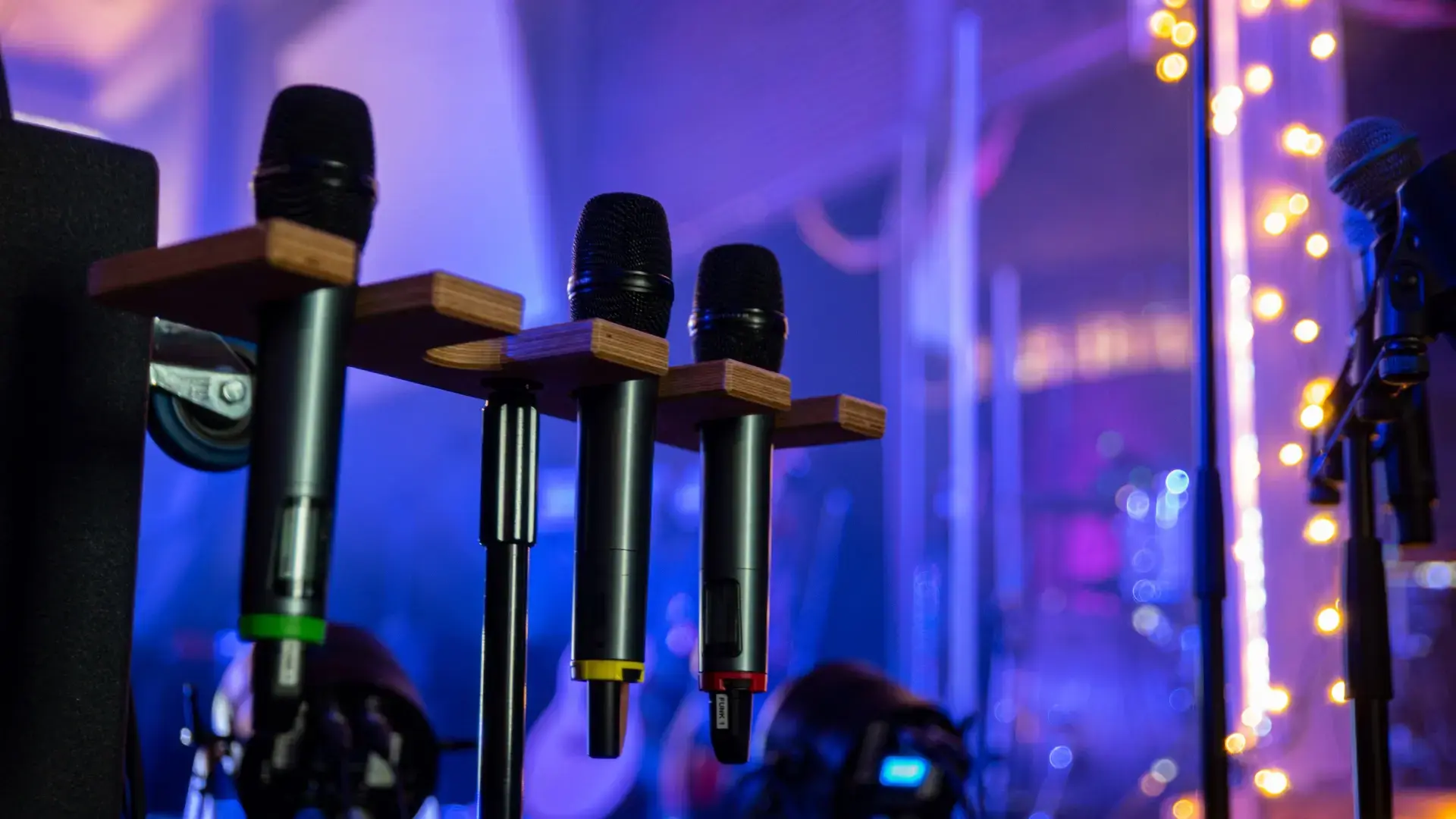
With several hundred guests in the auditorium, a fixed lectern is rarely enough. A handheld transmitter or a headset gives you freedom of movement and keeps the volume level constant, even if you turn away while speaking. You can see which options are available in the overview of wireless microphones for the stage.

Too long: After ten minutes, attention drops rapidly. It is better to cut one anecdote than to tell one too many.
Too many inside jokes: Jokes that only five people understand exclude the rest of the crowd. Make sure the address works for everyone in the room, including parents and siblings.
Too many names: A speech that sounds like a phone book quickly loses its spark. Limit name-dropping to a few targeted moments.
No clear theme: Without a clear structure, memories just pile up without a recognizable point. Define your goal before you start writing: What do you want the audience to feel after your speech?
Before you step on stage, check four things. First: Confirm the speaking time, technical setup, and the event schedule. Second: Mentally walk through your core message, key anecdotes, and closing image. Third: Clarify who is introducing you and how the hand-off will work. Fourth: Have a backup plan for slips of the tongue or microphone failure. A short pause and continuing calmly is usually enough.
Are you planning the entire graduation ball and need support with technology, the venue, and organization in addition to the speech? In our graduation ball planning guide you will find everything your committee needs.
What is the ideal length for a successful graduation speech?
What is the optimal structure for a graduation speech?
What essential building blocks should be included in the speech?
What common mistakes and pitfalls should be avoided?
How do I best integrate acknowledgments and tributes?
How do I prepare technically and mentally for the presentation?
Check event equipment, book in 90 seconds, and choose pickup or delivery. Deposit-free and insured throughout Germany and Austria.

Wir haben dir eine Mail geschickt, bitte bestätige sie um den Rabattcode zu erhalten.